


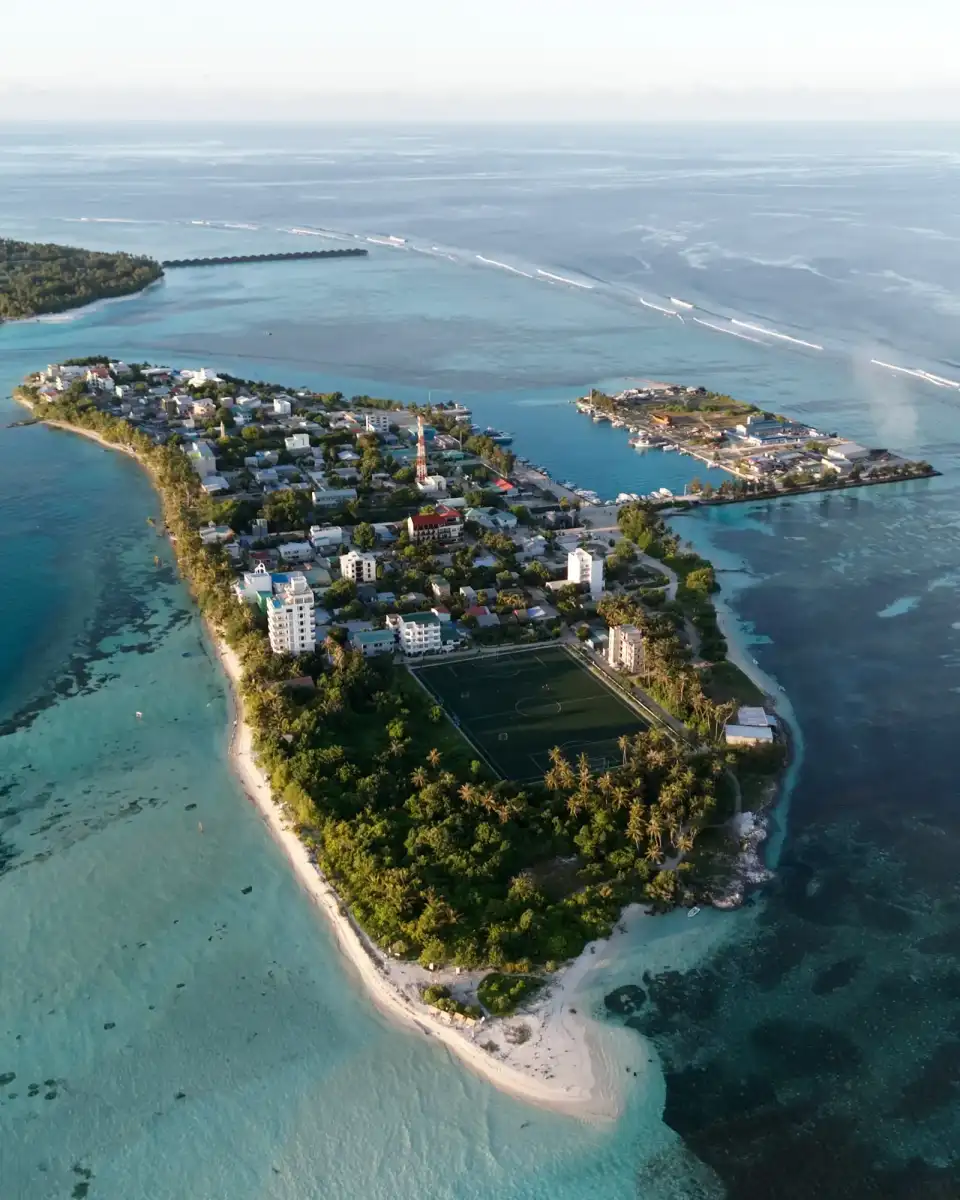
First time in the Maldives: 30 things to know before you go
Visas, IMUGA, taxes, local island rules, ferries, money and weather: 30 practical things to know before your first trip to the Maldives.
 By Dhiffushi Island Council9 min readUpdated
The Maldives is easier to visit than most first-timers expect. Most nationalities get a free 30-day tourist visa on arrival, and a short online form before you fly is the main paperwork. The rest is knowing how the islands work: local islands follow Maldivian customs, boats run to timetables, and the weather follows two monsoons.
Here are 30 things worth knowing before you go, each linked to a fuller guide. Start with the Maldives travel guide if you want the big picture first.
Before you fly
1. The tourist visa is free, but not automatic
Most nationalities are given a free 30-day tourist visa on arrival, at the immigration officer’s discretion. There are exceptions: Maldives Immigration has refused entry on Israeli passports since 15 April 2025, and you need a yellow fever certificate if you arrive from, or transit through, a country with yellow fever risk. Carry an onward or return ticket and a confirmed booking (or proof of funds). The full rules are in our visa and entry guide.
2. Check your passport against your airline’s rules
Maldives missions ask for a passport valid for at least one month. Many airlines want six months, so check with your airline before you book. Children need their own passport.
3. Fill in IMUGA within 96 hours of arrival
Every traveller must complete the free Traveller Declaration on the official IMUGA site (imuga.immigration.gov.mv) in the 96 hours before landing. Use the official site only. The departure declaration was dropped from 15 August 2024, so you only need it on the way in. Our arrival guide walks you through the airport.
4. Know what you cannot bring in
Alcohol, pork and pork products, narcotics, pornography and idols for worship are prohibited imports. Vapes are banned too. Duty-free alcohol bought on the way is taken by customs at the airport. See customs allowances for what you can carry.
5. Bring a prescription for your medicines
Controlled medicines for personal use need a valid prescription, according to Maldives Customs. Keep medicines in their original packaging. Our guide to bringing medicines into the Maldives covers the details.
6. Buy travel insurance that covers boats and diving
Fully equipped hospitals are only found in Malé and Hulhumalé, so a serious problem on a distant island can mean a boat or plane transfer. Check your policy covers evacuation and the activities you plan. Read travel insurance for the Maldives.
Choosing where to stay
7. Local islands and resort islands are different worlds
The 2022 census counted 187 inhabited islands and 168 resort islands. Resorts are private islands with their own rules. Local islands are where Maldivians live, with mosques, schools, shops and guesthouses. Our local island vs resort guide helps you choose.
8. Guesthouses are a normal way to visit now
About 22% of the Maldives’ 2.25 million tourist arrivals in 2025 stayed in guesthouses on local islands, according to Ministry of Tourism figures as reported. The Ministry lists around 970 guesthouses on more than 110 islands. Read staying in a guesthouse and the local islands guide.
9. Pick an island you can reach easily
For a first trip, an island near Malé keeps transfers short. Dhiffushi, about 37 km north-east of Malé, is around 40–50 minutes by shared speedboat from the airport. Compare options in local islands near Malé.
Money and costs
10. The rufiyaa is the local currency
The Maldivian rufiyaa (MVR) is issued by the Maldives Monetary Authority, at an official rate of around 15.42 rufiyaa to the US dollar. US dollars are widely accepted in tourism, but local shops and ferries prefer rufiyaa. See the Maldivian rufiyaa.
11. Taxes are added to your bill
Since 1 July 2025 the tourism GST is 17% (MIRA). There is also a green tax: USD 6 per guest per night at guesthouses and hotels with 50 rooms or fewer on inhabited islands, and USD 12 at resorts, larger hotels and liveaboards. Children under two are exempt. Our money, costs and taxes guide explains it all.
12. The service charge is the law, not a tip
Tourism businesses must add a service charge of at least 10% under the Employment Act, most of which goes to staff. Extra tips are welcome but never expected. Read tipping in the Maldives.
13. Departure charges are already in your air fare
For tickets issued since 1 December 2024, the departure tax and airport development fee (about USD 100 together for economy passengers) are included in the fare. You will not pay them at the airport.
14. Carry some cash, but check for ATMs
Smaller islands may have one ATM or none. Dhiffushi has a Bank of Maldives ATM that accepts foreign cards, but it is wise to arrive with some rufiyaa. Our guide to saving money on a Maldives trip has more ideas.
Local island life
15. Alcohol is not sold on local islands
Only resorts, the airport hotel island and liveaboards are licensed. On inhabited islands you will find fresh juices and mocktails instead. Read alcohol in the Maldives.
16. Swimwear belongs on the bikini beach
On local islands, swimwear is worn only on designated tourist beaches. Elsewhere, cover shoulders and knees. Nude or topless sunbathing is not allowed anywhere in the country. Bikinis are not permitted on Hulhumalé’s public beach either. See what to wear in the Maldives.
17. Fridays move at a different pace
Shops and cafés close for a while around Friday midday prayers. Most public ferry routes do not run on Fridays, so plan transfers for another day. Our religion guide explains why Friday matters.
18. Ramadan changes daily rhythms
During Ramadan, do not eat, drink or smoke in public in daylight on local islands. Guesthouses still serve guests, and evenings come alive after sunset. Read Ramadan in the Maldives.
19. Ask before photographing people
Maldivians are friendly, but not everyone wants to be photographed, especially women and children. Ask first and respect a no. Drones need a Ministry of Defence permit as well as other approvals. See photography in the Maldives.
20. A few Dhivehi words go a long way
Dhivehi is the national language, written in the Thaana script. Many people working in tourism speak English, but a greeting in Dhivehi earns smiles. Try our Dhivehi phrases for travellers.
Getting around
21. Boats are the buses of the Maldives
You will travel by shared speedboat, public ferry, domestic flight or seaplane. Seaplanes fly in daylight only, so late arrivals may need a night in the Malé area. Our getting around guide compares them.
22. Public ferries are cheap but slow
Public ferries run fixed routes on fixed days, and on many outer routes you pay in rufiyaa cash. Most routes have no Friday service. Read public ferries in the Maldives, or see the ferry route to Dhiffushi.
23. Malé is a short hop from the airport
Velana International Airport sits on Hulhulé, next to Malé. An airport ferry and public buses connect it with Malé and Hulhumalé. Spend a day in the capital with our one day in Malé itinerary.
Weather and health
24. There are two monsoons, not four seasons
The Maldives Meteorological Service describes a dry northeast monsoon from January to March and a wetter southwest monsoon from mid-May to November, with April and December as transition months. It is hot all year, with air around 30–31°C. See the best time to visit.
25. The sun is stronger than you think
The Maldives sits close to the equator, so the sun is strong all year, even on cloudy days. Wear a rash vest when snorkelling, drink plenty of water and seek shade at midday. Read sun safety in the Maldives.
26. Save the emergency numbers
The single national emergency number is 911. Police is 119, ambulance 102 and fire 118. Our health and safety guide covers the rest.
27. Plug in with a universal adapter
Power is 230 V at 50 Hz, and you may meet more than one socket type. A universal adapter saves trouble. See plugs, voltage and power. For staying connected, read the SIM card and wifi guide.
In the water
28. Look, but never touch the reef
Do not stand on coral, chase fish or touch turtles. Feeding sharks, rays and whale sharks is illegal, and many marine species are protected. Our coral reefs guide explains why, and snorkelling for beginners helps if you are new to it.
29. Respect currents and channels
The deep channels between reefs, called kandu, can carry strong currents. Snorkel with a guide when you are unsure, and use a life jacket on small boats. Read currents and channels.
Going home
30. Leave coral, shells and turtle shell behind
Many marine products need a permit to leave the country, and tortoiseshell is illegal. Do not buy or collect them. If you dive, leave 24 hours between your last dive and your flight. Our departure checklist covers the final day.
Questions people ask
Do I need a visa for my first trip to the Maldives?
Most nationalities receive a free 30-day tourist visa on arrival, at the immigration officer’s discretion, so there is usually nothing to apply for in advance. There are exceptions, including Israeli passports and travellers needing a yellow fever certificate. You must complete the IMUGA Traveller Declaration online within 96 hours before arrival, and carry an onward ticket and proof of accommodation or funds.
Can I visit the Maldives without staying at a resort?
Yes. About 22% of visitors in 2025, around half a million people, stayed in guesthouses on local islands, where Maldivians live. You eat in local cafés, travel by ferry or speedboat and book trips to sandbanks and reefs. The trade-off is that local island rules apply: no alcohol, and swimwear only on the designated bikini beach. Many first-timers combine a local island with a resort day trip.
What should I wear on a local island?
Outside the bikini beach, cover your shoulders and knees. Light, loose clothing is comfortable in the heat. Swimwear and short shorts are fine on the designated tourist beach. Nude or topless sunbathing is not allowed anywhere in the Maldives.
How much cash should I bring?
It depends on your island and plans. Ferries and small local shops often want rufiyaa cash, so ask your guesthouse in advance how you can pay. US dollars are widely accepted in tourism. Check whether your island has an ATM that takes foreign cards before you rely on it, and arrive with enough to cover your first few days.
Is the Maldives safe for first-time visitors?
The Maldives is generally a calm, welcoming place to visit, and most risks are about the sea and sun rather than crime. Respect currents, wear a life jacket on small boats and protect yourself from UV. Fully equipped hospitals are only in Malé and Hulhumalé, so good travel insurance matters. Save 911, the national emergency number.
When is the best time for a first visit?
For the calmest, driest weather, aim for the northeast monsoon from January to March. The southwest monsoon, from mid-May to November, brings more rain and wind, but also quieter islands and good manta season on some reefs. It is warm all year, so there is no bad month, just different conditions to plan around.
What is the most common first-timer mistake?
Planning a transfer on a Friday. Most public ferry routes do not run on Fridays, and shops close around midday prayers. Other common slips are forgetting the IMUGA form, packing duty-free alcohol, and underestimating the sun. Our Dhiffushi trip planner shows how a local island trip fits together.

