Ramadan in the Maldives: what visitors should know
Visiting the Maldives in Ramadan? The 2027 dates, what changes on local islands, how to be respectful in daylight, and what to expect at Eid al-Fitr.
 By Dhiffushi Island Council8 min readUpdated
Yes, you can visit the Maldives during Ramadan, and many independent travellers enjoy it. In 2027 Ramadan is expected to begin around 8 February and end with Eid al-Fitr around 9 or 10 March, depending on the moon. On local islands the days are quieter and you should not eat, drink or smoke in public before sunset, but your guesthouse will still feed you, boat trips still run, and the evenings are some of the friendliest of the year.
What Ramadan is
Ramadan is the ninth month of the Islamic calendar and the month of fasting. The Maldives is a Muslim country, and almost every Maldivian you meet on a local island will be fasting. From dawn until sunset they do not eat, drink (not even water) or smoke. Children, the sick, travellers and some others are excused.
Locally the month is often written Ramazan, and fasting is called *roadha*. People give to charity, share food with neighbours and spend evenings together. For a visitor on a local island, it is one of the best times to see community life up close.
You are not expected to fast. The only ask is discretion in public during daylight.
Ramadan 2027 dates
The Islamic calendar follows the moon, so Ramadan comes about 11 days earlier each year. The exact start is confirmed only when the new moon is sighted, so dates can shift by a day.
| Event | Expected date in 2027 |
|---|---|
| First day of Ramadan (public holiday) | Around Monday 8 February |
| Eid al-Fitr | Around 9 or 10 March |
In 2028 Ramadan will fall in late January. For every other public holiday, see our Maldives festivals and public holidays guide.
Good news for the weather: in 2027 and the next few years, Ramadan falls in the dry northeast monsoon, which the Maldives Meteorological Service puts at January to March. Expect calm seas, clear water and plenty of sun. See the Maldives in February and the Maldives in March for what the weather is like.
The daily rhythm
Ramadan turns the island day around. Mornings are slow, afternoons are sleepy, and life returns at sunset.
Before dawn: suhoor
Families wake before first light to eat *suhoor*, the meal that has to last until evening. You may hear quiet voices and kitchen sounds around 4am, then the dawn call to prayer.
Daytime
Most people work shorter hours and rest in the hottest part of the day. Lanes are empty, many local cafés and shops are closed, and the island feels very calm.
Sunset: iftar
At sunset the call to prayer signals the end of the fast. In February and March that is around 6pm. Families break the fast with dates, water and fruit juice, then share a meal. Short eats such as *gulha* (fried fish balls) and *bajiya* (pastries filled with fish or vegetables) appear on many tables. Read more in our guide to Maldivian food and dishes to try.
Evening: Taraweeh and late nights
After the evening prayers, men and women go to the mosque for *Taraweeh*, extra night prayers held only in Ramadan. Afterwards the island wakes up. Cafés open, children play in the lanes, and people sit out on swings and benches until late. If you like a sociable evening, this is the time to be out.
What changes for visitors
Most of the changes are small and easy to plan around.
Cafés and restaurants
On local islands, many cafés close during the day and open around sunset. In recent years the Ministry of Economic Development has published Ramadan opening hours each year. In 2026 cafés and restaurants could open from 5:30pm until 3am, as reported by Atoll Times. Shops also have set hours, and these change year to year, so check locally.
Your guesthouse will still serve breakfast, lunch and dinner to its guests, usually in a dining area away from public view. Ask your host on arrival how meals will work.
Offices, banks and services
Government offices run shorter hours in Ramadan. Since 2022 the official hours have been 9am to 1pm (President’s Office, as reported). In recent years the last ten days of Ramadan have also been given as holidays for government staff, with essential services kept running. If you need anything official in Malé, such as help from Maldives Immigration, do it early in the month.
Banks and ATMs keep working, but branch hours may be shorter. On Dhiffushi, the Bank of Maldives ATM accepts foreign cards.
Ferries and speedboats
Boats keep running, but timings can move. In recent years MTCC has adjusted public ferry schedules during Ramadan, and most routes still do not run on Fridays. Shared speedboats may shift departures around iftar. Confirm your transfer the day before. Our getting around the Maldives guide covers the options, and the MTCC route 308 page covers the ferry to Dhiffushi.
Excursions and diving
Snorkelling trips, sandbank picnics, dolphin cruises and diving generally carry on. Crews are often fasting, so trips may start earlier or finish before sunset so everyone can get home for iftar.
Etiquette on local islands
The rules are simple and the same everywhere on inhabited islands.
- Don’t eat, drink or smoke in public in daylight. That includes beaches, lanes, harbours and the ferry. Drinking water quietly in your room or guesthouse is fine.
- On a boat trip, ask the crew before eating your packed lunch. They will usually say yes, and appreciate being asked.
- Dress as you would any other month: swimwear only on designated bikini beaches, and shoulders and knees covered elsewhere. See what to wear in the Maldives.
- Keep music low, especially near mosques and during prayer times.
- Don’t walk into a mosque during prayers, and don’t photograph people praying.
- Alcohol is not allowed on local islands in any month. See alcohol in the Maldives.
- If you are invited to share iftar, say yes. It is a real honour and a lovely way to meet a family.
A simple greeting helps too: “Ramadan Mubarak” is widely understood. For everyday island manners, read our local island etiquette guide.
Resorts during Ramadan
Resorts are private islands with their own rules. They run as normal through Ramadan, with restaurants and bars open all day. If you split your trip between a local island and a resort, you will notice the contrast, but on the local island the daytime courtesy still applies.
Eid al-Fitr
Eid al-Fitr marks the end of Ramadan, and in the Maldives it is often called *Kuda Eid*, the “small Eid”. It is one of the happiest times of the year.
The day starts with Eid prayers at the mosque in the morning. Then come new clothes, family visits, food shared between houses, sweets for children and, on many islands, games, music and *boduberu* drumming.
For travellers, Eid has two practical effects:
- Boats and rooms fill up. Eid is a public holiday of several days, and many people travel from Malé to their home islands or to local islands for a break. Book transfers and stays early.
- Some services pause. Government offices close, and some shops and cafés take a day or two off. Guesthouses stay open.
If you are on a local island at Eid, you may be welcome to watch or join the celebrations. Ask before taking photos.
Ramadan on a local island: Dhiffushi as an example
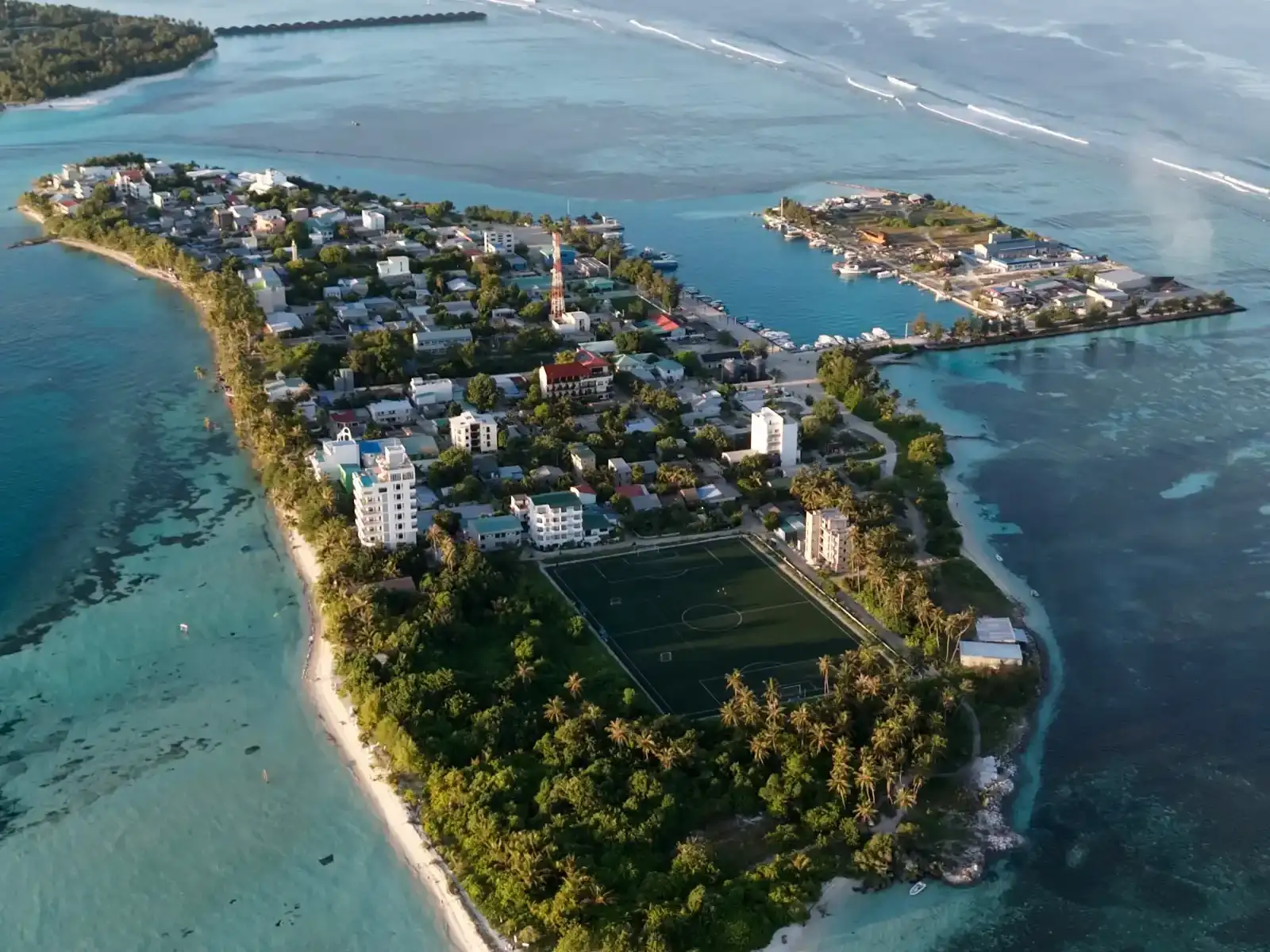
On Dhiffushi, a local island of about 1,270 people on the eastern rim of North Malé Atoll, Ramadan follows the same rhythm: quiet days, guesthouse meals for guests, and lively evenings after iftar. Our guide to visiting Dhiffushi during Ramadan explains what it is like on the island.
Questions people ask
Can tourists eat and drink during Ramadan in the Maldives?
Yes. Visitors are not expected to fast. On local islands, eat and drink at your guesthouse or in private during daylight, and avoid eating, drinking or smoking in public until sunset. Guesthouses serve meals to their guests as normal, and many cafés open from sunset until late. Resorts carry on as usual all day. A little discretion in public is all that is asked, and it is genuinely appreciated.
When is Ramadan 2027 in the Maldives?
Ramadan 2027 is expected to begin around Monday 8 February, with Eid al-Fitr around 9 or 10 March. The exact dates depend on the sighting of the new moon, so they may move by a day. Ramadan arrives about 11 days earlier each year, so in 2028 it will begin in late January. Check the official announcement close to your trip.
Can I drink water in public during Ramadan?
On local islands, it is best to drink water discreetly in your room, guesthouse or on a private boat with the crew’s agreement, rather than in the street or on the beach. In 30°C heat you must stay hydrated, so carry a bottle and step somewhere private. Nobody will stop you drinking if you feel unwell; the courtesy is about not doing it openly in public.
Do ferries and speedboats run during Ramadan?
Yes, but timings can change. In recent years MTCC has adjusted public ferry schedules during Ramadan, and most routes do not run on Fridays at any time of year. Shared speedboats may move departure times around iftar. Check the latest timetable and confirm your transfer a day ahead, especially in the days before and after Eid, when boats fill quickly.
What is Eid al-Fitr like in the Maldives?
Eid al-Fitr, often called Kuda Eid, is a joyful public holiday at the end of Ramadan. It starts with morning prayers at the mosque, followed by family visits, new clothes, shared food and sweets. Many islands hold games, music and boduberu drumming. Boats and guesthouses get busy as people travel home, so book early if your trip includes Eid.
Is Ramadan a good time for a local island holiday?
For many people, yes. In 2027 Ramadan falls in the dry season, with calm, clear seas, and the evenings after iftar are warm and sociable. Days are quieter and daytime food options are fewer, so it suits travellers who enjoy a slow pace. Excursions and diving generally continue, though times may shift so crews can break their fast at home.