


Maldives local islands: the complete guide
What a local island is, how guesthouse stays work, the rules on alcohol and dress, and how to choose the right inhabited island in the Maldives.
 By Dhiffushi Island Council9 min readUpdated
A local island in the Maldives is an inhabited island where Maldivians live, work and go to school, and where you can now stay in small, licensed guesthouses. It costs far less than a resort, puts you in real island life, and asks a few things in return: no alcohol, modest dress in the village and swimwear only on the bikini beach.
What a local island is (and how it differs from a resort)
The Maldives has two very different kinds of island for visitors. According to the Maldives Bureau of Statistics (Census 2022), there are 187 inhabited islands and 168 resort islands, plus 106 industrial islands used for things like fuel, fishing and storage.
A resort island is a private island run by one company. Everyone on it is either a guest or staff. It has its own rules, its own prices and, usually, a bar.
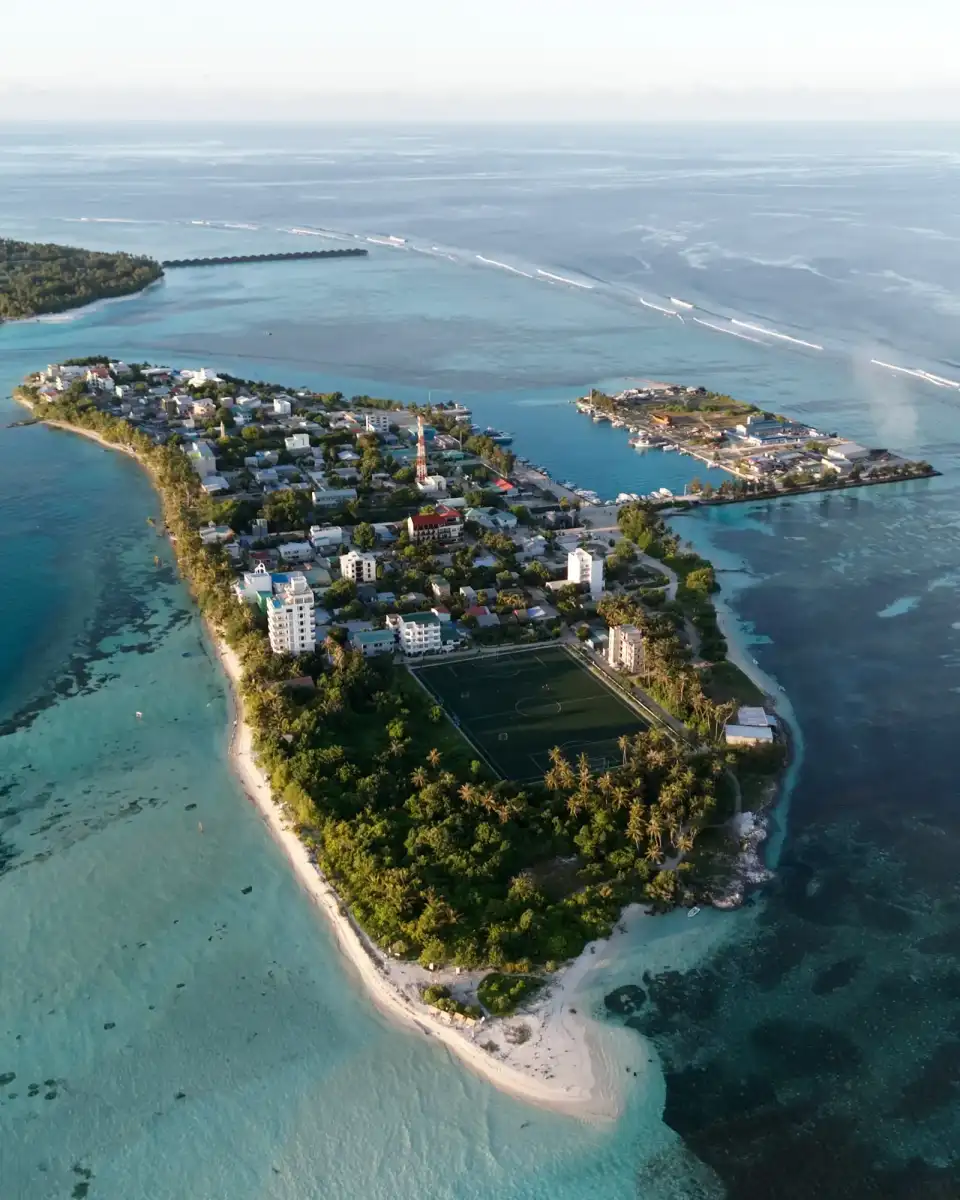
A local island (also called an inhabited island) is a community. It has a council, a mosque, a school, a health centre, a harbour, shops and homes. Guesthouses sit on ordinary streets, next to families. You share the island, the beach and the ferry with the people who live there.
| Local island | Resort island | |
|---|---|---|
| Who lives there | Maldivian families | Guests and staff only |
| Where you stay | Licensed guesthouses and small hotels | One resort |
| Alcohol | Not sold or allowed | Licensed |
| Swimwear | Bikini beach only | Anywhere on the island |
| Typical cost | Affordable | High |
| Getting there | Ferry or shared speedboat | Resort speedboat or seaplane |
For a deeper side-by-side, read our guide to choosing a local island or a resort.
A short history of local island tourism
For decades, Maldivian tourism followed a “one island, one resort” model. Visitors stayed on uninhabited islands turned into resorts, and guesthouses were not allowed outside Malé.
That changed at the end of the 2000s. Amendments to the Tourism Act in 2008 and a parliamentary resolution the same year opened the door to guesthouses on inhabited islands. In practice, permission came into effect at the end of 2009, once the regulations were in place. Reports from the time count 23 guesthouses with 479 beds in 2010.
Dhiffushi, in Kaafu Atoll, opened to visitors in 2009, so it was among the early islands to welcome guests. You can read more on our Dhiffushi history and island life page.
How many people choose local islands now
Local island stays are no longer a niche. Ministry of Tourism figures, as reported, show about 2.25 million tourist arrivals in 2025, up 9.8% on 2024. About 22% of visitors, around 500,000 people, stayed in guesthouses on local islands; about 73% stayed in resorts.
As of February 2025, guesthouses operated on about 116 islands across all 20 administrative atolls.
What daily life looks like
The best part of a local island stay is simply being there. Expect a rhythm that runs on prayer times, boat times and the heat of the day.
- The mosque. The call to prayer sounds five times a day. It is a good clock.
- The school. Children in uniform cycle to school in the morning. In the afternoon they swim off the harbour wall.
- The harbour. Ferries, supply boats and fishing boats come and go. It is where news arrives and where people gather at dusk.
- Fishing. Many families still fish. You may see tuna landed or reef fish sold at a small market.
- The council. Each inhabited island has an elected council that looks after roads, waste, the harbour and public spaces.
- Football. Most islands have a sand or turf pitch. Evening matches draw a crowd.
- Cafés. Local cafés sell short eats, sweet tea and fish curry. They are busy in the morning and after the evening prayer.
Evenings are the liveliest time, when people sit out on *joali* (rope seats) and chat. Try the food: our guide to Maldivian dishes is a good start.
The rules, and why they exist
The Maldives is a Muslim country, and a local island is someone’s home town. The rules are not there to spoil your holiday; they reflect how people live.
- Alcohol. It is not sold or allowed on inhabited islands. Only resorts, the airport hotel island and liveaboard boats are licensed. Do not bring any into the country: customs will hold it.
- Dress. In the village, cover shoulders and knees. This applies to men and women.
- Bikini beaches. Swimwear is fine on the island’s designated “bikini beach”, which is usually screened from the village. Cover up again when you leave it.
- No nudity. Nude or topless sunbathing is not allowed anywhere in the Maldives.
- Friday prayer. Around midday on Friday, shops and cafés close for a while. Plan lunch around it.
- Ramadan. During the holy month, do not eat, drink or smoke in public in daylight. Guesthouses still serve guests, and evenings are festive. See visiting during Ramadan.
Our full guide to local island etiquette covers photos, greetings, the mosque and more.
What a guesthouse stay includes
A guesthouse in the Maldives is usually a small, family-run hotel with a handful of rooms. Many are smart and modern, with air conditioning, Wi-Fi and private bathrooms.
Licensing and taxes
Guesthouses must be registered and licensed by the Ministry of Tourism. Check that your booking is with a licensed property.
Your bill will include taxes set by MIRA, the tax authority:
- Tourism GST of 17% (since 1 July 2025).
- Green tax of USD 6 per guest per night at guesthouses and hotels with 50 rooms or fewer on inhabited islands (from 1 January 2025). Children under 2 are exempt.
- A 10% service charge is commonly added.
For a full breakdown, see Maldives money, costs and taxes.
Excursions
Most guesthouses run or arrange day trips. Typical options include snorkelling on nearby reefs, sandbank picnics, dolphin cruises, fishing at sunset and, on some islands, trips to see manta rays or whale sharks. Many islands also offer resort day passes, which is how guests enjoy a drink or a spa without breaking local rules. Browse what is possible from Dhiffushi on our things to do page.
How to choose a local island
There is no single best island. It depends on what you want. Think about these points.
Distance from Malé
Islands in Kaafu Atoll are close to Velana International Airport. Some are 30 to 60 minutes away by shared speedboat. Islands in farther atolls may need a domestic flight and a boat. Short distances mean less travel time and more beach time. Our guide to getting around the Maldives explains each option.
Ferry days
MTCC public ferries are cheap but slow, run only on certain days and take cash in rufiyaa. Most routes have no Friday service. If you arrive on a Friday, plan for a speedboat.
Beach size and the bikini beach
Bikini beaches vary a lot. Some are long and wide; others are a short strip. Look at photos and a map before you book.
Reef and marine life
Some islands have a house reef you can snorkel straight from the shore. Others rely on boat trips. If marine life matters most, ask what you can reach without a boat.
Surf
A few islands in North Malé Atoll sit near well-known surf breaks. Ask about the season before you book.
Quiet or lively
Islands nearest Malé tend to have more guesthouses, more cafés and more day-trippers. Smaller, more distant islands are quieter, with fewer visitors and a slower pace. Neither is better; they are just different.
A worked example: Dhiffushi
Dhiffushi is about 37 km north-east of Malé, 40 to 50 minutes by shared speedboat from Malé or the airport. It is the easternmost inhabited island in the Maldives, “where the Maldives wakes first”. About 1,270 people live there (2022 census). It has a police post (since December 2024), a Bank of Maldives ATM that accepts foreign cards, a long bikini beach and a choice of guesthouses. The public ferry does not run on Fridays. See how to get to Dhiffushi, or compare it with two other islands in Dhiffushi vs Maafushi vs Thulusdhoo.
Responsible travel: keeping tourism money local
A local island stay can put your money straight into the community. A resort pays wages and taxes; a guesthouse island spreads spending across many families.
- Stay in licensed guesthouses owned and run by islanders.
- Eat at local cafés as well as your guesthouse.
- Book excursions with island operators and use local captains.
- Buy from island shops. Water, snacks and souvenirs bought locally support local jobs.
- Pay in rufiyaa for small things. Local shops often prefer it.
- Cut plastic. Bring a refillable bottle. Waste is hard to manage on a small island.
- Respect the reef. Do not stand on coral, touch turtles or feed fish.
- Ask before taking photos of people, especially women and children.
Be a good guest, and you will be welcomed back.
Ready to plan? Start with our Maldives travel guide and the Dhiffushi trip planner.
Questions people ask
What is a local island in the Maldives?
A local island is an inhabited island where Maldivian families live, with a mosque, school, council, harbour and shops. Since the end of 2009, licensed guesthouses have been allowed on these islands, so visitors can stay among residents. The Census 2022 counted 187 inhabited islands. Local islands are more affordable than resorts but follow local rules: no alcohol, modest dress in the village, and swimwear only on the bikini beach.
Can you drink alcohol on a local island?
No. Alcohol is not sold or allowed on inhabited islands. Only resorts, the airport hotel island and liveaboard boats hold licences. You also cannot bring alcohol into the country, as customs will hold it, including duty-free bought on the way. If you want a drink, many local islands offer day trips to a nearby resort or a licensed boat.
Can I wear a bikini on a local island?
Yes, on the designated bikini beach. These beaches are set aside for visitors and are usually screened from the village. Elsewhere on the island, cover your shoulders and knees, and put on a top and shorts or a sarong when you leave the beach. Nude and topless sunbathing are not allowed anywhere in the Maldives. On boat excursions away from the island, swimwear is fine.
Are local islands in the Maldives safe?
Local islands are generally calm, friendly, small communities where people know each other. Usual travel sense applies: lock your room, watch your belongings and follow local guidance at sea. Many islands have a police post and a health centre. Solo women travellers visit regularly; dressing modestly in the village helps you blend in and avoid unwanted attention.
How many tourists stay on local islands?
Ministry of Tourism figures, as reported, show about 2.25 million tourist arrivals in 2025. Around 22%, or about 500,000 visitors, stayed in guesthouses on local islands, while about 73% stayed in resorts. As of February 2025, guesthouses were operating on about 116 islands across all 20 administrative atolls, so there is a wide choice of islands to visit.
How do I get to a local island from the airport?
From Velana International Airport, most visitors take a shared speedboat, which is fast and runs on a schedule. MTCC public ferries are much cheaper but slower, run on limited days and take cash in rufiyaa; most have no Friday service. Farther atolls need a domestic flight and a boat. Your guesthouse can usually book the transfer for you.
What taxes do I pay at a guesthouse?
Guesthouse bills include 17% Tourism GST (since 1 July 2025) and a green tax of USD 6 per guest per night at properties with 50 rooms or fewer on inhabited islands. Children under 2 are exempt from green tax. A 10% service charge is often added too. Check whether the price you see includes these before you book, as many listings show them separately.

