Sun safety in the Maldives: UV, heat and staying well
Why the Maldives sun is so strong, how to avoid the classic snorkelling sunburn, staying cool and hydrated, protecting children, and sunscreen and coral reefs.
 By Dhiffushi Island Council8 min readUpdated
The Maldives sits just north of the equator, so the sun is strong all year, not only in the dry season. On a clear day the UV index usually climbs into the “extreme” range by late morning, and water and pale sand bounce extra light back at you. Cover up, use shade between about 11am and 3pm, wear a rash vest to snorkel, drink more water than you think you need, and you will enjoy the islands without losing days to sunburn.
This page is general information, not medical advice. If you have a skin condition, take medicines that make you sensitive to light, or are travelling with a baby, talk to a doctor or pharmacist before you go.
Why the sun is so strong in the Maldives
The islands run from about 7°N to just south of the equator, close to the line where the midday sun stands almost straight overhead. When the sun is high, its rays take a short path through the atmosphere and less ultraviolet (UV) light is filtered out.
A few local factors add to it:
- Reflection. The World Health Organization (WHO) notes that water and sand increase the UV you receive. In the Maldives you are surrounded by both, so even under a palm tree you still get reflected light.
- Cloud. WHO also points out that UV can stay high under cloud. A grey morning in the wet season can still burn you.
- Time in the water. Snorkelling, sandbank trips and boat transfers mean hours with your back and legs to the sky.
The UV index in plain words
The UV index is a scale used worldwide to show how quickly sun can damage skin. WHO advises sun protection from an index of 3 upwards, and suggests staying out of the midday sun at 8 and above. Around midday in the Maldives, readings in the 11+ “extreme” band are common on clear days through much of the year. UV peaks in the hours around solar noon, so the morning and late afternoon are the kindest times to be out.
There is no “low UV season” here. The dry season (January to March) has more clear days; the wet southwest monsoon (mid-May to November) has more cloud, but the sun is just as high. See the best time to visit the Maldives for how the seasons feel.
Simple rules for a sunny day
The best protection is shade and clothing, with sunscreen for the bits you cannot cover. WHO is clear that sunscreen should not be used to stretch out your time in the sun.
- Plan around the middle of the day. Do your walking, cycling and village visits early. Use the hours from about 11am to 3pm for lunch, a nap, a café or a shady spot.
- Cover up. Light, loose, long sleeves are cooler than you think and also suit local island dress norms. Our guide to what to wear in the Maldives covers what works on and off the bikini beach.
- Wear a hat with a brim that shades your ears and neck.
- Wear sunglasses that block close to 100% of UVA and UVB; WHO recommends wraparound styles.
- Use sunscreen well. The NHS suggests at least SPF 30 with a high UVA rating (four or five stars, or the UVA logo in a circle). Most people use far too little: an adult needs roughly 6 to 8 teaspoons to cover the whole body. Put it on before you go out and reapply about every two hours, and again after swimming or towelling, even if it says “water resistant”.
- Do not forget your feet, ears, scalp parting and lips (use an SPF lip balm).
Snorkelling and boat trips: where most people burn
The classic Maldives sunburn is a red back and the backs of the legs after a long snorkel. Face down in shallow water for an hour, you are fully exposed, and the sea washes sunscreen off.
- Wear a rash vest (a long-sleeved swim top). It is the single most useful thing you can pack.
- Choose shade on the boat. Most excursion boats have a covered area; sit under it on the way out and back.
- Sandbanks have no shade. Take a hat, a cover-up and water, and go early or late if you can.
More tips for time in the water are in our snorkelling in the Maldives guide.
Sunscreen and coral reefs
You may hear that some sunscreen ingredients harm coral. The picture is mixed. Laboratory studies have linked certain chemical filters, such as oxybenzone, to stress in coral, and the US National Oceanic and Atmospheric Administration (NOAA) lists sunscreen chemicals among the pressures on reefs. How much it matters on real reefs, next to warming seas, is debated.
A sensible approach:
- Cover up first. A rash vest needs no sunscreen at all, so it is the most reef-friendly choice.
- Apply sunscreen well before you swim rather than just before you jump in.
- Consider mineral sunscreens (zinc oxide or titanium dioxide) if you want to avoid chemical filters, but treat “reef safe” labels with caution: the term is not regulated everywhere.
- Never stand on or touch coral, whatever sunscreen you use. That does far more harm.
Our guide to coral reefs of the Maldives explains why the reefs are under pressure and how visitors can help.
Heat and hydration
Air temperatures sit around 30–31°C all year, with high humidity, so heat builds up fast if you walk or exercise at midday.
Drink often
- Carry water and sip through the day. Thirst is a late signal.
- If you sweat heavily, oral rehydration salts from a pharmacy help replace what you lose.
Know the signs of heat exhaustion
The NHS lists tiredness, dizziness, headache, feeling sick, heavy sweating with pale clammy skin, cramps and intense thirst as signs of heat exhaustion. Move the person somewhere cool, loosen extra clothing, give water or a rehydration drink, and cool the skin with water and fanning. They should feel better within about 30 minutes.
Heatstroke is an emergency. Get help straight away if someone is confused, has a seizure, collapses, or has very hot skin and has stopped sweating despite being hot. In the Maldives, the national emergency number is 911, and the ambulance number is 102.
Children and babies
Children burn faster than adults, and WHO notes that sunburn in childhood raises the risk of skin cancer later in life.
- The NHS advises keeping babies under 6 months out of direct strong sunlight altogether. Use shade, a sun hat and light clothing.
- For older children, a full-length swimsuit or rash vest, a wide-brimmed hat and sunglasses work better than trying to keep re-coating a wriggling child with cream.
- Plan beach time early and late in the day, and build in a rest in the shade at midday.
More family advice is in the Maldives with kids guide.
Treating mild sunburn
If you do burn, get out of the sun and stay out of it while the skin recovers.
- Cool the skin with a cool shower or damp cloth, and drink extra water.
- Ask a pharmacist about after-sun gels and pain relief.
- Keep the area covered until it heals.
Seek medical help for blistering over a large area, fever, chills, dizziness, or burns on a baby or young child. Inhabited islands have a health centre; the main hospitals are in Malé and Hulhumalé. Check that your policy covers medical evacuation: see travel insurance for the Maldives and our wider health and safety guide.
Sun safety on a local island
Local island life already follows the sun: people rest in the heat of the day and come out in the cool of the evening. Copy them.
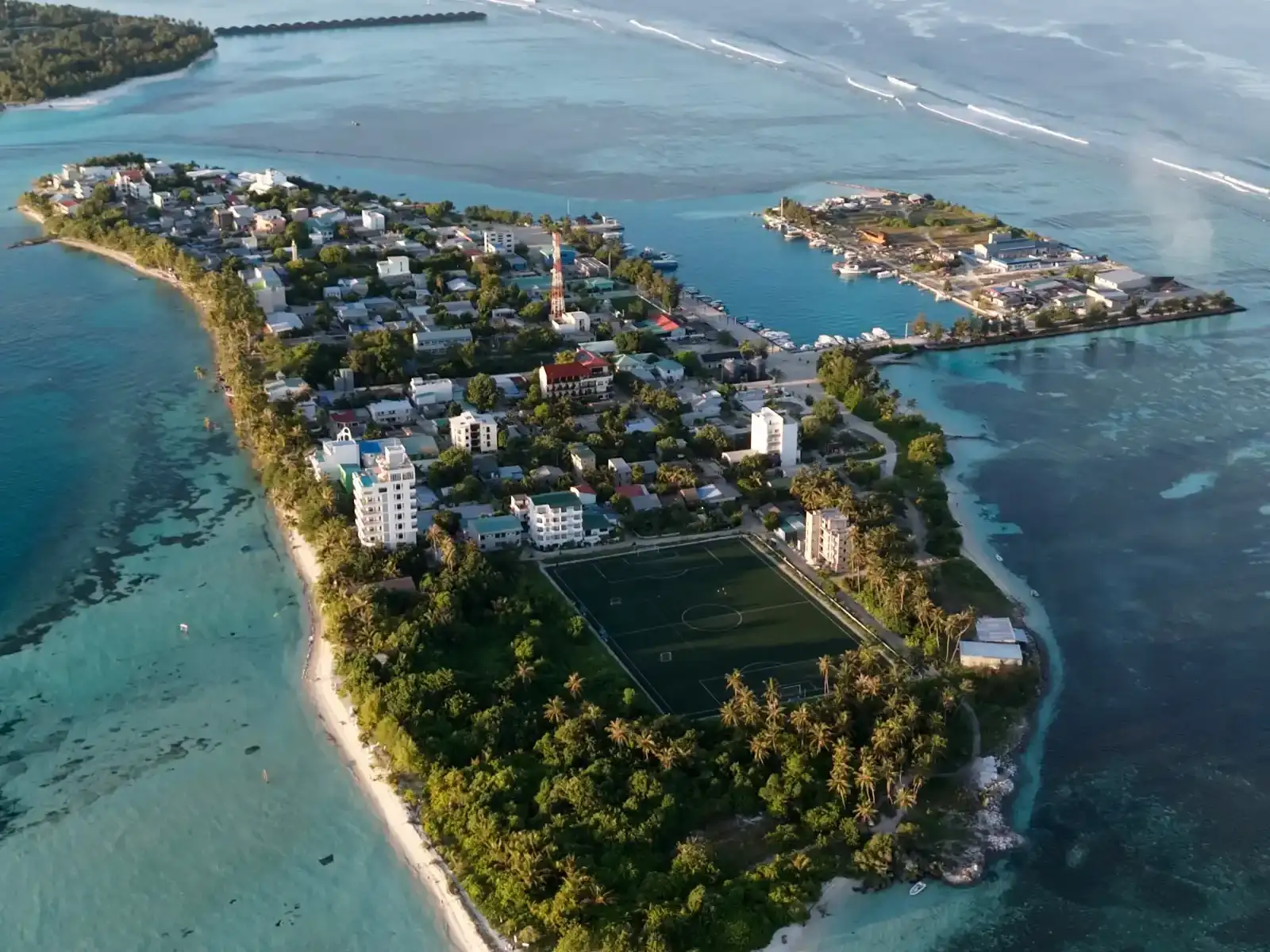
On Dhiffushi, the island’s eastern beaches catch the first light of the morning, which makes a sunrise swim or walk one of the best (and gentlest) ways to enjoy the sea before the UV builds. Our Dhiffushi packing list includes the sun kit worth bringing; sunscreen is sold on many islands, but choice can be limited.
Visitors are not expected to fast during Ramadan; drink discreetly, away from public view, in daylight on local islands, but keep drinking enough. See Ramadan in the Maldives.
Questions people ask
What is the UV index in the Maldives?
On clear days it usually reaches the “extreme” band, 11 or higher, around the middle of the day, and it stays high for much of the year because the islands lie close to the equator. WHO advises sun protection from an index of 3. Plan outdoor time around the hours from about 11am to 3pm and protect yourself whenever you are outside, even on cloudy days.
Can you get sunburnt in the Maldives when it is cloudy?
Yes. Cloud cuts some UV but not all of it, and WHO notes that levels can stay high under cloud cover. The cooling sea breeze makes it easy to underestimate the sun, so many visitors burn on grey days in the wet season. Wear sunscreen, a hat and a rash vest for snorkelling, whatever the sky looks like in the morning.
What SPF should I use in the Maldives?
The NHS recommends at least SPF 30 with high UVA protection, shown as four or five stars or the UVA logo in a circle. Many travellers to the tropics choose SPF 50. More important than the number is using enough, around 6 to 8 teaspoons for an adult’s whole body, and reapplying about every two hours and after every swim.
Is reef-safe sunscreen required in the Maldives?
We have not found a national rule requiring it. The evidence on sunscreen and coral is mixed, but the simplest way to protect both your skin and the reef is a rash vest, which needs no cream at all. If you do use sunscreen, apply it well before you swim.
How much water should I drink in the Maldives?
There is no single figure, as it depends on your size, activity and how much you sweat. Sip water regularly through the day rather than waiting for thirst, drink more on boat trips and after exercise, and consider oral rehydration salts on very hot days. Dark urine, headache and dizziness are signs you need more fluid and some shade.
Do I need sunglasses in the Maldives?
Yes. Glare from white sand and the lagoon is intense, and WHO links long-term UV exposure to eye problems such as cataracts. Choose sunglasses that block close to 100% of UVA and UVB, ideally a wraparound style, and use a hat with a brim. Children’s eyes are especially sensitive, so pack sunglasses for them too.