


Seaplanes and domestic flights in the Maldives
Daylight-only seaplanes, regional airports from Hoarafushi to Gan, flight-plus-boat transfers, baggage, weather delays and how to book, explained simply.
 By Dhiffushi Island Council8 min readUpdated
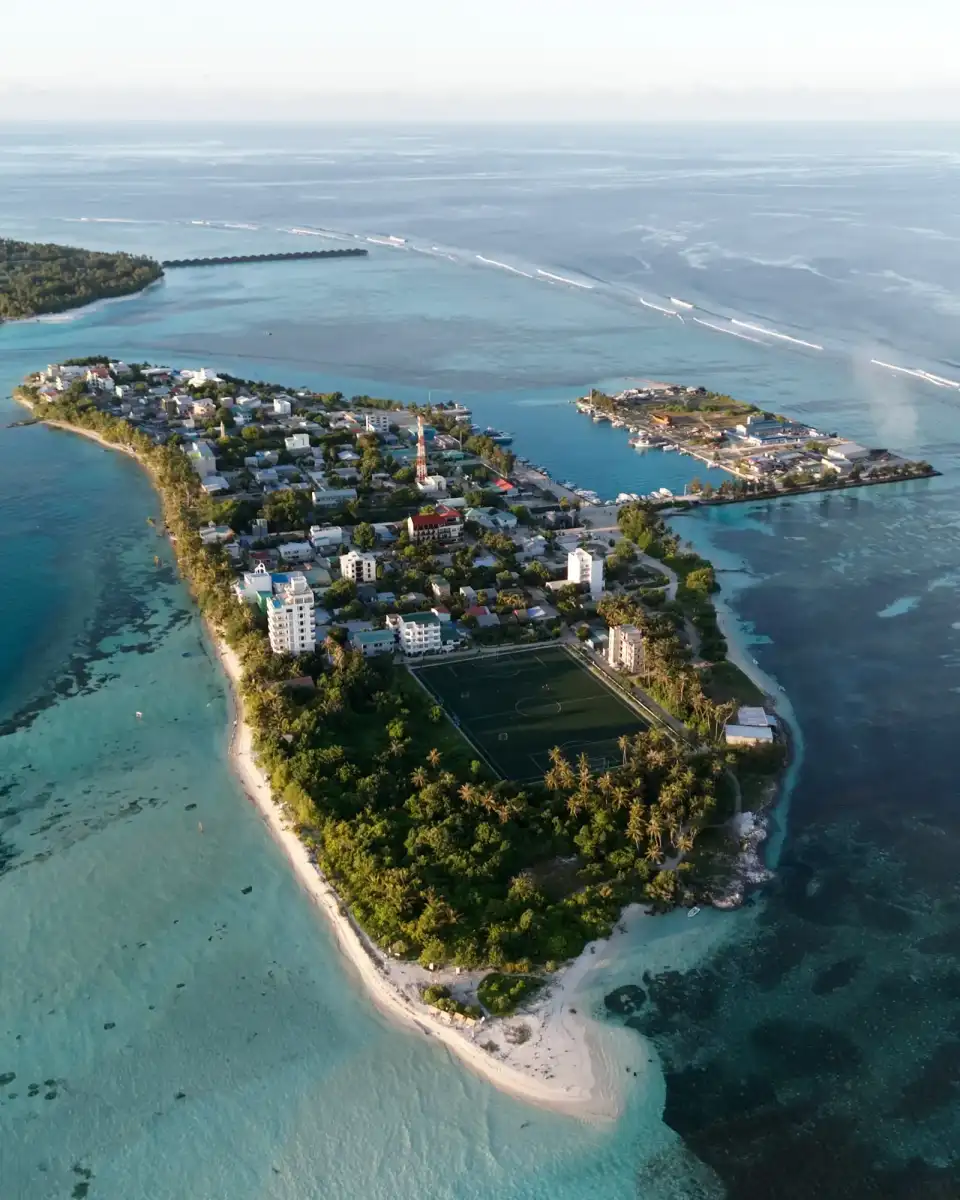
Seaplanes and domestic flights both start at Velana International Airport, next to Malé. Seaplanes are small floatplanes that land in island lagoons. They fly in daylight only and mainly serve resorts. Domestic flights are ordinary propeller planes that fly to regional airports across the atolls, usually followed by a short boat or road transfer. If you are staying on a local island near Malé, such as Dhiffushi, you need neither: a speedboat or ferry gets you there.
How seaplanes work in the Maldives
Seaplane flights began in 1993, taking off from a lagoon beside the airport island. The Maldives Civil Aviation Authority (CAA) told an ICAO meeting in 2023 that there were then more than 60 seaplanes in service, making around 400 movements a day.
The aircraft are mostly Twin Otters on floats. They are small and fly low. The CAA requires two pilots on every flight, even though the aircraft could legally be flown by one. That is stricter than the international standard.
Daylight only
This is the rule that shapes every seaplane trip. Seaplanes fly under visual flight rules, and night visual flying is not allowed in Malé airspace (CAA, 2023). In practice that means:
- The first departures leave soon after sunrise and the last ones go in the afternoon.
- If your international flight lands late in the afternoon or evening, you will usually stay a night near the airport and fly on the next morning.
- Exact cut-off times vary. Your accommodation will tell you the latest arrival time that still connects.
Hulhumalé, a short ride from the terminal, is the usual place to spend that night. See our Hulhumalé guide.
Where seaplanes land
Seaplanes leave from a dedicated seaplane terminal and water runways at Velana. At the other end, most land beside a floating platform moored in a lagoon, often next to a jetty. The CAA said in 2023 that more than 90 of these landing sites were licensed. From the platform, a small boat takes you the last stretch, or you step straight onto a jetty.
Almost all seaplane landing sites serve resorts, which are private islands with their own transfer arrangements. Seaplanes to local islands are rare, so independent travellers seldom need one.
What the trip is like
- The view. Flights are short and low. The atolls, reefs and sandbanks below are the reason many people remember the trip.
- The noise. Small floatplanes are loud. Earplugs help.
- Boarding. You may step on and off from a floating pontoon. Wear shoes that cope with a wet step.
- Photos. Window seats are not guaranteed. Our photography guide has tips.
Baggage
Seaplane baggage limits are tighter than on international flights, because every kilo counts on a small floatplane. Extra weight is often charged by the kilo, and large hard cases can be awkward to load. Check the limit with whoever books your transfer before you pack. Soft bags travel more easily.
Domestic flights and regional airports
Domestic flights link Velana with regional airports from the far north to the far south. They use small turboprop aircraft and leave from Velana’s domestic terminal, a separate building from the international one.
The CAA’s list of land aerodromes (February 2022) shows 18 airports. National media reported 19 operating airports in early 2025 (five international and 14 domestic), with four more domestic airports being built. Hanimaadhoo International Airport, in the far north, opened on 9 November 2025 (as reported).
Airports by region
The table lists airports named on the CAA’s aerodrome list. Not every airport has daily flights, and routes change, so check before you plan around one.
| Region | Atoll | Airports |
|---|---|---|
| Far north | Haa Alifu, Haa Dhaalu, Shaviyani | Hoarafushi, Hanimaadhoo (international), Kulhudhuffushi, Funadhoo |
| North | Noonu, Raa, Lhaviyani, Baa | Maafaru (international), Ifuru, Madivaru, Dharavandhoo |
| Centre | Kaafu (Malé area), Alifu Dhaalu, Dhaalu, Thaa | Velana (international), Maamigili (international), Dhaalu Airport, Thimarafushi |
| South | Laamu, Gaafu Alifu, Gaafu Dhaalu | Kadhdhoo, Kooddoo, Kaadedhdhoo, Maavarulu |
| Far south | Gnaviyani, Addu | Fuvahmulah, Gan (international) |
Which places really need a flight?
As a rough guide, the further you go from Malé, the more a flight makes sense:
- Kaafu (North and South Malé) and Vaavu: speedboat or ferry. A flight is not needed. See getting to Dhiffushi for a worked example.
- Ari Atoll: speedboats reach most islands. There is also an airport at Maamigili in South Ari. Our Ari Atoll guide covers both.
- Baa and the north: fly, or take a long speedboat ride. The Baa Atoll guide explains the options.
- Laamu and the Huvadhu atolls: a flight is the practical choice. See the Laamu Atoll guide.
- Fuvahmulah and Addu: fly. See the Fuvahmulah guide and Addu City guide.
Flight plus boat: how the combinations work
Most regional airports sit on a single island, and your accommodation is often on another. So a domestic trip is usually two legs:
1. The flight from Velana to the regional airport.
2. The transfer from that airport to your island, usually by speedboat or dhoni, sometimes by road.
In some atolls, islands are joined by causeways or link roads. In Addu, Gan is linked by road to several neighbouring islands, so a taxi may be all you need. In Laamu, a link road joins a chain of islands. Elsewhere, a boat meets the plane.
Tips for joining the legs:
- Let your accommodation arrange the boat. They know the flight times and will usually meet you at arrivals.
- Leave a margin. If the flight is late, the boat normally waits, but confirm this when you book.
- Carry your passport. You will need it at check-in for domestic flights.
- Keep valuables, medicines and chargers in your hand luggage.
What it costs, in words
Prices change often and depend on the route, season and how you book, so we don’t quote them here. The general pattern is clear, though:
- Public ferries are by far the cheapest way to move around, but slow and infrequent. They are paid in rufiyaa.
- Shared speedboats cost more but are fast and reliable for islands within reach of Malé.
- Domestic flights cost more again, but can be affordable for far-off atolls, especially compared with a private boat.
- Seaplanes are the most expensive transfer. They are usually sold as part of a resort stay, and they are rarely the best fit for a local island trip.
Check whether taxes and departure charges are already in the price you are quoted. For a fuller picture, see money, costs and taxes and the transport page for routes to Dhiffushi.
Weather, delays and cancellations
Small aircraft are more sensitive to weather than jets. Seaplanes are the most affected, because they need good visibility and a calm enough lagoon.
- Rain and squalls in the southwest monsoon, mid-May to November, can delay flights for an hour or more. See the best time to visit.
- Poor visibility stops seaplanes. In January 2026, Velana suspended visual flight rules for spells because of haze, and seaplanes were the hardest hit (as reported by Edition.mv).
- Rough seas can delay the boat leg, even when the flight goes ahead.
Practical advice:
- On your departure day, don’t plan a seaplane or domestic flight that lands just before your international flight. Leave several hours, or come back to Malé the day before.
- Check what your travel insurance covers for missed connections. Our travel insurance guide explains what to look for.
Booking your transfer
There are two usual ways to book:
- Through your accommodation. This is the simplest option. Guesthouses and resorts arrange transfers every day and match them to your flight times. For seaplanes, it is usually the only option.
- Directly with a domestic airline. You can book scheduled domestic flights yourself, then ask your accommodation to arrange the boat to meet you.
Either way, send your international flight number and arrival time as soon as you have them. If you need wheelchair help or have mobility needs, mention this early. Small aircraft and boat steps can be a challenge, and our accessible travel guide explains what to ask.
When you land, follow the signs at Velana for domestic transfers or seaplanes, or look for your accommodation’s representative. Our Velana airport guide walks you through the arrivals hall, and getting around the Maldives compares every way of travelling between islands.
Questions people ask
Do seaplanes fly at night in the Maldives?
No. Seaplanes operate under visual flight rules, and night visual flying is not allowed in Malé airspace. Flights run from soon after sunrise until the afternoon. If your international flight arrives late in the day, plan to spend a night near the airport, often in Hulhumalé, and fly on the next morning. Your accommodation will tell you its latest connecting time.
Do I need a seaplane to visit a local island?
Usually not. Seaplanes mainly serve resorts. Local islands near Malé are reached by speedboat or public ferry, and islands further away by a domestic flight followed by a boat or road transfer. Dhiffushi, for example, is about 40 to 50 minutes from the airport by shared speedboat, so independent travellers rarely need a seaplane at all.
How many airports does the Maldives have?
The Civil Aviation Authority’s list from 2022 names 18 land airports. National media reported 19 operating in early 2025, five international and 14 domestic, with more under construction. They run from Hoarafushi in the far north to Gan in Addu, the southernmost atoll. Not all have frequent flights, so check schedules before planning around a particular airport.
Are domestic flights in the Maldives reliable?
Generally yes, but delays are common in bad weather, especially during the southwest monsoon from mid-May to November. Small aircraft are grounded more easily by squalls and poor visibility than large jets. Build in a margin on your last day, avoid tight connections with your international flight, and keep your accommodation’s phone number handy for updates.
What is the baggage allowance on seaplanes?
It is lower than on most international flights, because floatplanes are small and weight-sensitive. The exact limit depends on who operates your transfer, and extra weight is usually charged by the kilo. Ask your accommodation before you pack. Soft bags are easier to load than large hard cases, and valuables belong in your hand luggage.
Can I book domestic flights myself?
Yes. Scheduled domestic flights can be booked directly, and many travellers do this for trips to the southern or northern atolls. You then need a boat or road transfer from the regional airport to your island, which your guesthouse can usually arrange. Seaplane transfers are different: they are almost always booked through the resort you are staying at.

