


Hulhumalé guide: beach, stopover and getting around
The reclaimed town next to the airport: its public beach and dress rules, parks, food, getting there, and why a night here makes island transfers easier.
 By Dhiffushi Island Council8 min readUpdated
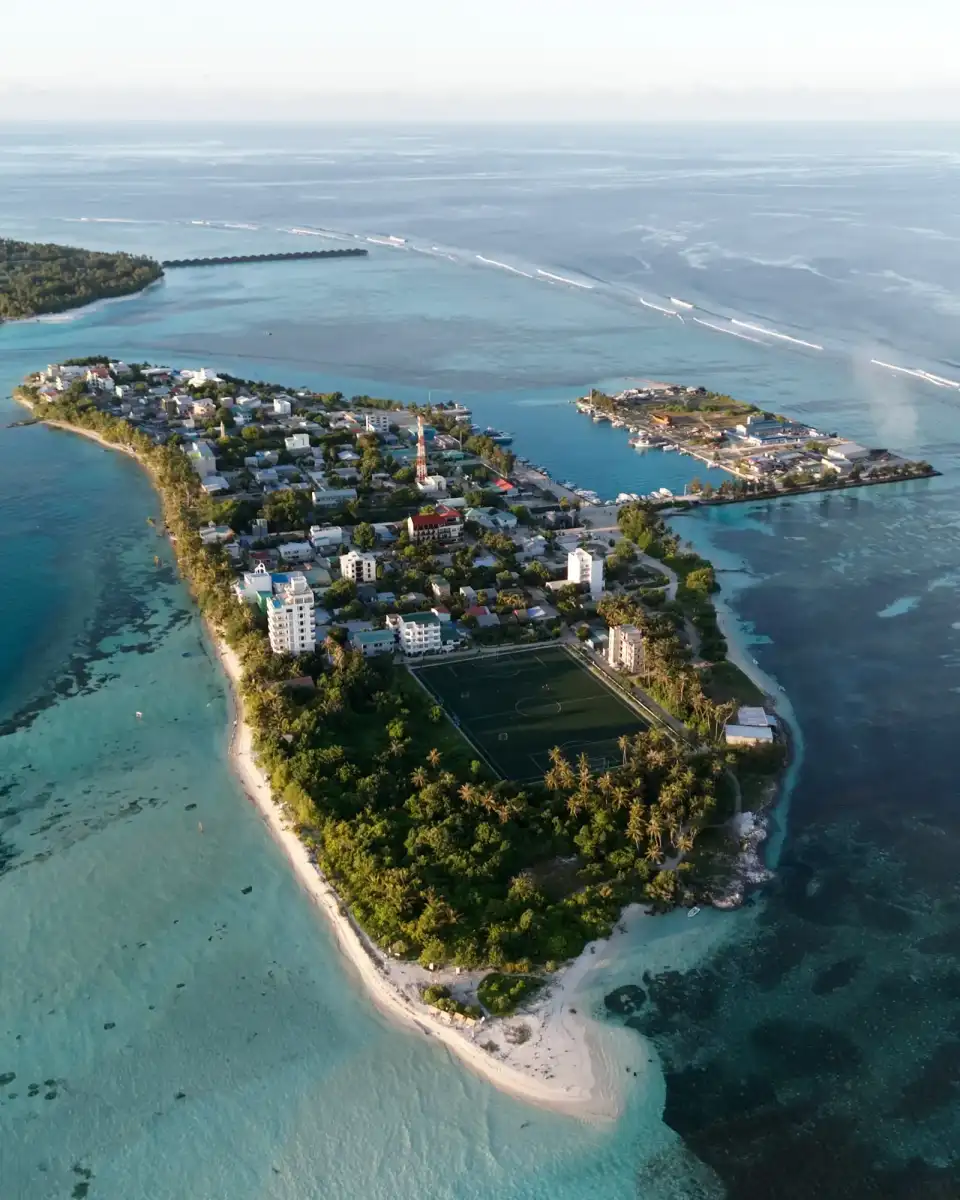
Hulhumalé is a planned town built on land reclaimed from the sea, right next to Velana International Airport and part of the wider Malé area. It has a long public beach, parks, mosques and plenty of places to eat, and it is the easiest place in the Maldives for a night before or after a stay on a local island. Think of it as a calm, modern Maldivian neighbourhood rather than a holiday island: local beach rules apply, and there is no alcohol.
What Hulhumalé is
Hulhumalé did not exist as an island until the late 1990s. The government’s Housing Development Corporation (HDC) began reclaiming it from a shallow lagoon in October 1997, and the first phase of reclamation and coastal protection was finished by June 2002. The first residents moved in on 12 May 2004, a community of just over 1,000 people.
Malé was running out of room, and Hulhumalé gave the country space for new homes, schools and offices. HDC raised the land to about 2 metres above mean sea level, higher than most natural Maldivian islands. If you’re curious about why that matters, our guide to sea level rise and the Maldives explains the bigger picture.
Phase 1 and Phase 2
- Phase 1 is the original, older part of town, next to the airport road. It has the main beach, Central Park, many low-rise streets and most of the small hotels and guesthouses aimed at visitors.
- Phase 2 was reclaimed later, from the mid-2010s, and is still growing. It is dominated by tall housing blocks, wide new roads and ongoing building work.
Official size figures vary: HDC has described Phase 2 as about 240 hectares, while a 2025 government announcement gave 194 hectares for Phase 1 and 251 for Phase 2.
The “youth city” plan
From the mid-2010s, the government promoted Hulhumalé as a “youth city”, where young Maldivians from the atolls could find housing, jobs and education. That vision shaped Phase 2. The 2022 census by the Maldives Bureau of Statistics counted 65,714 people living in Hulhumalé, about 35,900 in Phase 1 and about 29,900 in Phase 2. That makes it the second-largest community in the country after Malé itself.
Getting there from the airport
Hulhumalé sits just north of the airport island, Hulhulé, and the two are joined by road. You don’t need a boat.
- Public bus. RTL public buses run from the airport to Hulhumalé (and to Malé). They are the cheapest option and handy if you’re travelling light. Look for the bus stop outside the arrivals area.
- Taxi. Taxis wait outside arrivals and take you straight to your door. It is a short drive, usually well under half an hour even with traffic.
- Pick-up. Many places to stay offer an airport pick-up. Ask when you book.
The airport opened its new passenger terminal (Terminal 1) on 26 July 2025, so signs and layouts may differ from older online photos. Our guide to arriving at Velana International Airport walks you through the airport step by step, including immigration and the IMUGA arrival declaration.
From Hulhumalé, Malé is also reachable by road over the bridge from the airport island, by bus or taxi. See our Malé city guide if you want to spend a day in the capital.
Why it works so well as a stopover
Flights often land and leave at hours that don’t suit island transfers. Shared speedboats run to schedules, MTCC public ferries don’t sail on most routes on Fridays, and seaplanes need daylight. A night in Hulhumalé removes that stress.
It makes sense when:
- Your flight lands late in the evening or at night. Sleep near the airport and catch a morning boat to your island instead of waiting in the terminal.
- Your flight home leaves early in the morning. Come back from your island the afternoon before, so a late boat or bad weather can’t make you miss your flight.
- You arrive on a Thursday night or Friday. Friday is the weekly day of rest, with fewer boats and Friday midday prayers. One quiet night in Hulhumalé can be easier than chasing a Friday transfer.
- Sea conditions are rough. In the southwest monsoon (mid-May to November) crossings can be bumpy or delayed. A buffer night protects your international connection.
It is also a gentle first taste of local life. If you then head out to a local island such as Dhiffushi, about 37 km north-east of Malé and 40–50 minutes by shared speedboat, the change of pace feels even bigger. Our guide on how to get to Dhiffushi explains the options, and the plan your trip page brings it all together.
The beach and swimwear rules
Hulhumalé’s long beach runs along the eastern side of Phase 1. It is a public, man-made beach with shade trees and a promenade behind it. Locals come out in the late afternoon and evening, when families picnic and people swim fully clothed.
The key thing to know is that this is a local public beach, not a resort or a bikini beach.
- In late December, the Tourist Police and Neighbourhood Police ran an awareness programme for Hulhumalé guesthouses, asking them to tell guests that wearing bikinis is not permitted on public beaches (as reported by PSM News).
- Swim in shorts and a T-shirt, or a modest swimsuit with a cover-up, and cover shoulders and knees when you walk around town.
- Nude or topless sunbathing is not allowed anywhere in the Maldives.
- For regular swimwear, a local island with a designated bikini beach, such as Dhiffushi, is the easier choice.
Keep an eye on your belongings on the beach too. For more on what to wear, see our guide to what to wear in the Maldives.
For clear water and real snorkelling, you’ll want a local island further out.
Things to do in Hulhumalé
Hulhumalé isn’t a sightseeing destination; a day here is about walking, eating and watching everyday life.
Walk the beachfront
Go early for sunrise over the lagoon, or late afternoon when the heat softens. Planes coming in to land are part of the scenery.
Central Park and green spaces
HDC built Central Park in Phase 1 as a place for people to sit, play and exercise, with much of it closed to cars. HDC describes it as covering about 8 hectares, with leisure, recreation and play areas, an outdoor gym, a skating area and a large fountain near the mosque.
Mosques
Hulhumalé has several mosques, and you’ll hear the call to prayer five times a day. Admire them from outside; if you hope to go in, ask first, dress modestly, take your shoes off and avoid prayer times. Always ask before photographing people.
Food and cafés
Food ranges from small local cafés serving short eats (fried snacks such as gulha and bajiya) and sweet tea, to beachfront restaurants with grilled fish, curries and international dishes. Expect:
- No alcohol. Like every inhabited island, Hulhumalé is dry. Fresh juices, milkshakes and mocktails are everywhere. Our guide to alcohol in the Maldives explains where it is and isn’t allowed.
- Friday closures. Many places close for a while around Friday midday prayer.
- Prices in rufiyaa or dollars. Small cafés and shops may prefer rufiyaa (MVR); tourist-facing restaurants often accept US dollars and cards. A 10% service charge is commonly added to bills.
Our guide to Maldivian food and dishes to try will help you order with confidence.
Practical tips
- Taxes. Places to stay add Tourism GST (17% since 1 July 2025) and green tax (USD 6 per guest per night at guesthouses and hotels with 50 rooms or fewer on inhabited islands; USD 12 at larger ones), as set by MIRA. Check whether your quoted price includes them.
- Ramadan. During Ramadan, don’t eat, drink or smoke in public in daylight. Many cafés open after sunset, and the evenings are lively.
- Emergencies. The national emergency number is 911; police is 119, ambulance 102.
For wider planning, from boats and flights to ferries, see getting around the Maldives, and for life beyond the capital area, our guide to local islands.
Questions people ask
Is Hulhumalé worth visiting?
Yes, as a stopover. It is not a resort-style destination, but it is relaxed, safe and close to the airport, with a long public beach, parks and plenty of places to eat. One night here before or after your island stay takes the pressure off flight times and boat schedules, and gives you a glimpse of modern Maldivian everyday life.
Can you wear a bikini on Hulhumalé beach?
Generally, no. The main beach is a public local beach, and the Tourist Police have asked Hulhumalé guesthouses to tell guests that bikinis are not permitted on public beaches. Swim in shorts and a T-shirt or a modest swimsuit with a cover-up.
How far is Hulhumalé from the airport?
Very close. Hulhumalé lies just north of the airport island and is joined to it by road, so there is no boat involved. A taxi is a short drive, and RTL public buses run between the airport and Hulhumalé.
Is Hulhumalé an island or part of Malé?
Both, in a way. Hulhumalé is its own reclaimed island, built from 1997 onwards, but it is administered as part of Malé City and is joined by road to the airport island and, over the bridge, to Malé. It is often described as a suburb or satellite town of the capital.
Can you drink alcohol in Hulhumalé?
No. Hulhumalé is an inhabited island, and alcohol is not sold or allowed on inhabited islands in the Maldives. It is only available at licensed resorts, the airport island hotel and liveaboard boats. Do not bring alcohol into the country, as customs will hold it. Fresh juices, mocktails and good coffee are easy to find all over town.
Should I stay in Hulhumalé or Malé before my island?
For most travellers, Hulhumalé is the easier choice. It is closer to the airport, quieter, greener and has a beach. Malé is busier and more urban, with the fish market, historic mosques and museums. If your main aim is a calm night before an early boat or flight, pick Hulhumalé; if you want city sights, consider a day in Malé.

