


Walking and cycling on local islands in the Maldives
Local islands are small and flat, so walking and cycling are the easiest ways to explore. Lanes, bicycles, heat, dress and night-time tips.
 By Dhiffushi Island Council8 min readUpdated
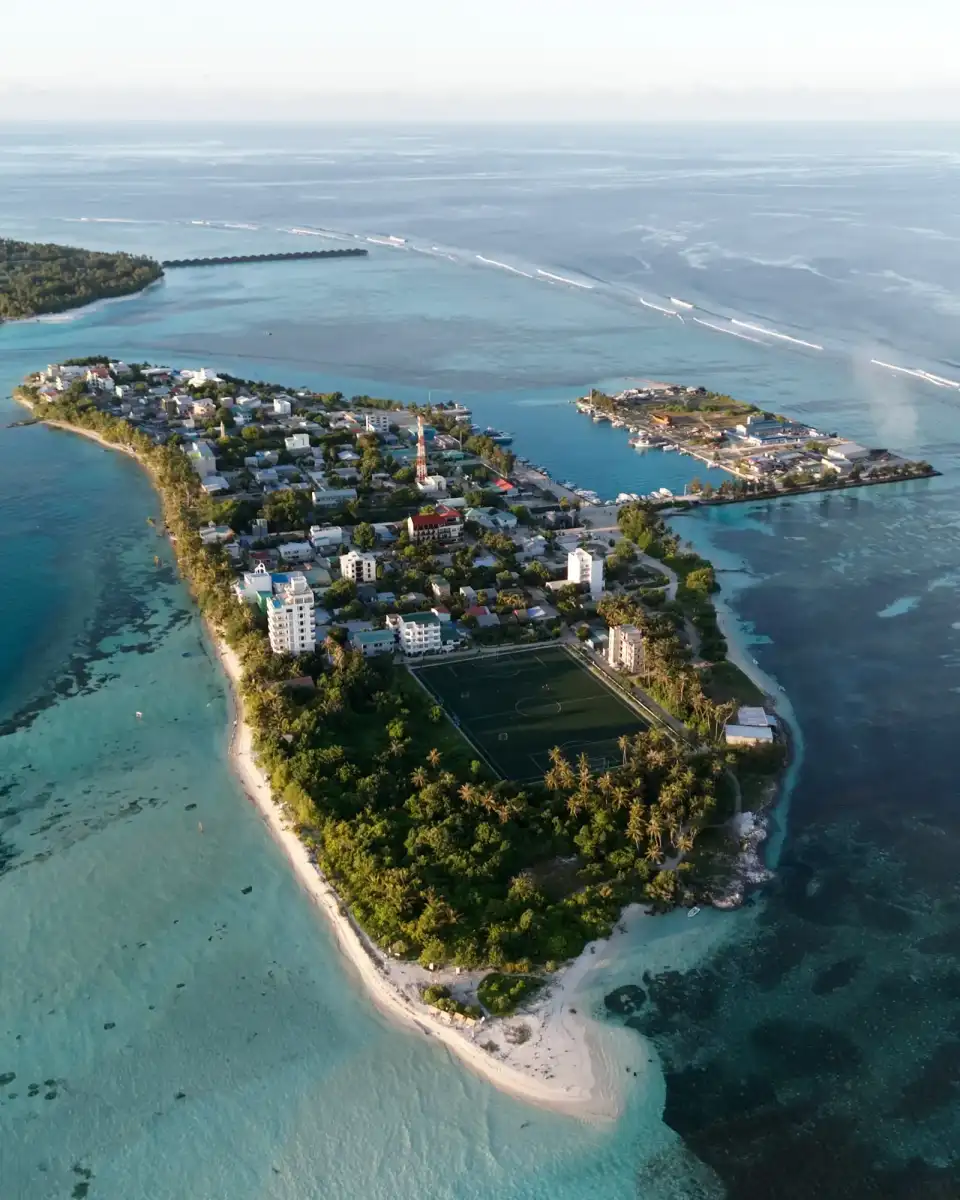
Most local islands in the Maldives are small, flat and quiet, so you can get almost everywhere on foot or by bicycle. On a typical island you can cross from one shore to the other in well under half an hour, with the harbour, mosque, shops and beaches all close together. Walk early or late to avoid the heat, dress modestly in the village, and share the narrow lanes with motorbikes and buggies.
Why local islands suit walking
Maldivian islands are low coral islands, built from sand and reef rubble, so they are almost perfectly flat. There are no hills to climb.
Most inhabited islands are also compact. Homes, the mosque, the school, the council office, small shops and cafés cluster around a grid of lanes, with the harbour on one side and beaches on the others. On many islands the whole village fits into an area you can circle in an afternoon stroll.
Dhiffushi is a good example. The island is small enough to cross on foot in about 20 minutes, and sandy lanes and coral-stone paths link the homes, mosque, school, shops and harbour. Our village walk page describes a simple loop, and the island map shows where everything is.
What the lanes are like
- Sand lanes. Many village streets are packed white sand. They are pleasant barefoot in the cool of the morning but can be soft and hot by midday.
- Paved roads. Busier islands often have paved main roads, with sand side streets.
- Coral-stone walls. Older compounds are bounded by walls of coral stone.
- Beach paths. Tracks run along the shore and through coastal vegetation to the beaches and, on some islands, to a bikini beach set apart from the village.
Pavements are rare. People, bicycles, motorbikes and small vehicles all share the same space, so keep to the side and stay alert.
Cycling on a local island
Bicycles are a normal way to get around on many islands, used by islanders of all ages for short trips. For visitors, a bicycle makes it easy to reach a far beach or explore the shoreline in a morning.
Getting a bicycle
There is no national bike-hire scheme for local islands. On many islands, guesthouses lend or hire bicycles to their guests, so ask where you are staying. Check the brakes, tyres and saddle before you set off, and ask for a lock if you plan to leave it outside a café or on a beach path.
Riding on sand
Soft sand is hard work on two wheels. Wider tyres help, and pushing the bike for a stretch is normal. Packed sand early in the morning, after rain or close to the water’s edge is usually firmer. Avoid riding on the beach itself where people are relaxing.
Riding courteously
- Ride slowly in the village, especially near the school, the mosque and the harbour.
- Give way to people on foot, older residents and children at play.
- Ring your bell gently before passing, and don’t ride two abreast.
- Park out of the way, not across a doorway or a gate.
Sharing the road: motorbikes and buggies
Even on small islands, motorbikes are the main vehicle for islanders, alongside buggies and small pick-up trucks. Guesthouses usually arrange for luggage to be carried from the harbour by buggy or van, so you do not need to drag a suitcase through the sand.
Most visitors never drive on a local island, and you do not need to. Walking or cycling is easier and kinder to the village. If you are thinking about hiring a scooter in Malé or Hulhumalé instead, our guide to driving and scooters in the Maldives explains the licence and helmet rules. A new Land Transport Act was ratified on 31 August 2026, so check the latest rules before you ride anything with an engine.
Walking and cycling in the Malé area
Greater Malé is very different from an outer island. Malé’s narrow streets are busy with motorbikes, so walking is the easiest way to see the city.
Hulhumalé, the planned city next to the airport, has wider streets and a long beachfront. The Hulhumalé Development Corporation began painting marked bicycle lanes on main roads such as Nirolhu Magu in late 2022, as part of a 2015 transport plan (Edition, Nov 2022). See our Hulhumalé guide for more on getting around there.
Some atolls, such as Addu and Laamu, have link roads joining several islands, where distances are longer and traffic is faster.
Beat the heat
The Maldives is hot all year, with air temperatures around 30–31°C, and the sun is strong close to the equator. A short walk at noon can feel much longer than it looks on the map.
- Go out early. Sunrise is around 6am all year, and the first two hours are the coolest and calmest.
- Head out again in the late afternoon, when the light softens and the village comes to life.
- Carry water, wear a hat and use reef-safe sunscreen.
- Rest in the shade of trees, and don’t sit or park a bicycle right under a coconut palm.
Our sun safety guide has more on UV, heat and staying well. After heavy rain, sand lanes can flood for a while.
Dress and behaviour in the village
Local islands are home to Muslim communities, and the village has its own customs. When walking or cycling through the village:
- Cover shoulders and knees. Swimwear is only for the designated bikini beaches. Put a shirt and shorts or a wrap on before you leave the beach.
- Mind prayer times. Shops and cafés close for a short time at each prayer, and for longer around Friday midday prayer. Keep noise down near the mosque.
- Ramadan. During Ramadan, don’t eat, drink or smoke in public in daylight on local islands. Carry water in a bag and drink out of sight.
- No alcohol. Alcohol is not allowed on local islands, including on beaches and in public spaces.
- Keep affection private. Public displays of affection are best avoided.
Our dress code guide explains what to wear in more detail, and the local island etiquette guide covers everyday manners on Dhiffushi.
Photography on your walk
Village lanes and boatyards make good pictures, but people live here.
- Ask before photographing people, especially women and children.
- Don’t photograph inside homes or over walls into private compounds.
- Be discreet near the mosque and during prayer times.
See our guide to photography in the Maldives for drone rules and more tips.
After dark
Evenings are a lovely time to walk. The heat fades, neighbours sit out to chat and children play by the beach. Our guide to evenings on a local island has more ideas.
Street lighting on small islands can be patchy, especially on paths to the beaches. We could not find an official rule on bicycle lights in the Maldives, but use a front and rear light or at least a torch, and wear something pale. Watch for motorbikes, which can come quickly round corners. Mosquitoes are more active at dusk, so use repellent.
Walking safely
A few common-sense points help:
- Wear sandals on paths, as there may be sharp coral, shells or thorns.
- Don’t walk on reef flats at low tide; it damages coral and you can cut your feet.
- Respect fenced plots and gardens.
- In an emergency, call 119 for the police or 102 for an ambulance; 911 is the single national emergency number.
A simple village walk in Dhiffushi
If you are staying on Dhiffushi, start at the harbour early in the morning, when boats come and go and the light is soft. Wander inland past the mosque and the school, then through the lanes of coral-stone walls towards the boatyards. Finish at the eastern shore, where Dhiffushi, the easternmost inhabited island of the Maldives, is one of the first places to see the sun rise. Take your time; the point is to slow down. Our village walk page has the details.
Questions people ask
Can you walk around a local island in the Maldives?
Yes. Most inhabited islands are small and flat, so walking is the easiest way to get around. On many islands you can cross from one side to the other in 15 to 30 minutes. On Dhiffushi it takes about 20 minutes. Walk early in the morning or late in the afternoon to avoid the midday heat, and cover shoulders and knees in the village.
Can I hire a bicycle on a local island?
On many local islands guesthouses lend or hire bicycles to their guests, so ask where you are staying. There is no national hire scheme for outer islands. Check the brakes and tyres first, expect soft sand on some lanes, and ride slowly through the village.
Do I need a helmet to cycle in the Maldives?
We could not find an official rule requiring helmets for bicycles. The helmet law that is in force applies to motorbike and scooter riders on faster roads, where the limit is above 30 km/h, such as the Sinamalé Bridge. On a quiet local island most people cycle without one, but wearing a helmet is still sensible, especially for children.
What should I wear when walking around a local island?
Cover your shoulders and knees when you are in the village, at the harbour or in shops and cafés. Light, loose cotton or linen is the most comfortable in the heat. Swimwear is only for designated bikini beaches, so pack a shirt and shorts or a wrap to put on when you leave the beach. Sandals with a good grip are useful on sand and coral paths.
Is it safe to walk on a local island at night?
Local islands are generally calm and friendly in the evening, and many families are out and about after dark. Lighting can be patchy on paths to the beach, so carry a torch or use your phone light. Watch for motorbikes on the lanes, use mosquito repellent at dusk, and let your guesthouse know if you are heading to a quiet part of the island.
Are local islands suitable for wheelchair users?
It depends on the island. Flat terrain helps, but many lanes are soft sand, and there are few pavements or ramps. Paved main roads are easier where they exist. Ask your guesthouse about the route from the harbour, the room entrance and the nearest firm path before you book. Our accessible travel guide has more planning tips.

