


Driving and scooters in the Maldives: licences and rules
Most visitors never drive in the Maldives. If you want a scooter in Malé or Hulhumalé, here is the 90-day licence rule, the helmet law and what to check first.
 By Dhiffushi Island Council8 min readUpdated
Most visitors to the Maldives never need to drive. Local islands are small enough to walk, and you travel between islands by boat or plane. If you do want to ride a scooter in Malé or Hulhumalé, the law lets visitors with a valid licence from a country the government recognises drive for up to 90 days. Check that the rules cover your licence first, wear a helmet, and make sure your insurance covers riding.
Do you need to drive in the Maldives at all?
For most trips, no. The Maldives is a country of islands, and the “roads” that matter most are sea channels. You get between islands by speedboat, public ferry, domestic flight or seaplane. Our guide to getting around the Maldives covers all of these.
On land, the picture is simple:
- Local islands are mostly small. Guesthouse guests walk almost everywhere, and many islands have sandy lanes rather than paved roads.
- Resorts are private islands with their own rules. Staff use buggies and bicycles, and guests do not drive.
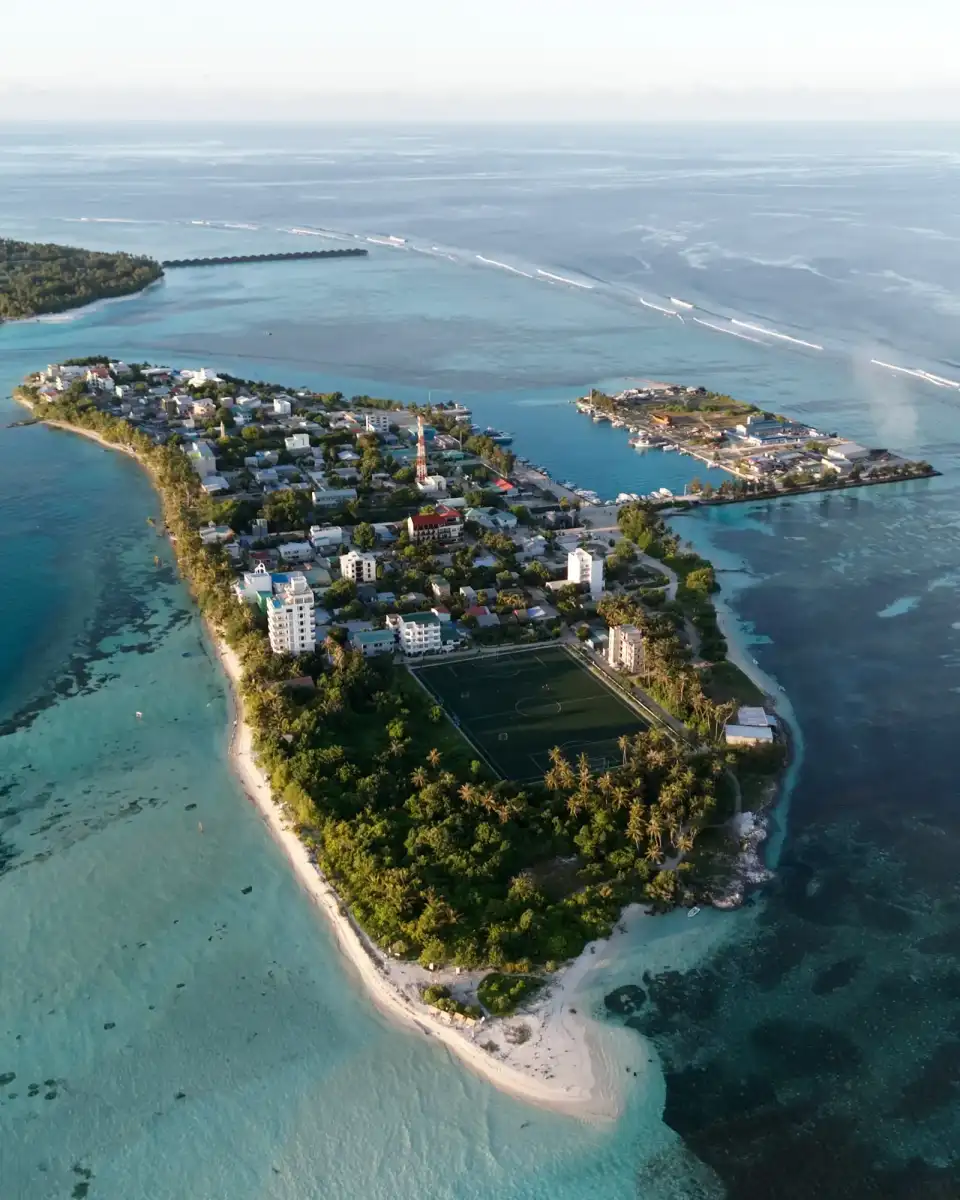
- Greater Malé (Malé, Villimalé, Hulhulé and Hulhumalé) is where nearly all the traffic is. Malé is one of the most crowded small cities anywhere, and its streets are packed with motorbikes.
- A few longer islands and linked islands in the outer atolls have real roads, for example the link roads in Addu City and Laamu Atoll.
Only a few visitors drive. Most are people staying longer in Hulhumalé, or travellers exploring a linked atoll such as Addu City or Laamu.
Can tourists drive with a foreign licence?
Yes, within limits. The rules are set by Parliament and the ministry responsible for transport.
The 90-day rule
Under the Land Transport Act, the transport ministry may accept valid driving licences issued by countries it approves, without the holder getting a Maldivian licence, for a period of 90 days. Ministry of Transport and Civil Aviation notices in the Government Gazette in 2021 listed the approved countries. The list grew over that year from 25 to 27 countries, and included, among others, the United Kingdom, the United States, Germany, Switzerland, Belgium, Japan, China, India, Singapore and the United Arab Emirates.
What this means for you:
- If your licence is from an approved country and is valid, you can drive for up to 90 days.
- If your country is not on the list, your licence is not accepted on its own.
- The list has changed before and may change again, so check the current list with the transport ministry before you rely on it.
The new Land Transport Act (2026)
Parliament passed a new Land Transport Act on 26 August 2026, and the President ratified it on 31 August 2026 (President’s Office). It replaces the 2009 Act and comes into force 30 days after it is published in the Government Gazette.
As reported by Atoll Times, the new Act keeps the same basic idea for visitors:
- Holders of a foreign licence may drive while their licence is valid, as long as their stay does not exceed 90 days.
- Anyone staying longer needs a Maldivian licence.
- The transport ministry must publish a list of the foreign licences it recognises.
- Vehicle insurance becomes mandatory, with proof needed when a vehicle is first registered.
The regulations under the new Act are still being written, so some details may shift. If you plan to drive, ask the transport ministry or the Transport Authority for the current position.
Staying longer than 90 days
People who live or work in the Maldives need a Maldivian licence. Since April 2025, foreigners are no longer given a Maldivian licence just because they hold a foreign one. The Transport Minister announced that they must pass the same driving assessment as other applicants, and the licence is only valid for as long as their foreign licence (Atoll Times and PSM, April 2025). This mostly affects residents and long-stay workers, not holidaymakers.
What about an International Driving Permit?
We could not confirm from an official source how the Maldives treats an International Driving Permit for visitors. The official rule is about a valid licence from an approved country. If you have one, carry it anyway, along with your national licence and passport.
Helmets and safety rules
When a helmet is required by law
A helmet is compulsory on the faster roads where the speed limit is above 30 km/h. Under an amendment to the Regulation on Speed Limit for Land Vehicles, these include:
- the Sinamalé Bridge between Malé and Hulhulé
- the Hulhumalé highway
- the Addu City link road
- the Laamu Atoll link road
The rule applies to riders of motorcycles and scooters and to anyone riding pillion. Helmets must meet the official standard, and police have said that a loose strap, a tinted visor or a hidden face can lead to a fine.
Everywhere else
On most other roads, including Malé’s inner streets, the law has not required a helmet. The Transport Authority has advised riders to wear one anyway, because most fatal crashes involve head injuries. Rules can change, so treat a helmet as normal, not optional.
Other rules worth knowing
- Keep off pavements. It is against the law to drive or park any vehicle on pavements and areas set aside for pedestrians. Police in Hulhumalé tow vehicles parked there.
- No drink-driving, and no drugs. Alcohol is not allowed on local islands at all, and narcotics are illegal everywhere. Do not ride after drinking on a resort or liveaboard trip. Read our guide to alcohol in the Maldives.
- Carry your documents. Keep your licence and passport (or a copy) with you when you ride.
Renting a scooter in Malé and Hulhumalé
Scooter rental is possible in Greater Malé, especially in Hulhumalé, which has wider roads and newer streets. We do not list or recommend any rental businesses, but here is what to check before you hire:
- Your licence category. Make sure your licence covers motorcycles or scooters, not just cars.
- Your licence’s country. Make sure it is on the ministry’s approved list.
- Insurance. Ask what the vehicle’s insurance covers, and check your own travel insurance. Many policies exclude scooters, or only cover you with a helmet and a valid motorcycle licence.
- Helmets. Ask for a proper helmet for you and any passenger.
- The bike’s condition. Check brakes, lights and tyres before you set off.
What riding in Malé is like
Malé is busy, tight and fast-moving. Streets are narrow, motorbikes weave through gaps, and pedestrians step out between parked bikes. Even confident riders find it hard work. For a short visit, walking and taxis are usually easier. Our Malé city guide and Hulhumalé guide explain other ways to get around, including public buses.
Getting around on a local island
On most local islands, you will not need a vehicle at all.
- Walking is the main way to get around. Many islands take only a short walk from one side to the other.
- Bicycles are common. Some guesthouses lend them; ask when you book.
- Buggies and small vans carry luggage from the harbour and take older residents around.
- Motorbikes are the family car for many islanders, so expect them on the main lanes.
Ride slowly in villages. Children play in the lanes, people walk home from the mosque at prayer times, and sand on the road makes braking harder. Dress modestly when you ride or walk through the village, just as you would on foot. Our local island etiquette guide explains why.
Dhiffushi as an example
Dhiffushi, on the eastern rim of North Malé Atoll, is a typical small local island. Visitors arrive by shared speedboat in about 40–50 minutes from Malé or the airport, and then explore on foot. Our village walk and island map show how close everything is: the harbour, the mosque, the beaches and the guesthouses.
Questions people ask
Can I drive in the Maldives with my UK or US licence?
The United Kingdom and the United States were on the transport ministry’s list of approved countries in 2021 notices. Holders of a valid licence from an approved country may drive for up to 90 days without a Maldivian licence. A new Land Transport Act was ratified in August 2026, and the ministry must publish an updated list, so check it before you drive.
Do I need an International Driving Permit in the Maldives?
We could not find an official statement on how the Maldives treats International Driving Permits for visitors. The official rule is based on holding a valid licence from a country the transport ministry approves. If you have a permit, carry it with your national licence and passport, and check with the transport ministry before you ride.
Is it compulsory to wear a helmet on a scooter in the Maldives?
It is compulsory on faster roads where the limit is above 30 km/h. These include the Sinamalé Bridge, the Hulhumalé highway and the link roads in Addu City and Laamu. Pillion passengers must wear one too. Elsewhere the law has been looser, but the Transport Authority advises wearing a helmet on every ride.
Can I rent a scooter on a local island?
On most local islands you don’t need one. They are small, and walking or cycling is easier and kinder to the village. Islanders ride motorbikes on the main lanes, but scooter hire for visitors is mainly found in Hulhumalé and Malé. If your guesthouse offers a bicycle, that is usually the best way to explore.
Are there taxis in the Maldives?
Yes, in Greater Malé, where taxis link Malé, Hulhumalé and the airport island. Public buses also run between Malé, the airport and Hulhumalé. On local islands there are no taxis in the usual sense, but guesthouses usually arrange for luggage to be carried from the harbour by buggy or van.
What happens if I stay longer than 90 days?
Once your stay passes 90 days, your foreign licence alone is no longer enough. You would need a Maldivian licence, and since April 2025 foreigners must pass the same driving assessment as other applicants. The licence is only valid for as long as your foreign licence. The tourist visa is issued for 30 days, so this mainly affects residents and long-stay workers.

