Maldives in June: weather, sea, surf and what to expect
June is the first full month of the southwest monsoon: showers between sunny spells, livelier seas, big surf, mantas on the eastern atolls and quiet, good-value islands.
 By Dhiffushi Island Council7 min readUpdated
June is the first full month of the southwest monsoon in the Maldives. Expect warm sea, short heavy showers between sunny spells, a stronger wind and some rough days on the water. It is also one of the quietest, best-value months of the year, with the surf season in full swing and mantas feeding on the eastern sides of the atolls.
June weather in the Maldives
By June the monsoon, known locally as *hulhangu*, has usually set in across the whole country. The Maldives Meteorological Service describes the southwest monsoon as the wet season, normally running from mid-May to November, with more rain than the dry northeast monsoon.
Rain
Rain usually comes as showers and squalls with sunny spells between them, not all-day drizzle. A downpour can pass in half an hour and leave a bright afternoon. A run of two or three unsettled days is still normal.
How much rain depends on where you are. As reported in national news, the Met Service’s 1991–2020 averages for June are:
- North (Hanimaadhoo, Haa Dhaalu): about 229 mm
- Malé area, central atolls: about 146 mm
- South-central (Kadhdhoo, Laamu): about 112 mm
So June tends to be wetter in the north than around Malé or further south. Every year differs.
Sunshine, heat and wind
- Sunshine: outside January to March, the Met Service gives about 7 to 9 hours a day.
- Heat: air temperatures stay around 30 to 31°C by day, with warm nights. The sea is around 28 to 29°C.
- Wind: the breeze blows from the south-west and west and is noticeably stronger than earlier in the year.
The sea in June
The sea is the biggest difference between June and the dry season.
- Swell: long-period swell from the southern Indian Ocean reaches the outer reefs, and open channels between islands can be choppy.
- Boat trips: speedboat crossings can be bumpy. On rough days, excursions, ferries and small boats are sometimes delayed or cancelled. Leave a spare day before your flight home.
- Visibility and currents: visibility can drop on windy days and where plankton is thick, and currents run hard in the channels, so go with a local guide.
- Sheltered spots: lagoons and the sheltered side of an island are often calm enough for snorkelling when the outer reef is not.
Mantas on the eastern sides
Research by the Manta Trust shows that mantas follow the plankton, and the plankton follows the monsoon. In the southwest monsoon, from about May to November, mantas tend to feed on the eastern sides of the atolls. It is also the season for Hanifaru Bay in Baa Atoll, a protected bay with strict rules where large numbers can gather on the right tides. By June the season is well under way. Sightings are never guaranteed.
Whale sharks are found all year in the South Ari Marine Protected Area, according to the Maldives Whale Shark Research Programme, though rougher seas can make the trip less comfortable. Our marine life guide covers where to look and how to swim with them responsibly.
Surfing in June
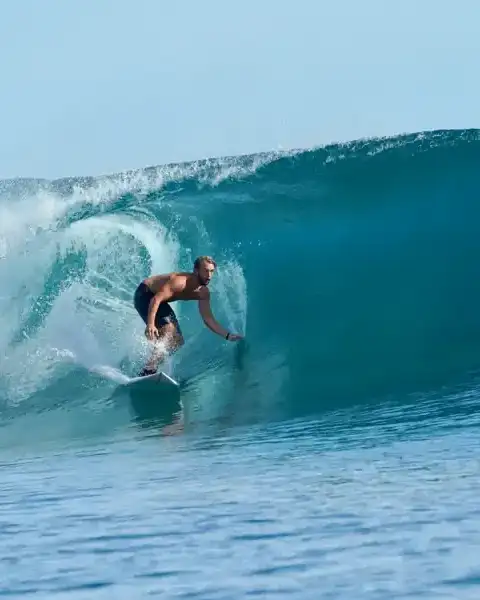
June opens the heart of the surf season. Surf forecasters and local surf guides generally describe June to August as the time of the biggest and most consistent swell, with busier line-ups at the best-known breaks.
That suits experienced surfers. Beginners should book a lesson with a qualified guide on a small day, or choose the shoulder months. Every wave breaks over live coral, so wear reef booties and never surf alone.
Read surfing in the Maldives for the regions and surfing near Dhiffushi for the breaks on the North Malé rim.
What’s on in June 2027
Islamic New Year
Islamic New Year (1 Muharram 1449) is expected around 5 to 7 June 2027, based on astronomical estimates. The exact date depends on the moon sighting and is confirmed only shortly before. It is a quiet religious public holiday rather than a festival: government offices and banks close, but guesthouses, cafés and most trips carry on.
Fridays and holidays elsewhere
On Fridays, shops and cafés on local islands close for a while around midday prayers, and most public ferry routes do not run. Late in the month, school holidays begin in parts of Europe, so visitor numbers start to rise into July and August. See our festivals and public holidays guide for the full 2027 calendar.
Crowds and prices in June
June is one of the quietest months in the Maldives. Official arrival figures show the country is busiest from December to March, with May and June among the quietest months.
- Good value: many guesthouses keep lower rates through the wet season, and rooms are easier to find. Rates vary by island and are never guaranteed.
- Taxes still apply: the 17% Tourism GST (since 1 July 2025) and the green tax are added to your bill, and a 10% service charge is common.
What to do in June
- Surf: the main reason many people come in June.
- Look for mantas: ask locally about manta trips on the eastern rims of the atolls.
- Snorkel: pick calm mornings and sheltered lagoons.
- Dive: diving goes on all year, but expect stronger currents and some rough surface days.
- Kitesurf: stronger, steadier monsoon winds suit experienced riders.
- Slow down: a rainy hour is a good excuse for a long lunch or an evening football match with the island.
On a local island in June: Dhiffushi
Dhiffushi is a local island on the eastern rim of North Malé Atoll, about 37 km north-east of Malé, and the easternmost inhabited island in the Maldives. In June it shows both sides of the season.
- Mantas: following the Manta Trust’s research, the eastern side of the atolls is where mantas tend to feed in the southwest monsoon, so June is a good month to ask on the island about manta trips.
- Surf: the island has no surf break of its own, but well-known North Malé breaks are a short boat ride south.
- Kitesurfing: the wide, shallow lagoon can suit riders who can already kite on their own when the wind is right; see kitesurfing on Dhiffushi.
- Getting there: the shared speedboat from Malé or the airport takes about 40 to 50 minutes, but it can be bumpy in the monsoon, and the public ferry does not run on Fridays. See how to get to Dhiffushi.
Local island norms apply all year: no alcohol, and swimwear on the bikini beach only. Read the best time to visit Dhiffushi for a month-by-month view of the island.
Packing for June
- A light rain jacket or compact umbrella for the squalls.
- A dry bag for your phone, camera and documents on boat trips.
- Seasickness tablets if you are prone to it, as crossings can be choppy.
- Quick-drying, light clothes that cover shoulders and knees for the village.
- Reef-safe sun cream and a hat: the sun is fierce between showers.
Before and after June
May is the month the monsoon arrives, with Eid al-Adha in 2027: see the Maldives in May. July brings Independence Day and the start of the European summer holidays: see the Maldives in July. To compare all twelve months, read the best time to visit the Maldives.
Questions people ask
Is June a good time to visit the Maldives?
Yes, if you can live with some rain and choppier seas. June is warm, green and quiet, often good value, and right in the surf and manta seasons. Showers usually pass quickly between sunny spells. It is less ideal if you want glassy water every day, as boat trips can be bumpy and are sometimes cancelled.
Does it rain all day in the Maldives in June?
Usually not. The Maldives Meteorological Service notes that wet-season rain tends to fall as showers with sunny spells between them. You may get a run of two or three unsettled days, especially when a weather advisory is out, so build some flexibility into your plans.
Is the sea rough in the Maldives in June?
It can be. The southwest monsoon brings stronger winds and swell, so open channels are often choppy and speedboat crossings can be bumpy. Lagoons and sheltered sides of islands are usually calmer. On rough days, excursions and small boats may be delayed or cancelled, so leave a spare day before your international flight home.
Can you see manta rays in the Maldives in June?
Often, yes, if you are in the right place. Research by the Manta Trust shows mantas tend to feed on the eastern sides of the atolls in the southwest monsoon, from about May to November, and this is the season for Hanifaru Bay in Baa Atoll. Ask locally about manta trips. No sighting is ever guaranteed, and you should keep at least 3 metres away.
Is June good for surfing in the Maldives?
Yes. Surf forecasters and local surf guides generally describe June to August as the time of the biggest and most consistent swell. That suits experienced surfers, but the best-known breaks can be crowded. All the waves break over live coral, so beginners should take a lesson with a qualified guide on a small day rather than paddle out alone.