Surfing Dhiffushi: North Malé surf breaks and season
The North Malé surf breaks a short boat ride from Dhiffushi: which waves are open to all, when the swell arrives, skill levels, boats, boards, reef safety and rough costs.
 By Dhiffushi Island Council7 min readUpdated
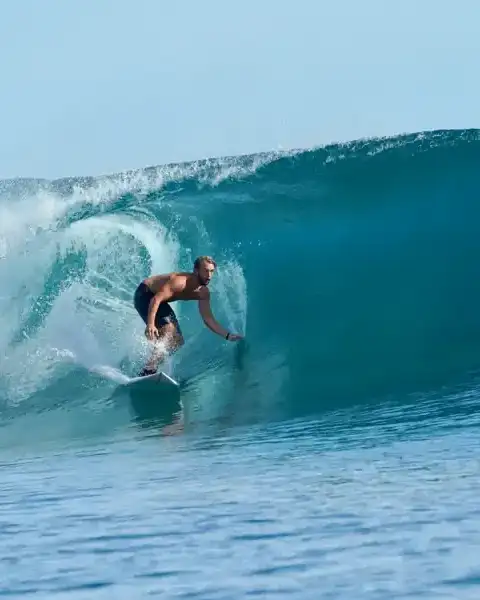
Surfing Dhiffushi means taking a boat. The island has no surf break of its own, but some of the best-known North Malé surf breaks are a short ride south: Chickens and Cokes near Thulusdhoo, Jailbreaks off Himmafushi, and Sultans and Honky’s at Thamburudhoo. The season runs from about March to October, with the most consistent swell usually in June to August.
Where are the surf breaks near Dhiffushi?
Dhiffushi sits on the eastern rim of North Malé Atoll. The waves break on reef passes further down the same rim. All are reef breaks, not beach breaks, so the water over the coral can be shallow.
Chickens
A long, fast left that peels across the channel from Thulusdhoo. On a good swell, rides can stretch for hundreds of metres, with hollow sections towards the end. It is usually rated intermediate and above. Smaller days can suit improving surfers and longboarders. See our Chickens page.
Cokes
A powerful, hollow right off Thulusdhoo, named after the island’s Coca-Cola plant. The take-off is steep and the reef is shallow. Treat it as a wave for experienced surfers, especially when the swell is up. More on our Cokes page.
Jailbreaks, Sultans and Honky’s
Jailbreaks is a long right off Himmafushi that tends to line up consistently. Sultans is a world-class right on Thamburudhoo, and Honky’s is the left on the other side of the same reef. When the wind spoils one, the other is often clean, so they work as a pair. Expect company at Sultans in peak season. See Jailbreaks, Sultans and Honky’s.
Other names you’ll hear
Boat crews also visit Ninjas, a gentler right that suits intermediates and longboarders, and Tombstones, a heavier right near Jailbreaks for experienced surfers.
Which breaks are off-limits?
Most North Malé breaks are open to anyone who arrives by boat. Two well-known lefts are not:
- Pasta Point is surfed only by guests of the resort it faces, who buy a surf package. Numbers are capped at about 30 surfers a day.
- Lohis works the same way for guests of its neighbouring resort, with a cap of about 45 surfers a day.
Reports from 2026 confirm both still work this way, despite a 2014 rule change that was meant to open popular breaks to everyone.
Sultans and Honky’s were once at risk too, until Maldivian surfers campaigned against an exclusive lease. In 2020 Thamburudhoo was given protected status, and both waves stay open to all.
Chickens now has a resort on the island beside it. Recent guides still list it as public, reached by boat.
When is the surf season?
The south-west monsoon brings Indian Ocean groundswell into the central atolls from about March to October. July and August usually bring the biggest, most consistent waves, often in the 4–8 ft range. They also bring the biggest crowds.
| Period | What to expect |
|---|---|
| Mar–Apr | Season starts; smaller, friendlier waves and fewer surfers |
| May | Swell building; weather becoming more changeable |
| Jun–Aug | Most consistent and largest swell; busiest line-ups |
| Sep–Oct | Swell easing; quieter, good for intermediates |
| Nov–Feb | Inconsistent; flat spells are common |
Wind, tide and swell direction decide which break is working on any given day. A good boat crew will choose for you. For weather by month, rain and Ramadan dates, see our best time to visit guide.
What level do you need?
Be honest with yourself. These are fast waves over live coral, often with currents.
- Beginners: the main breaks are not learner waves. If you are starting out, book a lesson with a qualified guide who will pick a gentler spot on a small day.
- Intermediates: Chickens, Ninjas, Jailbreaks and Honky’s on smaller days are the usual choices.
- Advanced: Cokes and Sultans on a solid swell, plus Tombstones.
Lessons
Surf guides on Thulusdhoo offer beginner coaching with boat transfers included. They choose between Chickens, Ninjas, Sultans or Honky’s depending on the conditions. On Dhiffushi, ask your guesthouse or a water-sports centre whether they can arrange a qualified surf instructor.
Getting a surf boat from Dhiffushi
You have two choices.
Stay on Dhiffushi and take day boats. Ask your guesthouse or a tour desk to arrange a surf boat (dhoni or speedboat). Thulusdhoo is about 8 km away.
Base yourself in Thulusdhoo or Himmafushi. Both are surf-focused local islands. Surf boats run daily from Thulusdhoo, and Cokes can be paddled to from the shore there. If surfing is the whole point of your trip, staying closer cuts boat time.
For ferries and speedboats between islands, see how to get to Dhiffushi. Remember the public ferry does not run on Fridays.
Boards: hire or bring your own?
Board hire is available on Thulusdhoo. Recent guides quote about US$20–30 a day.
If you bring your own:
- Flights: most airlines charge for surfboards as sports equipment, and fees and size limits vary. Check before you book.
- Speedboats: tell your transfer operator in advance that you are carrying a board bag.
Reef safety and first aid
Coral cuts are the most common surf injury here. They get infected quickly in the heat.
- Wear reef booties, and think about a helmet at shallow breaks such as Cokes.
- Wear a rash vest and use reef-safe sunscreen. There is little shade on a surf boat.
- Never stand on the reef. It hurts you and kills coral.
- Watch the currents in the channels. Never surf alone.
- Clean any cut straight away with fresh water and antiseptic, and keep it covered.
Dhiffushi Health Centre treats minor injuries and gives first aid. Serious cases go to Malé. Bring travel insurance that covers surfing and medical evacuation. In an emergency, call the police on 119.
Surf etiquette
- One surfer per wave. The surfer closest to the peak has priority.
- Respect Maldivian surfers. Many grew up on these waves.
- Give way to boats, and listen to your crew.
On land, these are local Muslim islands. Cover shoulders and knees in the village, keep swimwear for bikini beaches and the boat, and remember there is no alcohol. Things go quiet around Friday midday prayers.
Rough costs
Prices change, so treat these as a guide only (2025–2026 reports from Thulusdhoo):
- Boat to Chickens from Thulusdhoo: about US$10 per person per session
- Boat to Sultans from Thulusdhoo: about US$10 per person, often with a minimum group size
- Board hire: about US$20–30 a day
From Dhiffushi the trip is longer, so expect to pay more. Agree a per-person price before you go; most guesthouses can help.
Questions people ask
Is there surf on Dhiffushi itself?
No. Dhiffushi has no recognised surf break off its own shore. The nearest well-known waves are Chickens and Cokes near Thulusdhoo, about 8 km away. Jailbreaks, Sultans and Honky’s are further south in North Malé Atoll. All are reached by boat, which your guesthouse or a tour desk on Dhiffushi can arrange for you.
When is the best time for surfing near Dhiffushi?
The season runs from about March to October, during the south-west monsoon. June to August usually brings the biggest, most consistent swell, and the busiest line-ups. March, April, September and October tend to be quieter, with smaller waves that suit intermediates. November to February is unreliable, with frequent flat spells.
Can beginners surf in North Malé Atoll?
Yes, but not alone, and not on the famous breaks at full size. These are reef breaks with sharp coral and currents. Book lessons with a qualified local guide, who will choose a gentler spot on a small day. Learn to fall flat, wear booties, and never stand on the reef.
Can I surf Pasta Point or Lohis from Dhiffushi?
No. Pasta Point and Lohis are reserved for guests of the resorts beside them, who buy surf packages, and daily surfer numbers are capped. Boats from local islands go instead to the public breaks: Chickens, Cokes, Jailbreaks, Sultans, Honky’s and Ninjas. Sultans and Honky’s are on a protected island and stay open to everyone.
Should I stay on Dhiffushi or Thulusdhoo for surfing?
If you want to surf twice a day, Thulusdhoo or Himmafushi put you closer to the waves and cut boat time. Dhiffushi suits surfers who also want quieter beaches, snorkelling and family guesthouses, and who are happy to take day boats. Many travellers split their stay between the two.
What should I bring for surfing in the Maldives?
Reef booties, a rash vest, reef-safe sunscreen, a hat and plenty of water. Bring a spare leash, fins and a ding repair kit, as island shops are small. You won’t need a wetsuit, because the sea is about 29°C all year. Pack a basic first-aid kit and get travel insurance that covers surfing.