Maldives in September: weather, surf, mantas and tips
Showers, squalls and sunny spells, easing surf, mantas on the eastern atolls and some of the quietest weeks of the year. What to expect in September.
 By Dhiffushi Island Council7 min readUpdated
September is deep in the southwest monsoon, the Maldives’ wet season. Expect warm days broken by heavy showers and squalls, a livelier sea and the odd day when boats stay in harbour. In return you get some of the quietest weeks of the year, often better value, easing surf and manta season still running on the eastern sides of the atolls.
September weather in the Maldives
The Maldives Meteorological Service puts the wet season from mid-May to November. September sits in the second half of it, when the pattern is well established.
The numbers
Long-term averages for Malé (Hulhulé), supplied by the Maldives Meteorological Service to the World Meteorological Organization, give a clear picture:
- Rain: about 199 mm in September, with around 15 rainy days on average.
- Temperature: highs around 30°C and lows around 25°C.
- Sunshine: the Met Service says months outside January to March get about 7 to 9 hours of sunshine a day.
- Sea: around 28 to 29°C. No wetsuit needed.
September is often described as the wettest month. The Malé averages don’t quite bear that out: May, November and December all average more rain, though September shares the highest count of rainy days. It is fair to call it one of the wetter months, not the wettest.
What a September day feels like
The Met Service notes that rain usually falls as showers with sunny periods between, rather than lasting all day. A wet morning can turn into a bright afternoon, though some days stay grey and breezy throughout.
Winds blow mostly from the west and south-west, and squalls can arrive quickly. The Met Service issues advisories for strong wind and rough seas when needed.
The sea in September
The sea is where September matters most.
- Swell and chop: southern swell keeps rolling in, and open crossings between islands can be bumpy. Most days boats run normally, but on rough days speedboats, the public ferry and excursions may be delayed or cancelled.
- Visibility: often good on calm days, but wind, rain and plankton can cloud the water.
- Currents: the monsoon drives strong currents through the atoll channels, so snorkel channels and outer reefs only with a guide.
- Sheltered spots: lagoons and the lee side of an island are often calm when the outer reef is not.
Plan your most important boat day early, and leave a spare half-day before your flight home.
Mantas in September
Research by the Manta Trust shows manta rays follow the plankton, and the plankton follows the monsoon. In the southwest monsoon, roughly May to November, mantas tend to feed on the eastern sides of the atolls. September is still firmly in that season, and it falls within the season at Hanifaru Bay in Baa Atoll, the protected bay where large groups of mantas can gather when the tide pushes plankton in.
Whale sharks are found all year in the South Ari Marine Protected Area, according to the Maldives Whale Shark Research Programme, but the long crossing there can be uncomfortable on rough days. Our marine life guide explains where to look and how to swim with these animals responsibly. No sighting is ever guaranteed.
Surfing in September
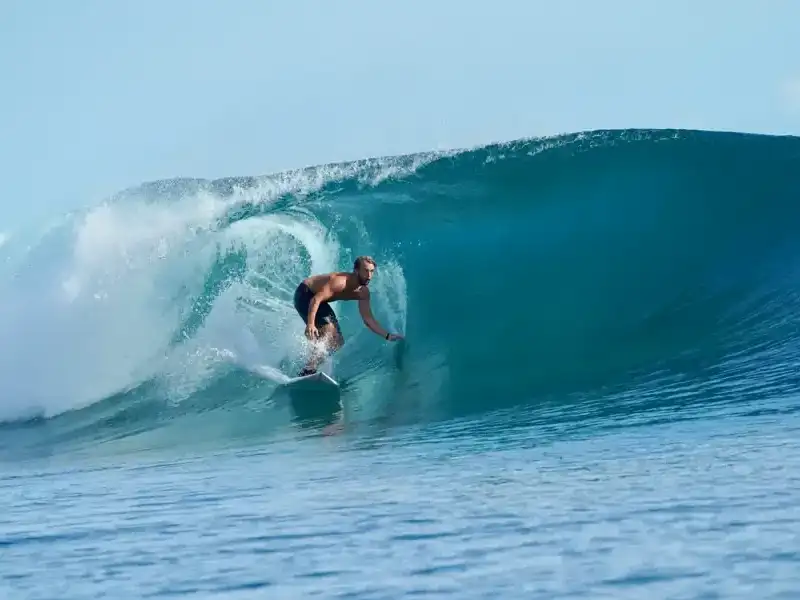
September is the shoulder of the surf season. Surf forecasters and local guides generally say the biggest, most consistent swell comes in June to August, then eases in September and October.
For many surfers that is the sweet spot: waves still running but more manageable, and quieter line-ups once the summer crowds leave. Every Maldivian wave is a reef break reached by boat, so these are not learner waves even on smaller days. Read surfing in the Maldives for regions and safety. The windier days also suit kitesurfing in sheltered lagoons.
What’s on in September 2027
The Day Maldives Embraced Islam
According to tradition, the Maldives became a Muslim country in 1153. The day is marked early in the Islamic month of Rabi’ al-Akhir, and in 2027 it is expected around Thursday 2 or Friday 3 September. This is an estimate based on astronomical projections; the date depends on the moon sighting.
For visitors it is a quiet public holiday: government offices and banks close, but there are no big parades. If it falls on a Thursday, expect a long, slow weekend. Our festivals and public holidays guide has the full 2027 calendar.
School holidays end
Many European schools go back in early September, so the summer bump in family travel fades.
Crowds and prices in September
September is low season. Official arrival figures show the Maldives is busiest from December to March, and our best time to visit the Maldives guide lists September among the most affordable months.
- Fewer visitors: beaches, snorkel spots and dive boats feel emptier.
- Often better value: many guesthouses lower their rates in the wet season, though this varies by island and is never guaranteed.
Remember that taxes, including the 17% Tourism GST and the green tax, are added to room rates.
What to do in September
- Manta trips: on an east-facing island, ask locally about manta snorkelling and dives.
- Surfing: a good month for intermediates, with easing swell.
- Snorkelling: pick calm mornings and sheltered lagoons; turtles live on most reefs all year.
- Sunset dolphin cruises: spinner dolphins are seen all year, weather allowing.
On a local island in September: Dhiffushi
Dhiffushi sits on the eastern rim of North Malé Atoll, about 37 km north-east of Malé. Following the Manta Trust’s research, the eastern side of the atolls is where mantas tend to feed in this season. Dive centres on the island run trips to Manta Bay (Dhiya Adi Faru), two small underwater pinnacles where feeding mantas gather in the southwest monsoon. It suits intermediate to experienced divers.
Our best time to visit Dhiffushi guide marks September as the quietest month on the island. Dhiffushi has no surf break of its own, but well-known North Malé breaks are a boat ride south; see surfing near Dhiffushi.
The shared speedboat from Malé or the airport usually takes 40 to 50 minutes and can be bumpy on monsoon days. The public ferry does not run on Fridays. Our how to get to Dhiffushi guide has the options. As on every local island, there is no alcohol, and swimwear is for the bikini beach only.
Packing for September
- A light rain jacket or compact umbrella for the squalls.
- A dry bag for phones, cameras and passports on boat days.
- Seasickness tablets if you are prone, as crossings can be choppy.
- Quick-drying clothes that cover shoulders and knees for the village.
- Reef-safe sun cream and a hat: the sun is strong between showers.
- Some rufiyaa in cash in case the public holiday closes the banks.
Before and after September
August brings bigger surf and the tail of the summer holidays: see the Maldives in August. October brings the first signs of the season turning, with calmer spells: see the Maldives in October.
Questions people ask
Is September a good time to visit the Maldives?
Yes, if you value quiet islands and good value over guaranteed sunshine. September is in the southwest monsoon, so expect showers, squalls and some rough-sea days. Rain usually comes in short bursts with sunny spells between, and the sea stays around 28 to 29°C. It also offers easing surf and continuing manta season on the eastern sides of the atolls.
Does it rain all day in the Maldives in September?
Rarely. The Maldives Meteorological Service notes that rain usually falls as showers with sunny periods between. Long-term averages for Malé give about 199 mm of rain over around 15 rainy days in September. Expect some grey, breezy days, but most days still have bright spells for the beach or a snorkel.
Is September the wettest month in the Maldives?
Not quite, on the long-term averages for Malé. May, November and December average more rain, although September has among the highest number of rainy days. It is fair to call September one of the wetter months. Rain also varies across the country: the Met Service says the southern atolls get more rain each year than the north.
Can you see manta rays in the Maldives in September?
Often, yes. Research by the Manta Trust shows mantas tend to feed on the eastern sides of the atolls in the southwest monsoon, roughly May to November, and September falls within the Hanifaru Bay season in Baa Atoll. Staying on or near an east-facing island helps. Sightings are never guaranteed, so allow more than one chance.
Is September good for surfing in the Maldives?
Yes, especially for intermediates. Surf forecasters and local guides generally say swell is biggest from June to August and eases in September and October, with quieter line-ups. All breaks are reef breaks reached by boat, so they are not learner waves. Beginners should take lessons with a qualified guide and surf only on small days.
Will my boat transfer be cancelled in September?
Probably not, but it can happen. Most days boats run normally. On rough days, speedboats, the public ferry and excursions may be delayed or cancelled for safety. Book transfers with some slack, avoid relying on the last boat of the day to reach an international flight, and remember the public ferry does not run on Fridays.