


Education in the Maldives: schools and universities
Free state schools on almost every inhabited island, English-medium lessons, two state universities and 98% literacy: how Maldivian education works and shapes island life.
 By Dhiffushi Island Council8 min readUpdated
Education in the Maldives is free in state schools, and children are expected to attend from kindergarten (age four) to Grade 10 (about 16). Almost every inhabited island has its own school, most lessons are taught in English, and Dhivehi and Islam are core subjects. The country has two state universities, the Maldives National University and the Islamic University of Maldives.
How the school system is organised
The Ministry of Education runs the national system and publishes the curriculum, school statistics and the academic calendar. The 2008 Constitution (Article 36) says primary and secondary education must be provided free by the state, and that parents and the state share the duty to make sure children receive it.
The Ministry’s *School Statistics 2023/2024* uses these stages:
| Stage | Grades | Usual ages |
|---|---|---|
| Pre-primary (kindergarten) | Lower and upper kindergarten | 4–5 |
| Primary | Grades 1–6 | 6–11 |
| Secondary | Grades 7–10 | 12–15 |
| Higher secondary | Grades 11–12 | 16–17 |
The government treats kindergarten to Grade 10 as compulsory. Some older sources describe a seven-year primary cycle; the Ministry’s current statistics use Grades 1–6.
Exams and qualifications
Students sit national examinations at the end of Grade 10 and Grade 12, widely referred to in the Maldives as O Levels and A Levels. They are held towards the end of the school year, in October and November.
The school year
The Maldivian school year runs roughly with the calendar year rather than from September. For 2026, the Ministry’s calendar set the first day for 27 January, with a term break from 17 July to 1 August, two short mid-term breaks (24–30 May and 13–19 September) and the long holiday from 18 December 2026 to 12 January 2027. Dates change each year, so check the Ministry of Education’s published calendar if it matters for your trip.
Weekends follow the Maldivian Friday–Saturday pattern, so schools are closed on those days. See time, weekends and calendars in the Maldives for how this works.
Schools, pupils and teachers in numbers
Ministry of Education figures (November 2023, school year 2023/2024):
- 354 schools in total: 216 government, 82 community (run jointly by the government and the island community) and 56 private.
- 42 schools in the Greater Malé region (Malé, Villimalé and Hulhumalé) and 312 in the atolls.
- 99,031 students from nursery to Grade 12, almost equally split between boys and girls.
- 11,499 teachers, about three-quarters of them women. Roughly one in five teachers is from overseas.
- 299 of the 354 schools have fewer than 500 pupils.
Almost four in ten students study in the Greater Malé region, which reflects how many families have moved to the capital area for work, health care and schooling. The population and census guide explains that shift in more detail.
Getting to Grade 12
Nearly all children aged 5 to 15 are in education: the Maldives Bureau of Statistics reported attendance above 99% for that age group in the 2022 census. The big drop comes after Grade 10. The Ministry’s 2023/2024 figures show a net enrolment ratio of about 24% for Grades 11–12, with more girls than boys continuing. Many smaller islands do not offer Grades 11 and 12, so teenagers often move to a larger island or to Malé to finish school, or switch to vocational training.
Languages in the classroom: Dhivehi and English
Dhivehi is the national language and the language of home life. English is the main language of teaching in Maldivian schools from the primary years onwards, while Dhivehi language and Islamic studies are taught in Dhivehi. The change towards English began in Malé in 1960 and had spread to schools across the country by the late 1990s, according to academic studies of language in Maldivian education.
A 2023 study in the *Journal of English-Medium Instruction* argued that learning mainly in a second language can hold back early literacy, and called for stronger Dhivehi support.
If you want to try a few words yourself, our Dhivehi phrases for travellers and the guide to Dhivehi and the Thaana script are good places to start.
Literacy
Literacy is high. The 2022 census (Maldives Bureau of Statistics), which asked everyone aged 10 and over, found:
- about 98% of the population literate, up from 92.2% in 1985;
- 98.6% of resident Maldivians literate in Dhivehi;
- 82.6% literate in English, up from 75.1% in 2014, with a higher rate in Malé (89.5%) than in the atolls (77.4%).
In practice, most younger people on local islands speak good English; some older residents prefer Dhivehi.
Islam and values in education
The Constitution says education should encourage obedience to and love for Islam, alongside respect for human rights and understanding between people. Islamic studies and Quran reading are part of school life. The religion guide gives the wider background.
A short history
Before modern schools, Maldivian children learned Quran reading and basic Dhivehi writing from teachers in their own communities, often at a home-based school known as an *edhuruge*. According to the US Library of Congress country study, island primary schools called *makthab* took on this role from the 1940s, adding reading, writing and arithmetic. The modern system grew from the 1960s; see the history of the Maldives.
Universities and higher education
The Maldives did not have a university until 2011. Today there are two state universities:
- Maldives National University (MNU), established on 15 February 2011. It grew out of the Maldives College of Higher Education (1998) and earlier state training centres for health, teaching, vocational skills and tourism. Besides its main base in Malé, it has campuses in the atolls, including in Addu (Gan and Hithadhoo), Kulhudhuffushi and Thinadhoo.
- Islamic University of Maldives (IUM), established in 2015 by presidential decree under its own Act. It focuses on Islamic studies and related fields such as Sharia and law, Arabic and education.
Private colleges also offer diplomas and degrees, regulated by the state. Since February 2019 the government has run a free first degree scheme, which covers tuition at the two state universities and all or part of the fees for approved courses elsewhere. Many Maldivians also go abroad for further study.
What visitors will notice on a local island
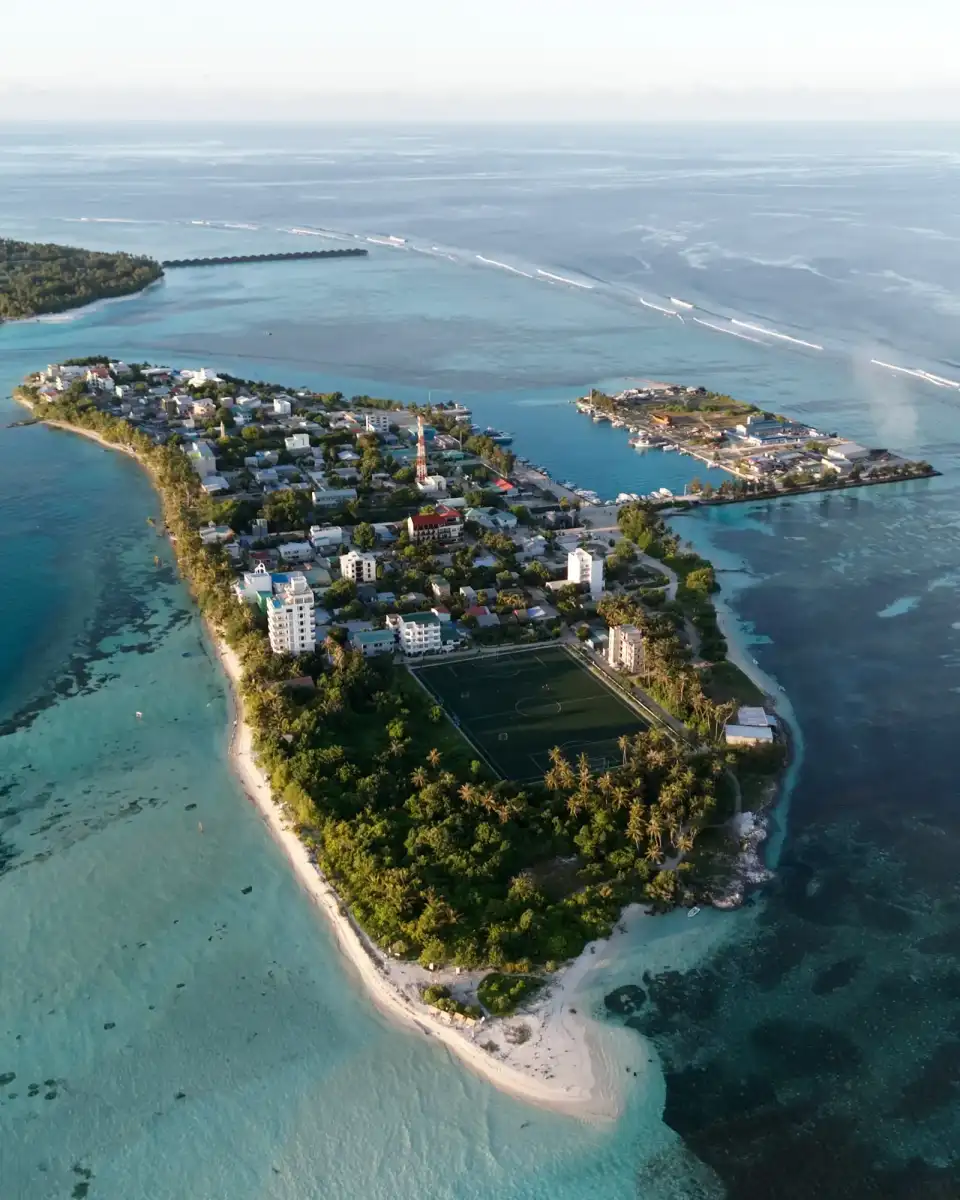
On a local island the school is usually one of the biggest buildings, often next to the football ground or the main road, and it shapes the day:
- Mornings are busy. Children in school uniform head off early, many walking or riding pillion with a parent.
- School runs mean traffic. Bikes and buggies slow down near the school at the start and end of the day. Do the same if you hire a bicycle.
- Holidays change the mood. In term breaks, especially the long December holiday, beaches and harbours are livelier, and families travel between islands, so boats can be busier.
- Exam season is quiet. In October and November, older students are revising for national exams. Keep music down near homes and schools.
How to be a respectful guest
- Do not enter school grounds without permission, and never photograph children without asking a parent or teacher first. The photography guide covers this in more detail.
- If you would like to help, for example by sharing a skill, contact the island council or the school office first. Turning up unannounced at a school is not appropriate. Our guide to volunteering and citizen science explains how to find genuine, approved programmes.
Dhiffushi as an example
Dhiffushi, on the eastern rim of North Malé Atoll, is a typical local island with its own government school. The Ministry of Education listed about 300 students there in November 2023, from kindergarten up through the school grades. Students join beach clean-ups and ocean-conservation projects, so some of the island’s clean shoreline is their work. You can read more on the Dhiffushi School page and in Dhiffushi history and island life. For travelling with your own children, see the family guide.
Questions people ask
Is school free in the Maldives?
Yes, in state schools. The Constitution says primary and secondary education must be provided free by the state, and most children attend government or community schools without paying fees. Private schools, mainly in the Malé area, do charge fees. Since 2019 a government scheme has also covered tuition for many first degrees.
What language are Maldivian schools taught in?
Most subjects are taught in English from the primary years onwards. Dhivehi, the national language, is taught as a subject, and Dhivehi and Islamic studies are taught in Dhivehi. The shift to English began in Malé in 1960 and reached schools across the country by the late 1990s.
At what age do children start school in the Maldives?
Children usually start kindergarten at about four and Grade 1 at six. The Ministry of Education treats kindergarten to Grade 10, roughly ages 4 to 16, as compulsory. Grades 11 and 12 are optional higher secondary years leading to A Level exams. Many smaller islands do not offer Grades 11 and 12, so students often move to a larger island or to Malé.
When are school holidays in the Maldives?
The school year runs roughly from late January to mid-December. In 2026 there was a two-week term break from 17 July to 1 August, short mid-term breaks in May and September, and a long holiday from 18 December to 12 January 2027. Dates change each year, so check the Ministry of Education’s calendar.
Does the Maldives have universities?
Yes. The Maldives National University was established in 2011, and the Islamic University of Maldives in 2015. Both are state universities with their main bases in Malé, and the national university also has campuses in the atolls. Private colleges offer diplomas and degrees too.
What is the literacy rate in the Maldives?
According to the 2022 census by the Maldives Bureau of Statistics, about 98% of people aged 10 and over can read and write, up from 92.2% in 1985. Literacy in Dhivehi among resident Maldivians was 98.6%, and English literacy was 82.6%, higher in Malé than in the atolls. Rates for men and women are almost the same.
Can visitors visit a school on a local island?
Schools are not tourist attractions, so do not walk in or take photos of children. If you have a genuine reason, such as a skill to share or an approved programme, contact the island council or the school office in advance. If you are invited to a school event, dress modestly and ask before taking photos.

