


Villimalé guide: Malé’s quiet island neighbour
A short ferry ride from Malé, Villimalé is a calm, shady island district with a local beach, few vehicles and a past as a prison and early resort.
 By Dhiffushi Island Council8 min readUpdated
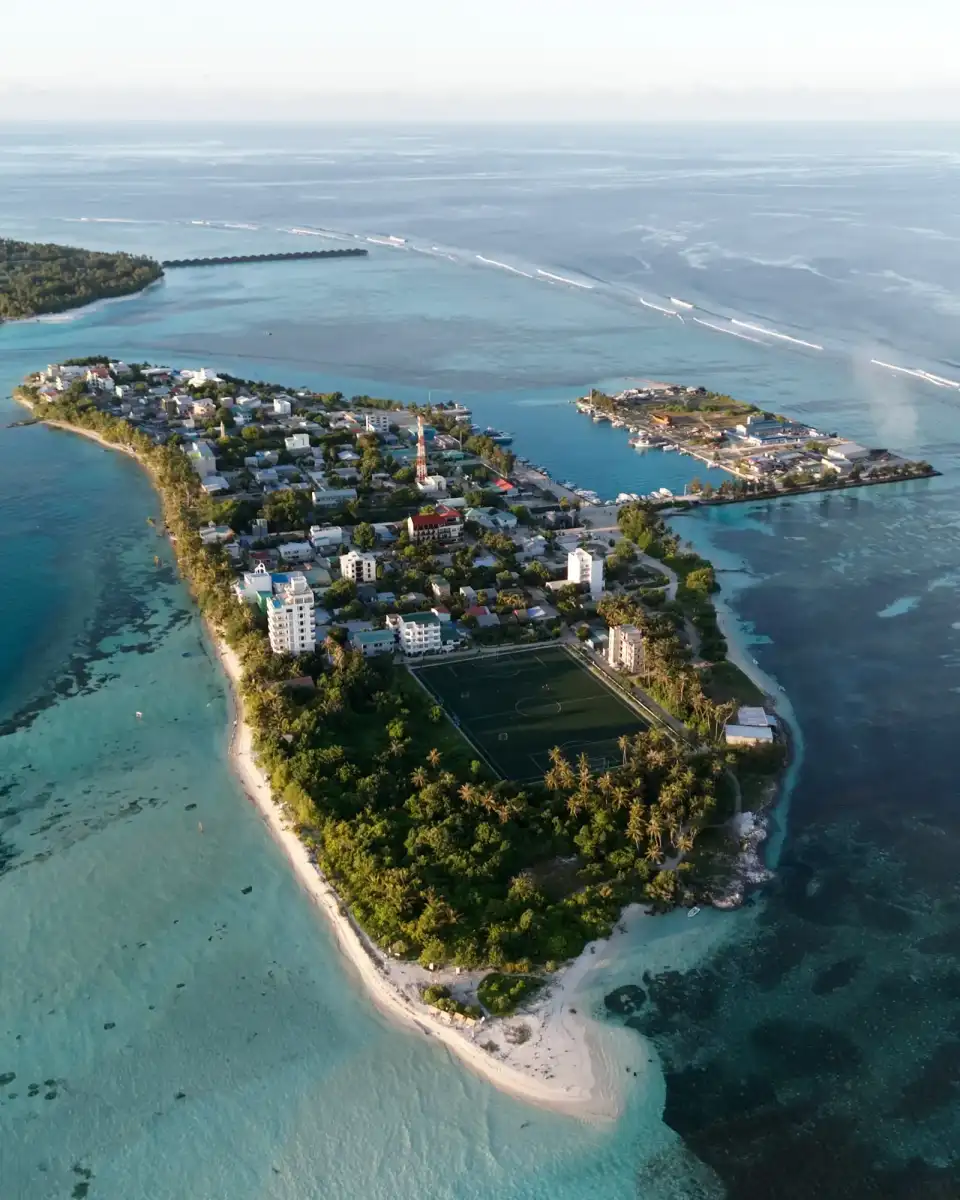
Villimalé (also called Villingili) is a small, green island just west of Malé and part of Malé City. Ferries cross from the capital all day, and the island has very few motor vehicles, so it feels calmer than Malé. It is worth a half day for a walk, a swim at the public beach and a look at everyday Maldivian city life.
Where Villimalé is and what it is
Villimalé sits about 2 km west of Malé island, across a narrow stretch of water. It is not part of Kaafu (North Malé) Atoll for administrative purposes: it belongs to Malé City, which also takes in Malé itself, Hulhulé (the airport island) and Hulhumalé. In everyday speech many people still use the older name, Villingili. Don’t confuse it with the islands of the same name in Addu and Gaafu Alif atolls far to the south.
It is a small place. The island is roughly 800 metres long and 600 metres wide, so you can walk around it in well under an hour. According to the Census 2022 published by the Maldives Bureau of Statistics, 6,755 people lived here, a little fewer than in 2014 as many families moved to the newer housing in Hulhumalé.
What makes Villimalé stand out is the pace. Motorised traffic has long been restricted here, and the streets are mostly used by people on foot and on bicycles. Tall trees shade many of the lanes. After the crowds and scooters of Malé, it can feel like a different town.
A short history
Villimalé has had several lives, and its story mirrors how the capital region has grown.
- Early settlement. The island was inhabited for centuries. Its people were moved away in 1961, when the island’s land was reassigned.
- Prison island. A prison was built here in the early 1960s.
- A resort. In the early 1970s, as tourism began in the Maldives, the island became one of the country’s first resorts. Read more about that era in our short history of tourism in the Maldives.
- A city district. Later, as Malé ran out of space, the resort closed and the island was turned into housing for the capital. It is now often described as Malé’s fifth district.
Today you will see a mix of homes, schools, small shops, a mosque, playgrounds and quiet open spaces. There is little left of the resort days, though the beach is still the island’s best-loved spot.
Getting there from Malé
The ferry
The usual way to reach Villimalé is the public ferry from the Villimalé ferry terminal on the west side of Malé. Boats run very frequently, including at night, and the crossing takes only a few minutes. You buy a ticket at the terminal; fares are low, and it is useful to carry some rufiyaa in small notes. We don’t list fares or timetables here, as they change.
If you are coming straight from the airport, first cross to Malé (see our guide to arriving at Velana International Airport) and then make your way to the western waterfront for the Villimalé boat.
The new bridge
The Thilamalé Bridge is being built to link Malé with Villimalé, and then on to the industrial islands of Gulhifalhu and Thilafushi. The final section joining Malé and Villimalé was put in place in August 2026, but as reported at the time, the bridge would only open to the public after finishing works such as railings and lighting. The wider project is expected to be completed in 2027. Until you hear otherwise from official sources, plan on taking the ferry.
The government has said that Villimalé will stay free of motorised traffic after the bridge opens, with parking planned near the point where the bridge lands. That promise matters a great deal to residents, who value the island’s quiet streets.
What to do on Villimalé
Walk the island
The best thing to do is simply walk. Start at the ferry jetty and follow the lanes in a loop. You will pass homes with small gardens, children playing football, older people chatting on wooden swing benches (joali) and tea shops serving short eats in the afternoon. It is a good place to see ordinary city life without traffic noise.
A full loop is easy in an hour, and you can add stops for a drink or a snack. Take water and a hat: there is shade under the trees, but the sun is strong all year.
The beach
Villimalé’s public beach is on the far side of the island from Malé, with views across the water. It is a popular place for families from Malé and Hulhumalé to swim and picnic, especially on Fridays, Saturdays and public holidays. On weekdays it is much quieter.
This is a local beach in a residential district, not a resort or tourist beach. We could not confirm any designated “bikini beach” on Villimalé, so treat it like any local island beach:
- Swim in modest clothing, such as a T-shirt and shorts, or a rash vest and swim leggings.
- Cover shoulders and knees when walking around the island.
- Nude or topless sunbathing is not allowed anywhere in the Maldives.
Our guide on what to wear in the Maldives explains the rules in more detail. Hulhumalé’s public beach works the same way, and bikinis are not permitted there either.
Parks and green spaces
Villimalé is known for its trees and open spaces. You will find small parks, playgrounds and shaded corners for a rest. Residents have campaigned to protect the island’s mature trees, and the government has said that protecting its greenery is a priority in new development. Please stay on paths and don’t pick plants or flowers.
Surfing nearby
Villimalé itself is not a surf destination. Malé’s own break, Raalhugandu, is on the opposite (south-eastern) corner of the capital, and access there has changed over the years with construction. The famous breaks of North Malé Atoll are reached by boat from the local islands further out. If you are coming to surf, start with our guide to surfing in the Maldives, or see surfing near Dhiffushi for the breaks on the eastern side of the atoll.
Practical tips
- Alcohol. Villimalé is an inhabited island, so alcohol is not sold or allowed.
- Prayer times. Shops and cafés close briefly for prayers, and for longer around Friday midday prayers.
- Ramadan. During the fasting month, don’t eat, drink or smoke in public during daylight hours.
- Money. Carry rufiyaa for the ferry and small shops. US dollars are less useful here than in tourist areas.
- Photos. Ask before photographing people, especially women and children, and avoid photographing homes over walls.
- Respect the quiet. People live here. Keep voices and music down, especially near the mosque and in the evening.
Why visit Villimalé
Most visitors pass through Malé on the way to somewhere else. If you have a few hours to spare between flights or boats, Villimalé is one of the easiest ways to see a calmer side of the capital. It is close, cheap to reach and simple to explore on foot.
It is also a gentle introduction to local island life before you head further out. The same customs apply on the inhabited islands across the country, from dress to prayer times. For the next step, browse our A to Z of local islands near Malé, or read about the capital itself in our Malé city guide.
If you want more space, more reef and a beach set aside for visitors, a local island further out in the atoll is the natural next stop. Dhiffushi, on the eastern rim of North Malé Atoll, is about 40 to 50 minutes from Malé by shared speedboat. See how to get to Dhiffushi to plan the trip.
Questions people ask
Is Villimalé the same as Villingili?
Yes. Villingili is the island’s older name, and Villimalé is its official name as a district of Malé City. You will see both on maps and signs. There are other islands called Villingili in the southern atolls, including one in Addu and one in Gaafu Alif, so check which one is meant when you read about “Villingili” online or book transport.
How do I get from Malé to Villimalé?
Take the public ferry from the Villimalé ferry terminal on the west side of Malé. Boats run frequently, including at night, and the crossing takes only a few minutes. Tickets are bought at the terminal and are cheap, so carry some rufiyaa. A bridge from Malé is being built, but check official announcements before relying on it, as it was not yet open to the public when last reported.
Can I wear a bikini on Villimalé beach?
No designated bikini beach on Villimalé could be confirmed, and the public beach is used mainly by local families. Treat it as a local beach: swim in a T-shirt and shorts or similar, and cover shoulders and knees when walking around. If you want to swim in a bikini, choose a local island with a designated bikini beach, a resort or a sandbank trip.
Are there cars on Villimalé?
Very few. Motorised traffic has long been restricted, and most people get around on foot or by bicycle. The government has said that motorised vehicles will not be brought onto the island when the new bridge to Malé opens, with parking planned near the bridge landing instead. It is one of the quietest parts of Malé City.
Is Villimalé worth visiting?
If you are in Malé with half a day to spare, yes. It is close, easy to explore on foot and shows a relaxed side of city life with shady lanes and a public beach. It is not a place for snorkelling trips or water sports holidays, so for longer stays most travellers continue to a local island further out in the atolls.
Can I stay overnight on Villimalé?
Yes. There are some small hotels and guesthouses on the island, and it can be a quieter base than Malé for a night before or after a flight. Remember that it is a residential district with local island rules: no alcohol, modest dress and quiet evenings. Allow time for the ferry and the airport connection on your departure day.

