


A short history of tourism in the Maldives
From 22 Italian visitors in 1972 to over two million a year: how resort islands, seaplanes, the tsunami, guesthouses on local islands and COVID-19 shaped Maldives tourism.
 By Dhiffushi Island Council8 min readUpdated
Tourism in the Maldives began in February 1972, when a small group of 22 Italian visitors flew in and stayed in simple guesthouses in Malé. The first resort opened on an island near the capital later that year. For almost four decades after that, visitors stayed almost only on resort islands, until a policy change around 2009 let Maldivians open guesthouses on their own inhabited islands. Today local island stays make up more than a fifth of all tourist stays.
Before tourism: a country few outsiders saw
Until the early 1970s the Maldives lived from the sea. Dried tuna, coir rope and cowrie shells had been traded across the Indian Ocean for centuries, but almost nobody came for a holiday. There were no banks, few telephones and no regular international flights; messages to Colombo often went by radio.
The country became fully independent in 1965. The wider story of sultans, trade and independence is in our history of the Maldives.
The first runway
Air travel arrived before tourism did. A first runway of steel planking was laid on Hulhulé, the island next to Malé, and the first aircraft landed there in October 1960. The government later replaced it with an asphalt runway, and Hulhulé Airport formally opened on 12 April 1966. That small airstrip is the ancestor of today’s Velana International Airport.
1972: the first visitors and the first resort
The story usually starts with an Italian travel organiser, George Corbin, who was looking for empty islands where Italians could swim and fish. He made contact through the Maldives embassy in Sri Lanka and reached Malé by cargo ship.
On 16 February 1972 the first group arrived: 22 people from Italy, on a chartered flight, including journalists whose articles helped put the islands on the map. They stayed for 12 days in a few houses and small guesthouses in Malé, led around by local hosts.
On 3 October 1972 the first resort opened on an uninhabited island close to Malé, with 30 rooms. A second resort followed soon after. The pattern that would shape the next 40 years was set: visitors on their own islands, Maldivians on theirs.
The “one island, one resort” years
Through the 1970s and 1980s the government chose a model that kept tourism and daily island life apart. Each resort took up a whole uninhabited island, leased from the state, with its own staff housing, power, water and jetty. Visitors could make day trips to inhabited islands, but staying overnight on one was not allowed, and hotels outside Malé were not permitted.
It protected the culture and religious life of island communities, since resorts could serve alcohol and allow swimwear out of sight of village life. It also let the state collect lease rents and taxes from a small number of operators, and it suited a country with plenty of empty islands.
Growth and the airport upgrade
Arrivals climbed steadily. In the late 1970s Hulhulé was enlarged with funding from the Abu Dhabi Fund for Development, with land reclamation to lengthen the runway so that bigger jets could land. Long-haul flights followed, and the Maldives became known for diving and honeymoons. The airport was later renamed Velana International Airport.
The rules for the whole industry were brought together in the Maldives Tourism Act (Law No. 2/99) of 1999. It covers how islands are zoned and leased for tourism and how resorts, hotels, guesthouses, tourist vessels, dive centres and travel agencies are licensed. It has been amended many times since.
Seaplanes open up the atolls
In 1993 seaplane flights began from a lagoon beside the airport island. They let resorts open far from Malé without a long boat trip, and helped spread tourism into distant atolls. Seaplanes still fly only in daylight. See seaplanes and domestic flights for how they work today.
2004: the tsunami
On 26 December 2004 the Indian Ocean tsunami struck the Maldives, causing deaths and wide damage to islands, homes and resorts. Several resorts closed for repairs, and arrivals fell sharply in 2005 before bouncing back strongly in 2006. The disaster also sharpened public debate about how exposed low islands are to the sea, which you can read more about in is the Maldives sinking?.
Around 2009: guesthouses on local islands
The biggest change for independent travellers came at the end of the 2000s. After the country’s first multi-party elections in 2008, a parliamentary resolution and the policy changes that followed, from around 2009, allowed Maldivians to run guesthouses on inhabited islands.
The aim was to share tourism income more widely, create jobs on the islands and give visitors a more affordable way to see the country. Some people worried about the effect on religious and family life, which is why local island stays come with clear rules:
- no alcohol on inhabited islands,
- swimwear only on designated “bikini beaches”,
- modest dress in the village, and respect for prayer times and Ramadan.
Our local island etiquette guide explains these in practice.
How local island tourism grew
Growth started slowly and took off in the 2010s, helped by cheaper flights, social media and travellers wanting something different from a resort. Islands close to Malé, with frequent speedboats, led the way.
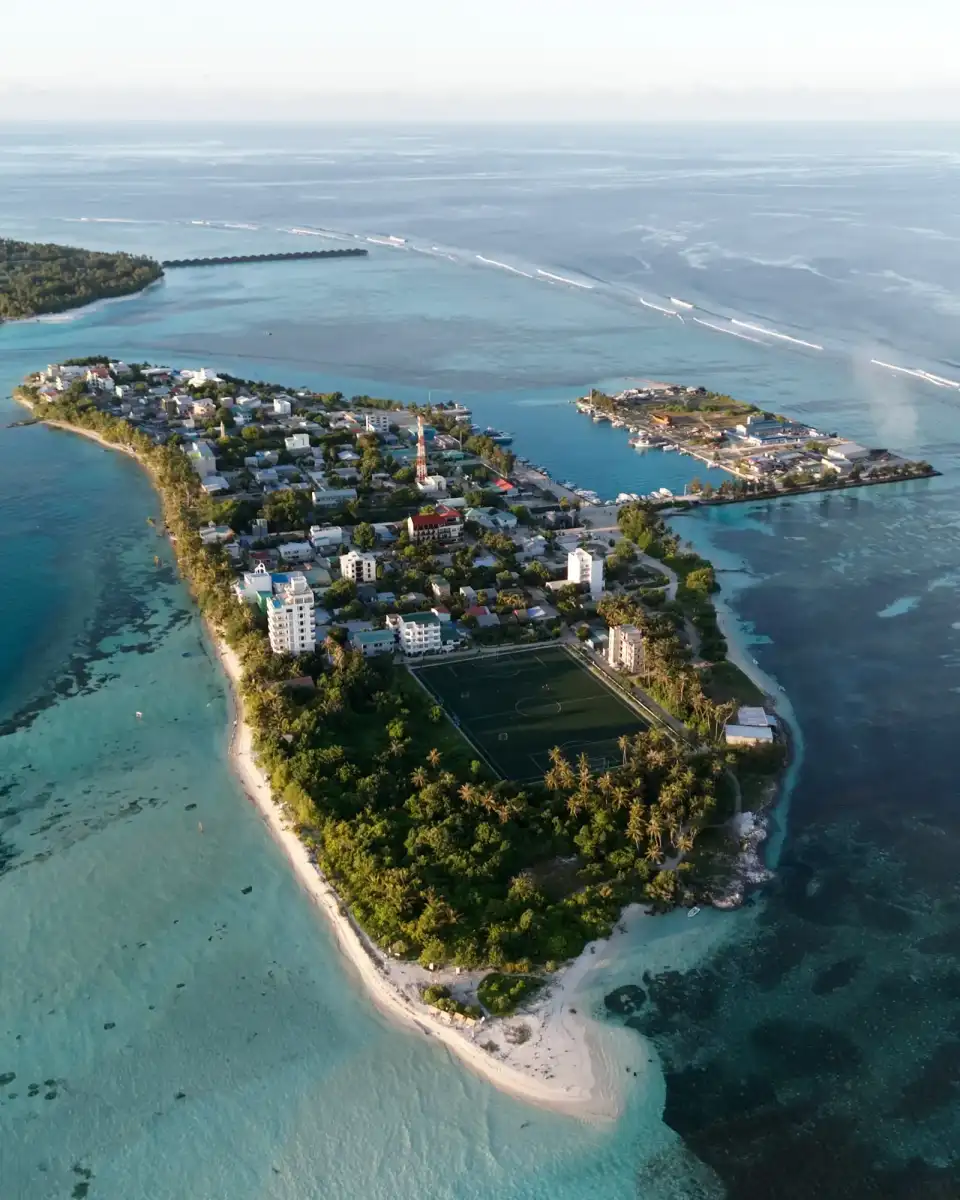
Dhiffushi, on the eastern rim of North Malé Atoll, is one of these islands. Its story is told in Dhiffushi history and island life.
In December 2021 a further rule change (the fourth amendment to the guesthouse regulation) allowed homestay guesthouses in homes where people live, for locally owned businesses.
2020: closing and reopening
The COVID-19 pandemic stopped tourism almost completely. The borders were closed to visitors for more than three months in 2020. On 15 July 2020 the Maldives reopened to international tourists, starting with resorts, liveaboards and hotels on uninhabited islands, with guesthouses on local islands following in stages afterwards.
The separate-island model, once criticised for keeping visitors apart, suddenly looked like an advantage, and arrivals recovered quickly.
Tourism today
Recent milestones, as reported from Ministry of Tourism figures:
| Year | What happened |
|---|---|
| 2023 | About 1.88 million tourist arrivals |
| 2024 | First year above 2 million arrivals (about 2.05 million) |
| 2025 | About 2.25 million arrivals, up 9.8% on 2024 |
In 2025 about 22% of visitors, around 500,000 people, stayed in guesthouses on local islands, and about 73% stayed in resorts. As of February 2025 guesthouses operated on about 116 islands across 20 atolls.
The infrastructure has grown with the numbers. Velana International Airport opened a new runway able to take the world’s largest passenger aircraft, and its new Terminal 1 opened on 26 July 2025. Hanimaadhoo International Airport in the far north opened on 9 November 2025. Details for arriving visitors are in our Velana airport guide.
Visitors also pay more directly towards public services: Tourism GST rose to 17% on 1 July 2025, and MIRA collects a per-night green tax.
What comes next
Several questions will shape the next chapter:
- Spreading the benefits. Local island tourism has brought jobs and income to island families, and councils are now planning how much more each island can take.
- Protecting reefs and beaches. Tourism depends on healthy coral and clean lagoons, so waste, reclamation and climate change are all live issues. See responsible travel in the Maldives.
- Keeping the balance. The two models, resort islands and local islands, now sit side by side. Our guide to local islands vs resorts compares them for travellers.
The best way to see how far tourism has come is to stay on a local island and talk to the people who run it. Start with our where to stay page for Dhiffushi.
Questions people ask
When did tourism start in the Maldives?
Tourism began in February 1972, when a group of 22 Italian visitors, including journalists, arrived on a chartered flight and stayed for 12 days in Malé. The first resort opened on an island near Malé on 3 October 1972. Before then almost no foreigners came to the islands for a holiday, and there were no banks, regular flights or hotels geared to visitors.
Why were tourists kept off local islands for so long?
From the 1970s the government followed a “one island, one resort” approach. Resorts took up whole uninhabited islands, where they could serve alcohol and allow swimwear without affecting island communities. Visitors could make day trips to inhabited islands but not stay overnight. The model protected local culture and religious life and made it easy for the state to lease islands and collect rent and taxes.
When were guesthouses allowed on inhabited islands?
Sources give 2008 for the parliamentary resolution and around 2009 for the change in practice, after the country’s first multi-party elections. From then Maldivians could open guesthouses on their own islands. Growth was slow at first and took off in the 2010s. By February 2025 guesthouses operated on about 116 islands across 20 atolls, according to Ministry of Tourism figures.
How many tourists visit the Maldives each year?
About 2.25 million tourists arrived in 2025, up 9.8% on 2024, according to Ministry of Tourism figures as reported. 2024 was the first year arrivals passed 2 million. In 2025 about 22% of visitors, around 500,000 people, stayed in guesthouses on local islands, while about 73% stayed in resorts.
How did the 2004 tsunami affect tourism?
The Indian Ocean tsunami of 26 December 2004 caused deaths and damaged islands, homes and resorts across the Maldives. Several resorts closed for repairs, and tourist arrivals fell sharply in 2005. The industry recovered strongly in 2006 as resorts reopened and flights returned. The disaster also raised lasting questions about how low-lying islands can be protected from the sea.
When did the Maldives reopen after COVID-19?
The Maldives reopened to international tourists on 15 July 2020, after the borders had been closed for more than three months. Resorts, liveaboards and hotels on uninhabited islands opened first, and guesthouses on local islands followed in stages after that. The separate-island model helped the country become one of the first in the region to welcome visitors back.

