


The Maldivian pantry: key ingredients explained
Valhoamas, rihaakuru, grated coconut, curry leaves and small hot chillies: what goes into Maldivian cooking, what it is called and where to buy it.
 By Dhiffushi Island Council8 min readUpdated
Open a kitchen cupboard on any Maldivian island and you will find the same few things: tuna in several forms, coconuts, rice, flour, onions, small hot chillies, limes and a jar of curry leaves or a pot of the plant by the door. Almost every local dish is built from that short list. This guide explains each ingredient, what it is called, how it is used and where you can buy it.
Why the pantry is so small
A coral island has thin, sandy soil and only a shallow layer of fresh water underground, so little can be farmed. For centuries the sea supplied protein, the coconut palm almost everything else, and a few garden plants added sourness, fragrance and heat.
Today much of the pantry comes by boat. A 2025 commentary from the Maldives National University puts imported staples (rice, flour and sugar) at over 90% of supply. In September 2025 the government widened the role of the State Trading Organization (STO), the majority state-owned trading company, to import rice, sugar, flour, lentils, eggs and other everyday foods in bulk to keep prices steady, as reported by PSM News.
Tuna: the heart of the pantry
In the Maldives, “fish” (*mas*) almost always means tuna, mostly skipjack caught by pole and line. One fish can end up in several forms, and most homes keep at least two of them. Our guide to fish on the menu covers the species; here is how tuna sits in the cupboard.
| Form | What it is | How it is used |
|---|---|---|
| Fresh tuna | Skipjack or yellowfin, bought the day it is landed | Curries such as mas riha, grilled fish, broth |
| Garudhiya | Clear broth from boiling tuna in salted water | Eaten with rice, lime, chilli and onion |
| Valhoamas | Tuna boiled, smoked and dried until very hard | Grated or flaked into dishes as a seasoning |
| Rihaakuru | Tuna broth slowly boiled down to a thick paste | A spoonful stirred into rice or curry |
| Tinned tuna | Factory-canned tuna | Mas huni and short eats in most homes today |
Valhoamas (smoked dried tuna)
Valhoamas, often sold abroad as “Maldive fish”, was the islands’ way of keeping tuna without a fridge. The pieces are so hard they are usually grated or shaved, and a little gives curries, sambols and snack fillings a deep, smoky, savoury taste.
Rihaakuru (tuna paste)
Rihaakuru is tuna broth reduced over a low heat for hours until it becomes a dark, glossy paste. It is not fermented, and it is very salty, so cooks use it by the teaspoon. Our guide to rihaakuru explains how it is made and eaten.
A note for vegetarians
Because valhoamas and rihaakuru are used like seasonings, they turn up in dishes that look vegetable-only. If you do not eat fish, ask before you order. Our vegetarian and vegan food guide has tips.
Coconut: grated, squeezed and pressed
The coconut palm (*ruh*) is the national tree, and the FAO describes it as central to food and nutrition security in the Maldives. In the kitchen it appears in several forms:
- Grated coconut (*huni*) from the mature nut (*kaashi*). It is mixed with tuna, onion, chilli and lime in mas huni, folded into short eats and used in sweets.
- Coconut milk (*kaashi kiru*), squeezed from the grated flesh. It thickens fish and vegetable curries and is the base of many puddings.
- Coconut oil, pressed from dried kernel, traditionally the everyday cooking oil.
- Coconut syrup and sugar, boiled down from *raa*, the sweet sap of the flower.
- Young green coconuts (*kurumba*), for drinking rather than cooking.
Our guide to the coconut palm in Maldivian life covers the tree in more depth.
Chillies, onions and lime
These three give Maldivian food its sharp, hot, fresh edge.
Chillies
Maldivian cooks favour small, very hot chillies, used fresh in mas huni and on the side of rice and broth, and cooked into curries. Some islands are known for growing them. Kandoodhoo in Dhaalu Atoll has grown chillies since 2001, and its crop is known across the country for its flavour and aroma, as Atoll Times reported in 2025. If you are not used to the heat, ask for “less chilli” and taste carefully.
Onions
Red onions and shallots are chopped finely and squeezed by hand with lime and chilli, the step that gives mas huni its flavour. Most onions are imported.
Lime (*lonu-boa*)
Small sour limes grow in home gardens across the islands, according to the FAO. A squeeze of lime goes into rice with fish broth, into curries and chutneys, and into drinks made with sugar or salt. The FAO also describes *lonu lumbo*, limes ripened in salt water and dried in the sun until the inside turns brown.
Leaves and garden flavours
Many Maldivian homes have a small kitchen garden. The FAO’s *Trees and shrubs of the Maldives* lists several plants grown for flavour:
- Curry leaf (*hikandhi faiy*): common in home gardens and widely used in fish, chicken and beef curries. The leaves are usually fried in oil first and left in the dish.
- Fragrant pandan (*raampa*): grown in home gardens as a spice. Its leaves flavour curries, alone or with curry leaves, and scent some sweets.
- Bilimbi (*bilimagu*): a very sour, finger-shaped fruit cooked into curry, chutney and pickles with chilli.
- Tamarind (*helenbeli*): grows occasionally in the northern islands; the pulp sours curries and chutneys.
- Drumstick tree (*muranga*): the long pods and the leaves go into curries and soups.
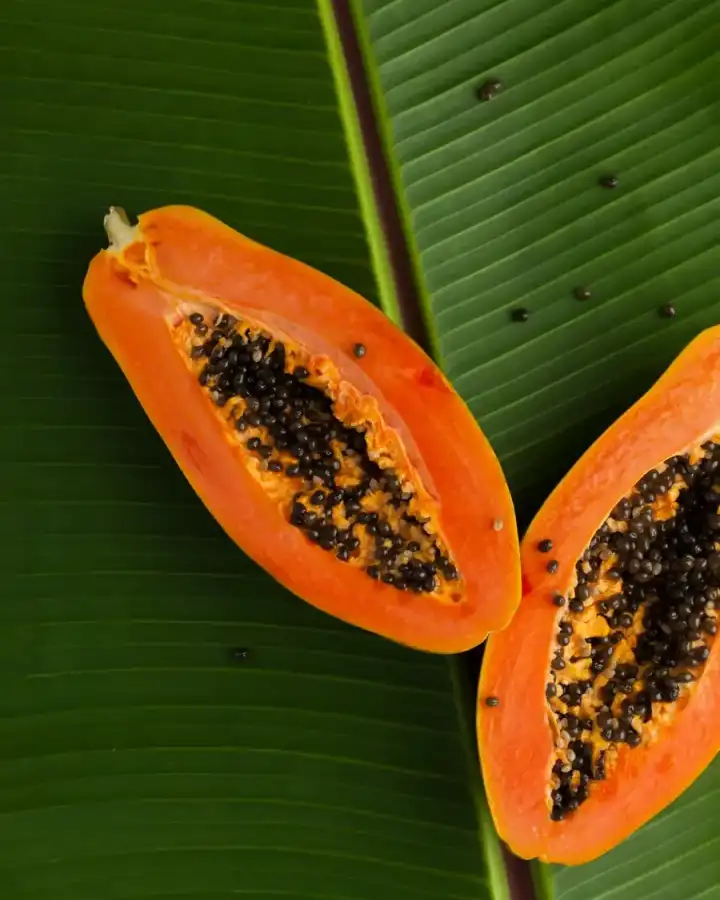
The beach screwpine (*kashikeyo*) is a different plant. Its large fruit was traditionally boiled and eaten. Our guide to tropical fruits of the Maldives covers it alongside breadfruit, papaya and bananas, which also turn up in curries and snacks.
Rice, flour and lentils
Rice
Rice is the daily staple, usually plain and boiled, eaten with fish broth, curry or a little rihaakuru. Rice flour goes into some short eats and sweets.
Wheat flour
Wheat flour makes *roshi*, the thin flatbread eaten with mas huni at breakfast and with curries later in the day, and the dough for many fried snacks. Our mas huni recipe includes a simple roshi.
Lentils and sugar
Lentils (*dhal*) go into curries and some short eats. Sugar, the third main imported staple, sweetens afternoon tea, puddings and desserts.
Spices and curry mixes
Dried spices are part of most Maldivian curries, and nearly all of them are imported. Many cooks buy or make their own curry powder or paste rather than measuring each spice. Addu City in the far south is known for its own spice blend, *havaadhu*, which the official tourism board lists as a local speciality used for tuna and chicken curries.
Exact mixes change from family to family and island to island, so if you want to cook a dish at home, ask your host which blend they use.
Where to buy Maldivian ingredients
On a local island
Every inhabited island has small grocery shops selling rice, flour, sugar, tinned tuna, rihaakuru in jars, valhoamas, dried spices, onions and coconuts. Fresh tuna comes from the island’s fishers, often in the afternoon when boats return. On Dhiffushi, see local minimarts and the fish market.
Curry leaves, limes and bilimbi are often grown at home rather than sold. Ask your host, and never pick from gardens or trees without permission.
In Malé
The local market on Malé’s northern waterfront sells fruit, vegetables and dried goods, and the fish market sits next door. Our guide to the Malé fish market and local market covers when to go and how to visit respectfully.
Taking Maldivian ingredients home
A jar of rihaakuru or a pack of valhoamas makes a good food souvenir. Before you pack it, check three things.
- Your home country’s rules. Many countries restrict fish, meat, plant and fresh food imports. Australia and New Zealand, for example, are strict about biosecurity. Check your own customs or biosecurity website before you fly, and declare food if asked.
- Hand luggage limits. Pastes and liquids, including rihaakuru, may count as liquids at airport security. Pack jars in checked luggage, well sealed.
- Maldivian export rules. Coral, shells, turtle products and some other marine items need a permit to leave the country. Never buy or collect them. For the full list, see our customs allowances guide.
Questions people ask
What is the most important ingredient in Maldivian food?
Tuna, closely followed by coconut. Most meals include tuna in some form: fresh in a curry, boiled as broth, smoked and dried as valhoamas, reduced to rihaakuru paste or tinned in mas huni. Grated coconut and coconut milk give most dishes their body and richness. Add onion, chilli and lime, and you have the base of nearly every Maldivian dish you will eat on a local island.
What is valhoamas?
Valhoamas is tuna that has been boiled, smoked and dried until it is very hard. It was the traditional way to keep fish without refrigeration and was once an important trade good. Cooks grate or shave it into curries, sambols and snack fillings for a deep savoury taste, and thin slices are fried until crisp. It is sometimes sold abroad as “Maldive fish”.
Is Maldivian food very spicy?
It can be. Small, very hot chillies are used fresh and in cooking, and curries often contain a spice blend as well. The heat is usually easy to control, though, because chilli is often served on the side with rice and broth. On a local island, ask for less chilli when you order, and taste a little first before adding more from the plate.
Which Maldivian ingredients are grown locally?
Coconuts, fresh tuna and garden plants such as curry leaves, fragrant pandan, limes, bilimbi, papaya, bananas and breadfruit are produced in the Maldives. Some islands also grow chillies and watermelon on farms. Rice, wheat flour, sugar, onions, lentils and most dried spices are imported, with a 2025 Maldives National University commentary putting imported staples at over 90% of supply.
Can I take rihaakuru or valhoamas home?
Often yes, but your home country decides. Many countries limit fish and food imports, so check your customs or biosecurity website before you travel and declare food if asked. Pack jars of rihaakuru in checked luggage, because pastes can count as liquids at security. Coral, shells and turtle products are different: they need a permit to leave the Maldives, so never buy them.
Where can I try home-style Maldivian cooking?
The easiest place is a local island. Guesthouses often serve mas huni and roshi at breakfast, and island cafés serve curries, rice with fish broth and short eats in the afternoon. Ask your host if a home-style lunch is possible. On Dhiffushi, our food guide explains what is served on the island and where to look.


