


Tropical fruits of the Maldives: what to try and where
From breadfruit crisps to drinking coconuts: the fruits that really grow on Maldivian islands, how they are eaten, and how to buy fruit on a local island.
 By Dhiffushi Island Council8 min readUpdated
The Maldives grows more fruit than most visitors expect. On local islands you will find papaya, bananas, breadfruit, mango, guava, star fruit and, of course, coconut growing in home gardens and small farm plots, while apples, grapes and much of the mango supply arrive by boat from abroad. The best way to taste local fruit is at breakfast in a guesthouse, at a small island shop, or at an iftar table during Ramadan.
Why fruit is special on a coral island
Maldivian islands are low, sandy and small, with thin soil and only a shallow lens of fresh water under the ground. That limits what can grow. Gardens sit in the band of better soil between the houses and the beach scrub, and most families tend a few trees rather than an orchard.
Many plants arrived with traders over the centuries. The Food and Agriculture Organization of the United Nations (FAO), in its work on Maldivian agriculture, notes that coconut, banana and taro are native, while breadfruit, mango, citrus and jujube came from the Malabar coast of India and Sri Lanka. Papaya, custard apple and watermelon came, much later, from the Americas.
Some fruits are everyday staples. Others grow on a single tree in someone’s yard, and you only taste them if a neighbour shares.
The fruits you are most likely to try
Dhivehi names below follow the FAO’s *Trees and shrubs of the Maldives*. Spellings vary from island to island, so do not worry if a host says it differently.
Coconut (ruh / kurumba)
The coconut palm is the national tree and grows wild on every island. A green drinking coconut, called *kurumba*, is the most refreshing thing you can buy on a hot afternoon. Mature coconuts are grated into almost everything, from *mas huni* at breakfast to curries and sweets. Our guide to the coconut palm in Maldivian life covers the tree in depth.
Banana (keyo)
Bananas are native and widely grown, and island families know them by variety. On one northern island the FAO recorded seven local names, including *bodukeyo* (big banana), *mosukeyo* and *raaskeyo*. Most are small and sweet. Green bananas and banana flower also go into curries and a vegetable version of *mashuni*.
Breadfruit (bambukeyo)
Breadfruit is the classic Maldivian tree fruit. The FAO describes it as abundant and a staple eaten at every stage of ripeness. You will meet it boiled with grated coconut, in curries, and above all as thin, salty breadfruit crisps sold in bags in island shops. It is starchy rather than sweet, closer to a potato than a peach.
Papaya (falho)
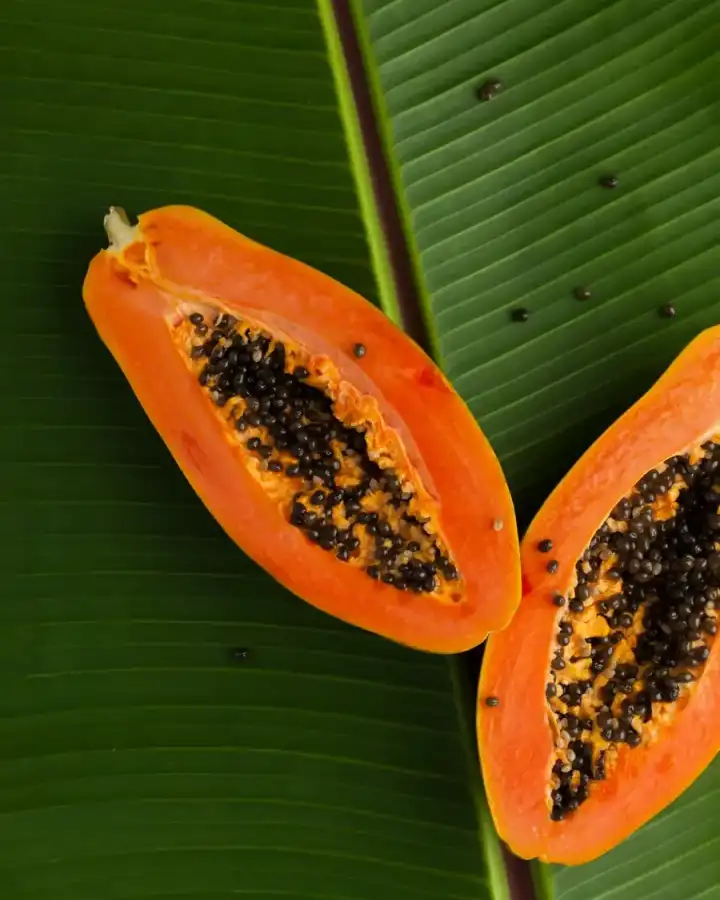
Papaya grows in home gardens across the country. Ripe papaya is the most common breakfast fruit in guesthouses. Unripe papaya goes into spicy curry.
Mango (anbu)
Mango trees grow on islands in the north and south, and fruit is eaten ripe, or green with *rihaakuru* (tuna paste) and chilli. Local trees are not enough to meet demand, though, and much of what you see in shops is imported.
Screwpine (kashikeyo)
The screwpine, or pandanus, is a beach tree with long, sword-shaped leaves and a large, segmented fruit that turns orange-yellow when ripe. The FAO lists it as *maakashikeyo* and says it grows along beaches on almost all islands. Traditionally the fruit was boiled and eaten, and the leaves were woven into mats. You will see the trees far more often than the fruit on a plate. Please leave wild screwpine alone: on a local island most trees belong to someone or to the community.
Watermelon
Watermelon is an introduced crop, but the Maldives now grows a lot of it. Thoddoo in Alif Alif Atoll is the best-known farming island. In 2023 its council told *The Edition* that the island had 112 farms, most of them growing watermelon, with production geared towards Ramadan, when demand in Malé peaks.
Fruits you might find in a garden
These grow mostly in home gardens. You are more likely to be offered them than to see them for sale.
- Guava (feyru): common in gardens; eaten raw or made into juice and jam.
- Star fruit (kaamaranga): occasional; eaten fresh, or salted and pickled when underripe.
- Bilimbi (bilimagu): a small, very sour relative of star fruit, used in curries and chutney rather than eaten raw.
- Lime (lunboa): common in gardens and squeezed over almost every meal.
- Pomegranate (annaaru): grown in gardens and pressed into a popular juice.
- Sapodilla (sabudheli): a soft, brown, caramel-sweet fruit eaten raw or blended.
- Soursop and sweetsop (anoanaa, Dhivehi atha): custard-like fruits; soursop is more common in the northern islands.
- Jackfruit (sakkeyo): occasional; the flesh is eaten fresh and the seeds boiled or roasted.
Seasons vary by tree and island, and there is no reliable national fruit calendar. As a rule, ask what is ripe this week rather than looking for a particular fruit.
Local fruit versus imported fruit
Most fresh produce in the Maldives is imported, mainly from India and Sri Lanka, and Maldives Customs records show regular imports of bananas, mangoes, papaya, guava and watermelon even though these also grow locally. That is simply a matter of scale: a few hundred small islands cannot feed half a million people and over two million visitors a year.
So when you buy fruit:
- Local: small bananas, papaya, breadfruit, coconuts, watermelon, limes and garden fruit, often sold in small quantities.
- Usually imported: apples, oranges, grapes and much of the mango supply.
Local fruit is often smaller and riper. If you care where it comes from, just ask.
How fruit is eaten locally
- At breakfast: sliced papaya and banana sit beside *mas huni* and *roshi* in many guesthouses.
- In curries: green papaya, green banana, banana flower and breadfruit all go into curries cooked with coconut milk.
- As snacks: breadfruit and banana crisps are sold everywhere and travel well.
- With salt and chilli: green mango, star fruit and guava are often eaten with salt, chilli or *rihaakuru*.
- As drinks: fresh juices, sweet sherbets and young coconut water are on every café menu.
For the dishes themselves, see our guides to Maldivian food and dishes to try and vegetarian and vegan food in the Maldives, where fruit and vegetable curries are easy options. For eating out on one island, see food in Dhiffushi.
Fruit during Ramadan
Fruit plays a big part in breaking the fast. Iftar tables fill with watermelon, dates, sweet drinks and short eats, and watermelon prices usually rise as demand climbs. If you visit a local island during Ramadan, eat and drink discreetly in daylight, and enjoy the evenings. Our guide to visiting Dhiffushi during Ramadan has the practical details.
Buying fruit on a local island
On a local island like Dhiffushi, fruit is sold at small general shops rather than at a separate market. Stock depends on the boat from Malé and on what local gardens have produced, so the choice changes day to day. See our page on local minimarts and the fish market for where to shop in Dhiffushi.
A few tips:
- Carry rufiyaa: small shops prefer local currency for small purchases.
- Shop early: fresh fruit sells out, especially the day after a supply boat.
- Expect closures: shops close for a while during Friday midday prayers.
- Ask your host: guesthouses can often get a drinking coconut or garden fruit from a neighbour.
- Refuse the bag: bring your own to cut plastic waste on a small island.
Malé has the widest choice of fruit in the country; our Malé city guide covers the capital.
Respect gardens and trees
Fruit trees on local islands almost always belong to a family or to the island community, even when they grow beside a public path or a beach. Coconuts and breadfruit are a real part of household food, not a free buffet.
- Never pick fruit from gardens, beach trees or public spaces without asking.
- Do not climb palms or knock coconuts down; falling nuts and fronds can also injure people.
- Watch for fruit bats: they feed on mango, papaya and breadfruit and are often seen at dusk.
For wider local-island manners, read our local island etiquette guide.
Questions people ask
What fruits grow in the Maldives?
Coconut, banana, breadfruit, papaya, mango, watermelon, screwpine, guava, lime and pomegranate are among the most common. Home gardens also hold star fruit, bilimbi, sapodilla, soursop, jackfruit and Indian almond. The FAO notes that coconut and banana are native, while most other fruits were introduced through trade with India, Sri Lanka and, later, the Americas.
Is fruit in the Maldives imported?
Much of it is. The islands grow coconuts, bananas, papaya, breadfruit, watermelon and garden fruit, but not enough for the whole population and its visitors. Customs records show regular imports of mangoes, bananas, papaya, guava and melons, mainly from India and Sri Lanka. Apples, grapes and oranges are almost always imported. Ask the shopkeeper if you want something local.
What is the national fruit of the Maldives?
The Maldives does not have an official national fruit. Its national tree is the coconut palm, which appears on the national emblem, and coconut is the most important fruit in Maldivian cooking. Breadfruit is the other great staple, eaten boiled, in curries and as crisps, and it is the fruit most visitors associate with island home cooking.
Can I pick coconuts or fruit on a local island?
No, not without permission. Fruit trees on local islands belong to families or the community, even if they grow beside a beach or a path. Picking fruit uninvited is rude and can cause real offence. Ask your guesthouse host instead; they can usually arrange a fresh drinking coconut or some garden fruit from a neighbour.
Where can I buy fresh fruit on a local island?
Small general shops sell fruit alongside groceries, and the choice depends on the latest supply boat from Malé and what local gardens have produced. Shop in the morning, carry some rufiyaa, and expect short closures during Friday prayers. Your guesthouse can often help too, and most serve fresh papaya and bananas at breakfast.
What is breadfruit and how do Maldivians eat it?
Breadfruit, or *bambukeyo*, is a large green tree fruit with starchy flesh, more like a potato than a sweet fruit. Maldivians boil it and eat it with grated coconut, cook it in curries, and slice it thinly into salty crisps sold in bags in island shops. It is naturally vegan and is a good snack for boat trips.


