Fish on the menu in the Maldives: what you are eating
Skipjack, yellowfin, groupers and smoked valhoamas: what fish you are eating in the Maldives, what to ask, and which protected species to never order.
 By Dhiffushi Island Council8 min readUpdated
In the Maldives, “fish” on a local menu nearly always means tuna: skipjack and yellowfin, caught one at a time by pole and line or handline. Reef fish such as groupers and snappers turn up as grilled fish or curry, especially in tourist cafés. A few species, including parrotfish, sharks, rays, turtles and the Napoleon wrasse, are protected and should never be on your plate.
Why fish matters so much here
On a coral island with little farmland, the sea has always been the larder, and that still shows in daily food. Breakfast, lunch, tea-time snacks and dinner can all include tuna in some form: fresh, dried, smoked or as a paste.
Fishing is also one of the country’s oldest industries and, after tourism, one of its most important.
Tuna: the fish behind almost everything
Skipjack (kanduli)
Skipjack is the everyday fish of the Maldives. It is a small, fast tuna with darker, richer flesh than the big steaks you may know from home. It goes into curries, soups, breakfast dishes and most short eats.
According to the Maldives’ national report to the Indian Ocean Tuna Commission, skipjack made up about 81% of the country’s tuna landings in 2023, and around 99% of that skipjack was caught by pole and line. That is a method where crews throw live bait to bring a school to the surface and then hook fish one by one with short poles. It is slow work, but it means very little bycatch. Read more in our guide to pole-and-line tuna fishing.
Yellowfin (kanneli)
Yellowfin is the larger tuna, with paler, firmer flesh. It made up the other 19% or so of tuna landings in 2023, and most of it is caught by handline. In cafés you will usually see it as a grilled steak, in sashimi-style dishes, or cubed in a curry. If a menu just says “tuna steak”, it is almost certainly yellowfin.
How tuna turns up on your plate
Tuna comes in many forms, sometimes several in one meal:
- Fresh – grilled, fried or in a curry such as mas riha.
- Boiled into broth – garudhiya, the clear fish soup eaten with rice, lime and chilli.
- Smoked and dried – valhoamas (see below), flaked into dishes.
- Canned – shredded tuna mixed with coconut, onion and chilli in mas huni, the classic breakfast.
- As a paste – rihaakuru, a thick, salty paste made by slowly boiling down tuna stock.
- In snacks – hedhikaa such as gulha, masroshi and kulhi boakiba nearly all hide tuna inside.
Valhoamas: the smoked fish of the islands
Valhoamas, often called “Maldive fish” abroad, is the traditional way of keeping tuna without a fridge. The fish is cleaned and cut, boiled in salted water, then smoked and dried until the pieces are very hard. It keeps for a long time without refrigeration, which made it a valuable trade good in the past.
In the kitchen it is grated or flaked and used like a seasoning: a little gives curries, sambols and rice dishes a deep, savoury taste.
If you are vegetarian, this is the hidden ingredient to watch for. Many dishes that look plant-based, including some vegetable curries and sambols, are seasoned with dried fish or rihaakuru. Our vegetarian and vegan food guide has tips on asking.
Reef fish you may be offered
Most tuna is caught out at sea, but reef fish are caught in and around the atolls. In Maldivian homes they are eaten less often than tuna; in tourist cafés and at beach barbecues they are more common. The names you will see most are groupers and snappers, both firm white fish, often grilled whole or as fillets. Other reef fish are often sold simply as “reef fish” or “catch of the day”, so ask what it is.
A whole grilled fish with garlic, chilli and lime is a very good meal. Just know that some reef species are under pressure, which brings us to the rules.
Groupers and size limits
Groupers are long-lived, slow to mature and gather in predictable spots to spawn, which makes them easy to overfish. The Ministry of Fisheries’ Grouper Fishery Management Plan, introduced in December 2020, set minimum landing sizes for 23 grouper species, based on research by the Maldives Marine Research Institute. It is illegal to catch, keep, land or export these groupers below their size limits. The institute had found that most of the highly valued groupers being landed were immature.
For you, the practical point is simple. A small, plate-sized grouper served whole is worth questioning. A larger fish served as fillets is more likely to have been caught legally.
How to order and what to ask
Menus on local islands are usually in English, and staff are used to questions such as:
- “Is this skipjack or yellowfin?” – useful if you prefer the richer or the milder taste.
- “Was it caught today?” – on many islands the answer is genuinely yes.
- “What kind of reef fish is it?” – if the answer is parrotfish, choose something else.
- “Is there fish in this?” – ask about sambols, curries and rice if you avoid fish.
Useful words: “mas” is fish, “kanduli” skipjack and “kanneli” yellowfin.
At tourist cafés, a 10% service charge and 17% tourism GST are commonly added to the bill, so check the menu notes.
Where to see fish before it reaches the table
Watching the catch come in is one of the best free experiences in the Maldives.
- In Malé, the fish market is a busy, working place where tuna is landed, sold and cleaned. Go in the afternoon, keep clear of the knives and ask before taking photos.
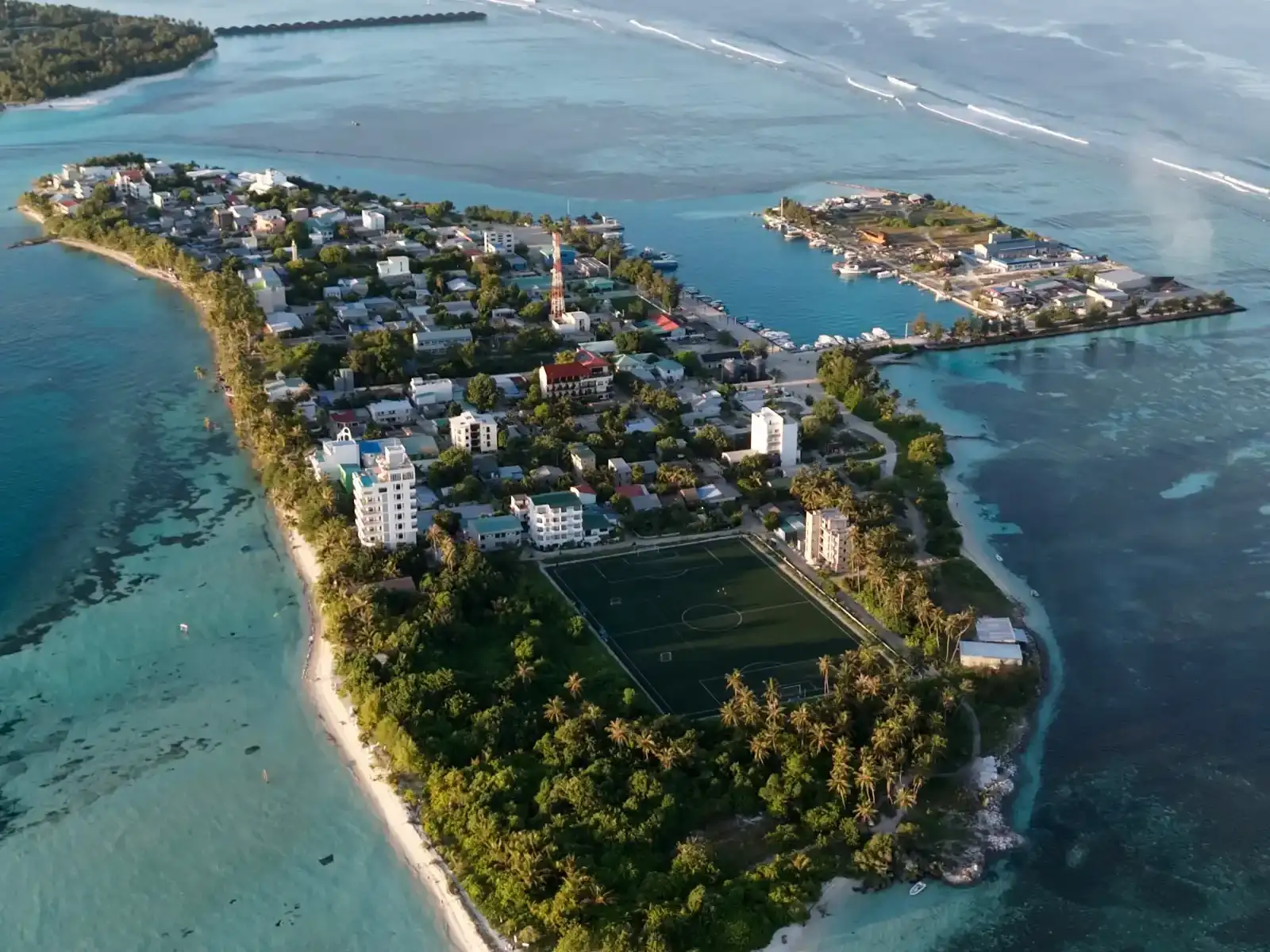
- On a local island, ask around the harbour. On Dhiffushi, for example, you can see the day’s catch at the local minimarts and fish market, and island cafés serve it grilled or curried.
- On the water, some local islands run evening line-fishing trips where the catch is grilled afterwards. Dhiffushi’s night fishing and beach barbecue is one example. Return small fish and anything protected to the water.
Eating fish responsibly
A few simple habits help keep fish on Maldivian plates for generations to come:
- Choose tuna first. Pole-and-line skipjack is a highly selective fishery.
- Be curious about reef fish. Ask what it is and roughly how big it was.
- Skip anything protected. Parrotfish, sharks, rays, turtles and Napoleon wrasse should never be on a plate.
- Don’t buy shells, coral or turtle products as souvenirs. Many marine products need a permit to leave the country, and some are banned outright.
- Eat local. Simple Maldivian dishes in local cafés usually use tuna caught nearby and support island families.
For more on caring for the reefs while you are here, see our responsible travel guide and Maldivian food: dishes to try.
Questions people ask
What fish is most commonly eaten in the Maldives?
Skipjack tuna, by a wide margin. It is the everyday fish in homes and local cafés, used fresh in curries and soups, smoked and dried as valhoamas, canned for mas huni and boiled into rihaakuru paste. Yellowfin tuna is the second most common, usually served as steaks. Reef fish such as groupers and snappers appear more often on tourist menus and at barbecues than at Maldivian family tables.
Is it safe to eat fish in the Maldives?
Generally, yes. Most fish is caught locally and eaten very fresh, often the same day. As anywhere in the tropics, choose busy places, make sure cooked fish is cooked through and take a little care with raw dishes if you have a sensitive stomach. If you have a fish allergy, remember that dried fish and fish paste hide in many dishes that do not look fishy, so always ask.
Can I eat parrotfish in the Maldives?
No. Parrotfish have been protected in the Maldives since September 2020, and their sale and display have been banned since 1 March 2021. They help keep reefs healthy by grazing algae and produce much of the white sand on the beaches. If a menu or a barbecue offers parrotfish, choose something else and, if you feel comfortable, mention politely that it is a protected species.
Is shark or ray meat sold in the Maldives?
You should not find either on a menu. Shark fishing was banned in 2010, and although a small licensed gulper shark fishery reopened outside the atolls in late 2025, other sharks remain protected. All rays, including mantas and stingrays, have been protected since 2014. Sea turtles are also protected. Living sharks, rays and turtles are worth far more to the islands through snorkelling and diving.
What is valhoamas?
Valhoamas is the traditional smoked and dried tuna of the Maldives, sometimes called Maldive fish. The tuna is boiled in salted water, then smoked and dried until it is very hard, so it keeps without refrigeration. Cooks grate or flake it into curries, sambols and rice dishes as a savoury seasoning. Vegetarians should ask about it, as it hides in many dishes.
Is Maldivian tuna sustainable?
The skipjack fishery has a strong reputation because about 99% of it is caught by pole and line, one fish at a time, with very little bycatch and no large nets. Yellowfin is mostly caught by handline, which is also selective. Tuna stocks are shared across the Indian Ocean and managed regionally through the Indian Ocean Tuna Commission, so locally caught line-caught tuna remains a sound choice.