


Waste and recycling in the Maldives: how islands cope
Where rubbish goes on a coral island: council waste centres, Thilafushi, new regional facilities, the single-use plastic phase-out and simple ways visitors can help.
 By Dhiffushi Island Council8 min readUpdated
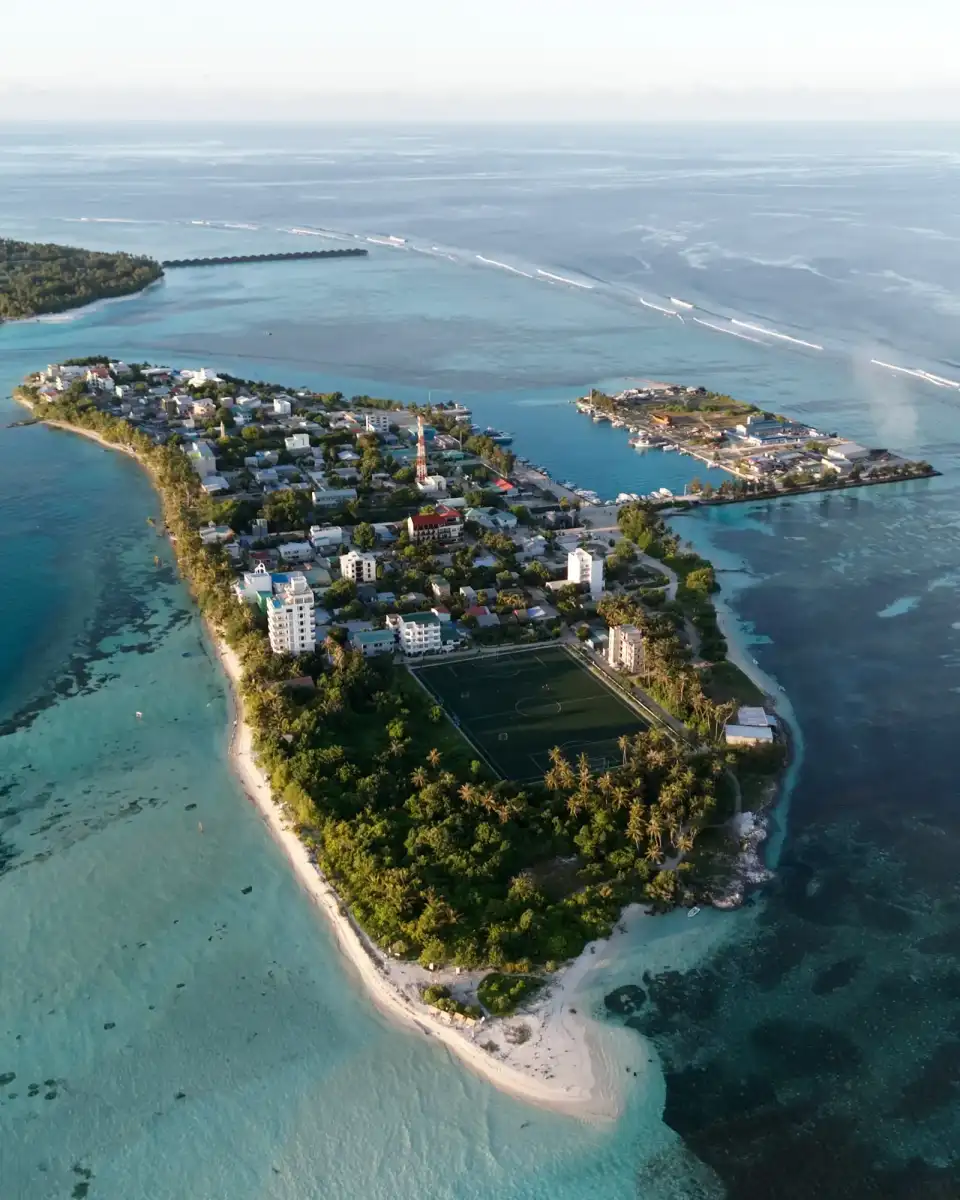
On a coral island a metre or two above the sea, there is no hidden valley to put rubbish in. Every bottle, wrapper and battery has to be collected, sorted, burned, baled or shipped away. Most inhabited islands now run a council-managed waste site, the Malé area sends its rubbish to the industrial island of Thilafushi, and the government is building a network of regional facilities. Visitors can help a lot by bringing less plastic and taking their own rubbish back.
Why waste is a big issue in the Maldives
The Maldives produces far more rubbish than its land can absorb. In July 2026 the environment ministry said the country generates about 517,000 tonnes of waste a year, and that the amount is growing by around 9% a year (as reported by Atoll Times).
A few things make this harder than in most countries:
- Space. Islands are small and low. Many have no room to store waste for long, and officials say some lack the space for the volumes they now produce.
- Distance. Waste has to move by land and by sea. The ministry says the cost of collection, transport and disposal is the main barrier to doing better.
- Imports. Almost everything arrives by ship, often in packaging, and the packaging stays behind.
- Tourism. The ministry puts resort waste at about 3.5 kg per guest night, compared with about 0.8 kg per person per day on rural islands and 1.2–1.7 kg in urban areas.
Who handles the rubbish
Island councils
On most inhabited islands, waste is a local job. Each island council organises collection and runs the island’s waste site, often called an island waste management centre. Our guide to island councils and local government explains how councils work.
At a typical island centre, waste is separated so that food and garden waste can be dealt with on the island, while plastics, metals and other material that cannot be treated locally are baled or stored for shipping. In 2024 the government launched a five-year national programme, *Magey Saafu Raajje* (“My clean Maldives”), and said island waste centres would be built or upgraded on 100 islands that year: 54 new centres and 44 repairs and expansions (as reported by state broadcaster PSM).
WAMCO and the Malé region
The Waste Management Corporation (WAMCO) is a state-owned company, wholly owned by the government, according to the Ministry of Finance’s state enterprise register. It took over waste management for the Malé region at the start of 2016. Its work includes moving waste from Malé to Thilafushi, running waste services in Villimalé and operating the Thilafushi site.
Regional waste facilities
The long-term plan divides the country into seven waste zones, with regional facilities to receive what islands cannot treat themselves. As reported by PSM, three regional centres are planned or in use:
- Thilafushi (Kaafu), the largest, serving Greater Malé and nearby islands.
- Vandhoo (Raa), built with World Bank and government funding to serve islands in the northern central atolls.
- Addu City, in the far south, where a regional centre is planned.
Plans and timelines have shifted over the years, so treat any opening date as a target rather than a promise. See our guides to Raa Atoll and Addu City for those regions.
Thilafushi and the waste-to-energy plant
For three decades Thilafushi, an island built on a lagoon west of Malé, has been the end of the line for rubbish from the capital, nearby islands and many resorts.
The Greater Malé Environmental Improvement and Waste Management Project, backed by the Asian Development Bank and other lenders, is changing that. Project documents describe more than 800 tonnes of mixed waste a day from Greater Malé, 32 inhabited outer islands and dozens of resorts. Waste is now sorted and baled at Thilafushi, and a waste-to-energy plant designed for about 500 tonnes a day is being built. A fire at the facility in July 2026 forced WAMCO to limit how much waste it accepted for a time, a reminder of how stretched the system is.
You cannot visit Thilafushi, and there is no reason to try. Our guide to Thilafushi explained covers its history, the plant and the debate around burning waste.
The law: what changed in 2026
The Waste Management Act was first ratified in December 2022. In August 2026 the President ratified its first amendment, after the People’s Majlis passed it on 17 August (President’s Office). The main points:
- Islands, and land leased for economic or industrial use, must have proper waste management systems, checked by the Utility Regulatory Authority.
- The Environmental Regulatory Authority can make rules to fine people whose waste breaches harm the environment or public health.
- Importing waste into the Maldives is now a criminal offence, and hazardous waste needs a permit.
- Shops no longer have to charge the fixed plastic bag fee at the till.
Officials have also said that current rules ban moving waste to inhabited islands, and that conditions for allowing it in practical cases are being considered (Atoll Times, July 2026).
Single-use plastic: the phase-out
The government keeps a list of single-use plastics to be phased out. As reported by PSM and Atoll Times, it covers items such as plastic straws, plates, cutlery and stirrers, styrofoam food boxes, plastic shopping bags, plastic-stemmed cotton buds and small shampoo and lotion bottles. These may not be made in the country, and imports are banned by set dates.
Plastic water bottles are on the list too, but the dates have moved several times. In December 2025 a ban on importing and producing 500 ml to 1 litre bottles was set for 1 December 2027. In September 2026 that was deferred again, to 1 December 2029, with a sales ban from 1 June 2030 (as reported by Edition). The reason given was that some islands still lack a proper water system and depend on bottled water. Our drinking water guide explains what to drink and how to refill.
A local island example
Some islands have led the way. According to its island council, Ukulhas in Alif Alif set up the first systematic island waste management system in the Maldives in November 2011,. Read more in our Ari Atoll guide.
On Dhiffushi, as on other local islands, waste is managed by the island council. If you spot a problem on a beach or public area during your stay, the Dhiffushi Island Council welcomes feedback.
What you will notice as a visitor
On a local island, you are likely to see:
- Bins near beaches, jetties and cafés. Use them, and do not leave bags on the ground, where crows tear them open.
- A waste site at the edge of the island. This is a working area, not a place to wander into.
- Rubbish on some shores. Plastic washes in from the ocean as well as from the islands. Seeing it is not always a sign of local neglect.
Resorts handle their own waste. Either way, nothing you throw away simply disappears.
What you can do
Small habits matter more here than at home. A few that make a real difference:
- Bring a refillable bottle. Most guesthouses offer filtered water or a dispenser. See staying in a guesthouse for what to expect.
- Say no to extra plastic. Carry a cloth bag, and skip straws and single-use cups.
- Pack less packaging. Take toiletries out of boxes before you travel, and choose bars or refills over small bottles.
- Take batteries and electronics home. Islands have very limited ways to deal with hazardous waste.
- Carry rubbish back from trips. On a sandbank or picnic island, bring a bag and take everything back to your guesthouse. Our sandbanks and picnic islands guide covers picnic etiquette.
- Never throw anything overboard. That includes cigarette ends and fruit stickers.
- Join a clean-up. Many islands organise beach and reef clean-ups. Ask your host.
- Protect the reef. Waste and runoff stress corals already under pressure. See our coral reefs guide.
For more on cutting your footprint, read our responsible travel guide.
Questions people ask
Where does rubbish go in the Maldives?
On most inhabited islands, waste goes to an island waste site run by the council, where it is sorted. Food and garden waste is dealt with locally, and other material is baled or stored for shipping. In the Malé area, the state-owned company WAMCO takes waste to Thilafushi. Regional facilities at Thilafushi and Vandhoo, with one planned for Addu City, receive waste from islands in their zones.
Is there recycling in the Maldives?
Some, but options are limited on small, remote islands. At island and regional sites, materials such as metal and plastic are separated, baled and shipped away. The best thing a visitor can do is reduce waste in the first place, especially plastic bottles and packaging that would otherwise need shipping.
Are plastic bags and straws banned in the Maldives?
Many single-use plastics are on a government phase-out list, including straws, plastic cutlery and plates, styrofoam food boxes and shopping bags, with import bans by set dates. Plastic water bottles from 500 ml to 1 litre are also on the list, but their ban has been deferred to December 2029. Carry a cloth bag and a refillable bottle to avoid the issue.
What is Thilafushi?
Thilafushi is a man-made industrial island west of Malé, built on a lagoon that became the capital’s rubbish tip in the early 1990s. It hosts the largest waste facility in the country, run by WAMCO, where a waste-to-energy plant is being built. It is a working site, closed to visitors. Our Thilafushi guide explains its history and what is changing there.
Can I leave rubbish on a sandbank or picnic island?
No. Sandbanks and uninhabited islands have no bins or collection, so anything left behind ends up in the sea. Bring a bag, take all your rubbish back to your guesthouse or boat, and pick up a stray piece or two of plastic if you can. Boat crews usually help, but it is everyone’s responsibility to leave the place as they found it.
Does the green tax pay for waste management?
The green tax is charged per guest per night: USD 6 at guesthouses and hotels with 50 rooms or fewer on inhabited islands, and USD 12 at resorts, larger properties and liveaboards. Children under 2 are exempt. As reported by state media, the money goes into a Green Fund that has paid for island projects including water, sewerage, waste management and coastal protection.

