Raa Atoll guide: boat builders and quiet islands
A quiet northern atoll of boat builders and fishing islands: Alifushi’s dhoni yards, Meedhoo’s old mosque, where you can stay and how to get there via Ifuru.
 By Dhiffushi Island Council8 min readUpdated
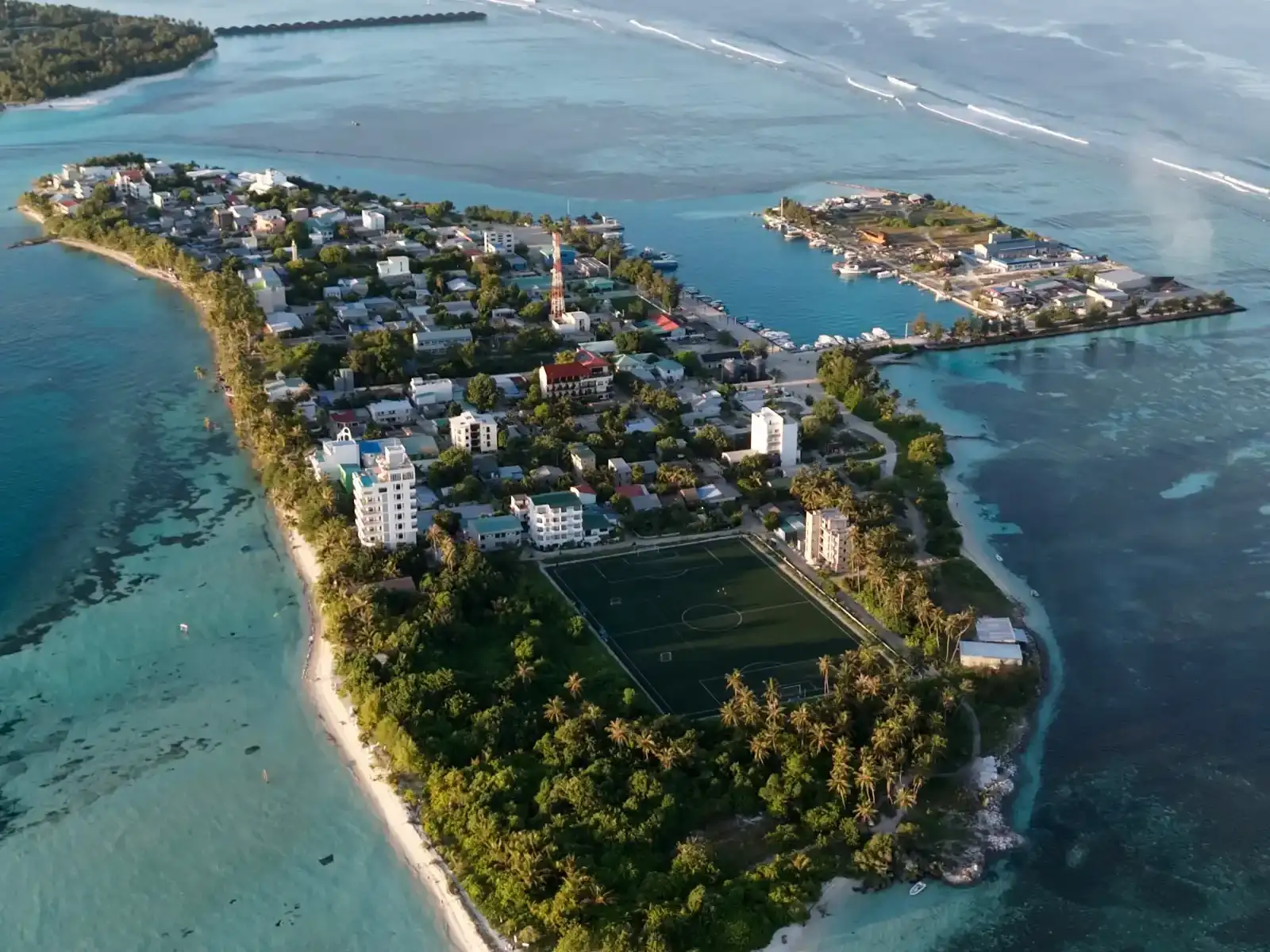
Raa Atoll is a quiet atoll in the north of the Maldives, best known for the boat builders of Alifushi and the old coral stone mosque on Meedhoo. Few independent travellers make it this far, so it suits people who want slow days on a local island rather than a busy tourist scene. You reach it by domestic flight to Ifuru, then a short boat ride, and only a handful of its local islands have registered guesthouses.
Where Raa Atoll is
Raa sits north of Malé, in the northern half of the old natural atoll called Maalhosmadulu. Its southern neighbour, Baa Atoll, forms the other half. The name “Raa” is the letter used for the atoll in the Thaana alphabet, which is how most Maldivian atolls got their everyday names. Our atolls guide explains how the natural and administrative atolls fit together.
The atoll is a broad ring of reefs, lagoons and small islands, with deep channels on its rim. Some islands are home to fishing communities, some are uninhabited, and a number are private resort islands with their own rules.
Raa in numbers
- People: about 18,350 residents lived on Raa’s inhabited islands at the 2022 census, with around 5,400 more, almost all foreign workers, on resort and other non-inhabited islands (Maldives Bureau of Statistics atoll profile).
- Inhabited islands: around 15 administrative islands were counted in the 2022 census.
- Airport: Ifuru domestic airport, opened by the President on 28 May 2015 (President’s Office).
The islands to know
Raa is not a place of big sights. Its interest lies in island life, crafts and history. Here are the islands visitors most often ask about, in A to Z order.
Alifushi
Alifushi, in the north of the atoll, is widely known as the main centre of dhoni building in the Maldives. Its yards build traditional wooden dhonis as well as modern fishing vessels and fibreglass boats. Skills have long passed from master carpenters to apprentices, often within families. If you are curious about the craft, read our guide to the dhoni, the traditional Maldivian boat before you go. Boatyards are working places, so ask before you walk in or take photos.
Dhuvaafaru
Dhuvaafaru is a newer community with a moving story. The 2004 tsunami badly damaged the crowded island of Kandholhudhoo, and the government decided to move its people. After living on other islands for several years, they settled on Dhuvaafaru, then uninhabited, in December 2008. The new island was built with housing, schools and a health centre in a Red Cross–led project.
Meedhoo
Meedhoo is home to one of the old coral stone mosques on the UNESCO Tentative List, as part of the “Coral Stone Mosques of Maldives” group. According to local tradition it dates from around the early 1700s. It is noted for its carved coral stone and the old burial stones in its graveyard. The mosque is a place of worship, so ask the island council or caretaker before visiting, dress modestly and take off your shoes. Our guide to the coral stone mosques of the Maldives covers all six sites and where the UNESCO nomination stands.
Ungoofaaru
Ungoofaaru has long been the administrative and service centre of Raa, with a busy harbour, government offices and shops. It is a practical place to see everyday island life in the atoll.
Where you can stay
As of October 2026, the Ministry of Tourism’s register of guesthouses lists registered guesthouses on four local islands in Raa:
- Alifushi
- Inguraidhoo
- Maakurathu
- Maduvvari
That is a small number compared with Kaafu or Alifu Alifu, and most are small places with a few rooms. Other islands may welcome visitors on day trips, but check with the island council before planning an overnight stay anywhere that has no registered guesthouse.
Raa also has several resorts on their own islands. As anywhere in the Maldives, resorts are private islands with their own rules and prices, and they are a different kind of holiday from a local island. Our guide to local islands vs resorts explains the difference.
Getting to Raa Atoll
By domestic flight
The usual route is a domestic flight from Velana International Airport to Ifuru. From there, a speedboat takes you to your island. Your guesthouse will normally arrange the boat and tell you how long the ride is. Flights are daytime only and schedules change, so book them together with your international flight if you can.
By seaplane
Seaplanes from Velana fly to some resort islands. They fly in daylight only, so a late international arrival may mean a night near Malé first.
By public ferry and speedboat
Raa is too far for a simple day trip from Malé by shared speedboat. Public ferries run between islands within atolls, but they are slow, need planning, and most do not run on Fridays. Check current routes with the Maldives Transport and Contracting Company (MTCC) or the island council. Our guide to getting around the Maldives covers every option.
Things to do
Snorkelling and diving
Raa’s reefs and channels hold the usual Maldivian reef life: reef sharks, turtles, rays and big schools of fish. Neighbouring Baa is famous for the manta gatherings at Hanifaru Bay; see our Baa Atoll guide. As a general pattern, mantas feed on the eastern sides of the atolls in the southwest monsoon (about May to November) and the western sides in the northeast monsoon.
Ask your guesthouse about trips with a licensed operator. Recreational diving is limited to 30 metres in the Maldives, and feeding sharks or rays is illegal. Our guide to snorkelling in the Maldives has more tips.
Island life
- Walk the island in the early morning or late afternoon, when it is cooler and people are out.
- Watch the fishing boats come in at the harbour.
- Try short eats and sweet tea at a local café.
- Visit a boatyard on Alifushi, with permission.
- Try traditional line fishing from a dhoni at sunset, if your guesthouse offers it.
Local island norms
Raa’s local islands are traditional, conservative communities. The usual Maldivian rules apply:
- Alcohol is not sold or allowed on local islands.
- Wear swimwear only on a designated bikini beach, if the island has one. Elsewhere, cover shoulders and knees.
- No nude or topless sunbathing anywhere.
- Shops and cafés close for a while at Friday midday prayer.
- During Ramadan, don’t eat, drink or smoke in public in daylight.
Not every small island has a bikini beach, so ask your guesthouse before you pack. Our guide to what to wear in the Maldives has more detail.
When to go
The Maldives is warm all year, with air temperatures of around 30–31°C and the sea at about 28–29°C. The northeast monsoon, roughly January to March, is the dry season. The southwest monsoon, from mid-May to November, brings more rain, wind and rougher seas, which can affect boat transfers. April and December are transition months. Leave a spare day before your flight home in case the weather delays a boat. See the best time to visit the Maldives.
Practical tips
- Money: carry some rufiyaa for small shops and cafés. Don’t count on finding an ATM that takes foreign cards, so bring enough cash.
- Health: small islands have a health centre, but the only fully equipped hospitals are in Malé and Hulhumalé. Get travel insurance that covers evacuation.
- Coral and shells: don’t buy or collect them; many marine products need a permit to leave the country.
If you want an easier first taste of local island life closer to the airport, Dhiffushi in North Malé Atoll is about 40–50 minutes by shared speedboat from Malé. See how to get to Dhiffushi.
Questions people ask
Is Raa Atoll good for a local island holiday?
Yes, if you want quiet. Raa has only a few local islands with registered guesthouses, so it feels far from the busier islands near Malé. You will see fishing, boat building and everyday life rather than a tourist strip. It suits travellers who are happy with simple days, snorkelling and conversation. If you want lots of cafés and excursions, an island closer to Malé may suit you better.
How do I get to Raa Atoll from Malé?
Most visitors take a domestic flight from Velana International Airport to Ifuru, Raa’s domestic airport, then a speedboat to their island. Seaplanes serve some resort islands, in daylight only. Public ferries exist within the atoll but are slow and most do not run on Fridays.
Which local islands in Raa have guesthouses?
As of October 2026, the Ministry of Tourism’s guesthouse register lists registered guesthouses on Alifushi, Inguraidhoo, Maakurathu and Maduvvari. The list changes as new places open and others close, so check the Ministry’s register or ask the island council before you book. Don’t plan an overnight stay on an island without a registered guesthouse unless the council has confirmed it is allowed.
Why is Alifushi famous?
Alifushi is widely known as the main boat-building island of the Maldives. Its yards build traditional wooden dhonis as well as modern fishing vessels and fibreglass boats, and building skills have long passed from master carpenters to apprentices. If you visit, remember the yards are working places. Ask before you walk in or take photos, and keep clear of tools and machinery.
Can I visit the old mosque on Meedhoo?
The old coral stone mosque on Meedhoo is on the UNESCO Tentative List as part of the Coral Stone Mosques of Maldives group. It is still a place of worship, so entry for non-Muslim visitors may be limited. Ask the island council before you go, cover your shoulders and knees, take off your shoes, and avoid prayer times. Its old carved burial stones are worth seeing.
Can I drink alcohol in Raa Atoll?
Not on local islands. Alcohol is not sold or allowed on any inhabited island in the Maldives, including those in Raa. It is only sold at licensed resorts, the airport hotel island and liveaboards. Alcohol brought into the country is confiscated on arrival. If you are staying on a local island, plan for fresh juice, coconuts and plenty of tea instead.