


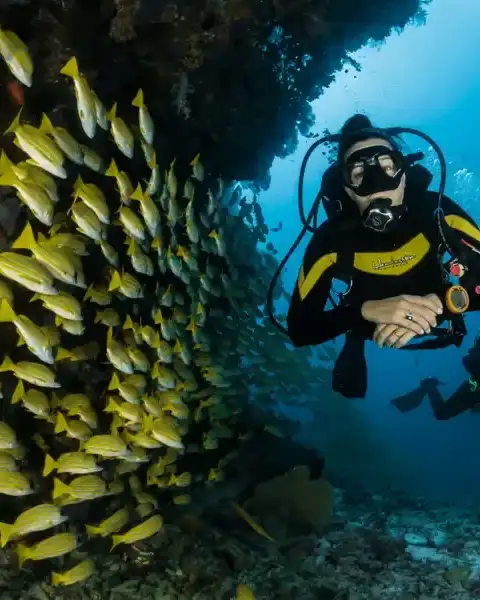
Snorkelling in the Maldives: from the beach and by boat
Snorkel the Maldives from a local island: free house reefs, affordable boat trips, turtles and reef sharks, seasons, safety and how to protect the coral.
 By Dhiffushi Island Council9 min readUpdated
Snorkelling in the Maldives is some of the easiest in the world: warm, clear water and coral reefs ring almost every island, so you can often swim from the beach in a few steps. On a local island you get two options: a free snorkel on the house reef, or an affordable boat trip out to healthier reefs, sandbanks and places where turtles, rays and reef sharks are often seen. Go with a buddy or a guide, respect the currents, and never touch the coral.
Why the Maldives is so good for snorkelling
The Maldives is a chain of coral atolls in the Indian Ocean, around 1,200 islands spread over a country that is almost all sea. Each atoll is a ring of reefs around a lagoon. That means shallow reef tops, sheltered lagoons and steep outer walls are never far from where you sleep.
A few things work in your favour:
- Warm water all year. The sea sits at about 28–29°C, so most people snorkel comfortably without a wetsuit. A rash vest is still a good idea against the sun.
- Reefs close to shore. Many local islands have a reef you can reach from the beach, and boat trips to outer reefs are often short.
Visibility and the seasons
The Maldives Meteorological Service describes two monsoons. The northeast monsoon (dry season) runs January to March, with calmer seas and usually the clearest water on many reefs. The southwest monsoon (wet season) runs from mid-May to November, bringing more rain, wind and choppier crossings, although plankton in the water at this time also draws manta rays and whale sharks to feeding sites. April and December are transition months.
For a month-by-month view, read our best time to visit the Maldives guide.
House reefs vs boat snorkelling trips
The house reef
“House reef” means the reef next to your island. On a local island it is free, you walk in from the beach, and it is the best place to get used to your mask.
Be realistic. House reefs near inhabited islands can be patchy, with damaged coral close to the shore and harbours. Treat them as a warm-up rather than the highlight. Dhiffushi is a good example: its house reef shore snorkelling is gentle and shallow near the beach, while the richer reefs are a short boat ride away. Our Dhiffushi beach guide explains which beach has the easiest entry.
Boat snorkelling trips
Most of the best snorkelling in the Maldives is done from a boat. On local islands, excursions are usually booked through your guesthouse or a local tour desk the day before. A typical trip looks like this:
- Half-day reef trips stop at two or three sites, such as a coral garden or a reef where turtles are often seen. The crew picks spots to suit the day’s current and weather.
- Sandbank trips combine snorkelling with time on a bare strip of white sand in the middle of the lagoon. Bring shade, water and sun cream, as there is usually none on the sand.
- Turtle, manta and shark trips visit reefs or cleaning stations where these animals are regularly seen. Longer full-day trips may go further afield to look for mantas or whale sharks, depending on the season and where you are.
Ask what is included (gear, life jackets, water, a guide in the water) before you book. To see how this works from one local island, read diving and snorkelling from Dhiffushi and Dhiffushi excursions: sandbanks, dolphins and island hopping.
What you might see
Wild animals keep their own timetable, so nothing here is guaranteed.
- Reef fish. The one thing you can almost count on: parrotfish, butterflyfish, surgeonfish and more.
- Turtles. Five of the world’s seven sea turtle species have been recorded in the Maldives. Green and hawksbill turtles are the ones most often seen, and they occur throughout the country. Both are threatened, and turtles have been protected by law in the Maldives since 1995.
- Reef sharks. Small reef sharks are commonly seen on shallow reefs and are not a danger to snorkellers who keep a respectful distance. The Maldives banned shark fishing in 2010; since November 2025 a small licensed fishery for deep-water gulper sharks is allowed outside the atolls only, and other sharks stay protected, one reason reef sharks remain a familiar sight.
- Rays. Stingrays often rest or feed in sandy shallows, and eagle rays sometimes glide along reef edges.
- Manta rays and whale sharks. These are the big ones. They gather at certain feeding and cleaning sites, often more during the southwest monsoon. Seeing them usually means a dedicated boat trip and some luck.
Stingrays bury themselves in sand, so shuffle your feet when wading.
Snorkelling safety in the Maldives
Most snorkelling problems come from currents, boats and the sun, not wildlife.
- Respect currents and channels. The gaps in an atoll’s reef (channels) can have strong currents, especially on a changing tide. Check with locals or your guide before swimming to the reef edge, and swim back early.
- Never snorkel alone. Always go with a buddy or a guide, and tell someone on shore where you are going and when you expect to be back.
- Stay away from harbours and boat lanes. Speedboats, ferries and fishing boats come and go close to local islands. Do not snorkel off the harbour or in the channels boats use.
- Wear a life jacket if you are a weak swimmer. Most boat trips carry them; ask for one. Children should wear one on every boat trip and in deeper water.
- Get gear that fits. A leaking mask spoils a snorkel and can cause panic. Fins help you swim against a current and save energy.
- Protect yourself from the sun. The sun near the equator is strong, and your back burns quickly while you float face down. Wear a long-sleeved rash vest, drink plenty of water and avoid the midday sun.
Travelling with children? Our Maldives with kids guide has more on safe swimming for families.
Reef etiquette: how to protect the coral
Coral grows slowly and breaks easily. A few simple habits help:
- Don’t stand on, kick or touch coral. Even a light touch can damage living coral. Practise floating in sand or deeper water, and watch where your fins go.
- Don’t touch, chase or feed animals. Give turtles space to come up for air, never ride or grab them, and keep well back from sharks and rays. Feeding fish changes their behaviour and harms the reef.
- Choose reef-friendly sun protection. A rash vest is the best option. If you use sun cream, consider a mineral, reef-safe type and put it on well before you get in the water.
- Take nothing away. Leave shells, coral and sand where you find them. Coral, turtles and some shells are protected in the Maldives, and many marine products cannot be taken out of the country without a permit. Don’t buy coral or turtle-shell souvenirs: they may be confiscated, and buying them fuels harm to the reef.
Marine protected areas
The Maldives has dozens of officially protected areas, listed by the Environmental Protection Agency, including reefs, islands and dive sites. Rules differ, but fishing, anchoring and taking anything is usually restricted. Two well-known examples:
- Hanifaru Bay, Baa Atoll. Declared a protected area on 5 June 2009 and extended on 5 June 2011, Hanifaru is a core zone of the Baa Atoll UNESCO Biosphere Reserve (2011). Manta rays, and sometimes whale sharks, gather here to feed during the southwest monsoon. Visitor numbers and time in the bay are limited, and only snorkelling is allowed.
- South Ari Marine Protected Area. Also protected since 2009, this stretch of reef in South Ari Atoll is one of the few places where whale sharks are seen all year round. Boat strikes are a known threat, so follow your crew’s instructions about distance and never swim in front of the animal.
North Malé Atoll has manta sites too; see our manta and whale shark season page.
Renting gear or bringing your own
Masks, snorkels and fins can be hired on almost every local island, and many boat trips include gear.
Bring your own if:
- You snorkel a lot. A mask that fits your face makes a real difference.
- You need a prescription mask. These are hard to find locally.
- You’re travelling with children. Children’s sizes can run out.
To test a mask, press it to your face without the strap and breathe in gently through your nose: if it stays on, it fits.
Underwater photography tips
- Test your waterproof case in a sink before the trip.
- Shoot close and shallow, with the sun behind you: water absorbs colour fast.
- Don’t chase the shot. Never touch coral or crowd an animal; calm snorkellers get better photos.
- Rinse your camera in fresh water after every swim.
Questions people ask
Can you snorkel from the beach in the Maldives?
Yes. Many islands have a house reef you can reach by walking in from the beach, and on local islands it costs nothing. Near inhabited islands the coral close to shore can be patchy, so treat the house reef as a warm-up. For healthier reefs and more wildlife, most travellers add at least one boat snorkelling trip. Always check currents first and keep away from the harbour.
What is the best time of year for snorkelling in the Maldives?
You can snorkel all year. The Maldives Meteorological Service names January to March as the dry northeast monsoon, often with calmer seas and clear water. Mid-May to November is the wetter southwest monsoon, with choppier crossings, but it is also when mantas and whale sharks gather at well-known feeding sites. April and December are transition months.
Do I need to be a strong swimmer to snorkel?
No, but you should be comfortable in water. Weak swimmers can snorkel in shallow lagoons or wear a life jacket on boat trips, which most excursions carry. Tell your guide before you get in so they can keep an eye on you. Never snorkel alone, and avoid reef edges and channels where currents can be strong.
Will I see turtles and sharks?
There’s a good chance, but no one can promise it. Green and hawksbill turtles are the most commonly seen of the five turtle species recorded in the Maldives, and small reef sharks are a familiar sight on shallow reefs. Boat trips to reefs where they are regularly seen improve your odds. Keep your distance and never touch them.
Can I take shells or coral home from the Maldives?
Please don’t. Coral, turtles and some shells are protected in the Maldives, and many marine products cannot leave the country without a permit, so they may be confiscated at the airport. Collecting them also harms reefs and beaches. Take photos instead, and check with Maldives Customs if you are unsure about a souvenir.
Should I rent snorkel gear or bring my own?
Gear is easy to hire on most local islands and is often included on boat trips. If you snorkel a lot, need a prescription mask or are travelling with young children, bringing your own is worth it, because a well-fitting mask makes snorkelling far more comfortable. Pack a rash vest too, for sun protection.


