


Plants and trees of the Maldives: what grows on an atoll
From magoo hedges on the beach to breadfruit and banyan in the village: what grows on a Maldivian coral island, and why those plants matter.
 By Dhiffushi Island Council8 min readUpdated
A Maldivian coral island grows a small but tough set of plants. Salt-tolerant shrubs like magoo (scaevola) and boshi (beach heliotrope) hold the beach, while coconut palms, screwpine, breadfruit, Indian almond and banyan trees grow further in. Government figures record 583 vascular plants in the country, more than half of them cultivated, and fewer than 100 are thought to be truly native.
Why so few plants grow on a coral island
Every island in the Maldives is built from coral sand and rubble, sitting only a little above the sea. That makes life hard for plants.
- Thin, young soil. The FAO’s *Trees and Shrubs of the Maldives* (2007) describes a shallow brown topsoil over coral limestone, often with a hard cemented layer that only big tree roots can break through.
- Alkaline and hungry. Soils run at pH 8.0–8.8 and lack nitrogen, potassium and several trace elements. Water drains away quickly.
- Salt and wind. Plants near the shore live with constant spray and sea breezes.
That is why, of the 583 plants in the Ministry of Environment’s 2015 biodiversity report, 323 (55%) are cultivated. Much of the greenery you see was planted by people at some point.
Three zones, from sand to shade
Walk inland from almost any beach and you pass three plant zones, as described in both the government report and the FAO guide.
The foreshore
This is the strip of sand between the high-tide line and the top of the beach. Waves, wind and spray hit it constantly, so almost nothing grows here except creeping vines such as beach morning glory that trail over the sand and help bind it.
The beach crest
The beach rises to about a metre above high tide and runs 5–20 metres inland. This is where the hardy shrubs live:
- Magoo (*Scaevola taccada*) is the most common beach scrub across the country. It forms a dense hedge three to four metres tall that takes the full force of the wind.
- Boshi (*Tournefortia argentea*, beach heliotrope) has soft, silvery leaves and grows very close to the sea, especially on drier northern islands.
- Kuredhi (*Pemphis acidula*) makes thick, tangled stands on old reef rock, often with its roots wetted by the tide.
- Uni (*Guettarda speciosa*) appears on the highest beach crests.
The inner island
Sheltered by the beach scrub, the middle of the island can support real trees. On many islands this means coconut groves; elsewhere it is a mixed forest of screwpine, sea hibiscus, Alexandrian laurel, Indian almond and other trees, with smaller shrubs such as noni underneath.
Trees you will notice
Dhivehi names follow the FAO guide; spellings vary.
| Tree | Dhivehi name | Where you see it |
|---|---|---|
| Coconut palm | see our coconut guide | Everywhere: groves, gardens, beaches |
| Screwpine (pandanus) | kashikeyo | Beaches and the edges of villages |
| Breadfruit | bambukeyo | Gardens and village lanes |
| Indian almond | midhili | Beach edges and shady corners |
| Banyan | nika | Village squares and beaches, for shade |
| Alexandrian laurel | funa | Mixed forest, old village trees |
| Sea hibiscus | dhiggaa | Damp ground and inner forest |
Coconut palm
The coconut palm is the national tree and the plant that shaped island life: food, drink, rope, thatch and timber all came from it. We have a full guide to the coconut palm in Maldivian life.
Screwpine (kashikeyo)
Look for a tree that seems to stand on stilts. These are prop roots, and the leaves grow in tight spirals with spiny edges. The FAO guide describes the large beach screwpine (*Pandanus odoratissimus*, which it calls maakashikeyo) as abundant on almost every island. Its ripe orange-red fruit was a famine food and is still used in drinks and sweets, including a screwpine version of bondibaiy. Dried leaves were made into soft mats. A smaller cousin, raampa, is grown in gardens for its fragrant leaves, which go into curries.
Breadfruit (bambukeyo)
A big tree with large, deeply cut leaves and round green fruit. The government report calls breadfruit an important part of the traditional island diet. The FAO guide notes it grows almost anywhere on an island except right by the beach, and its timber and sap were used in boat building. See tropical fruits of the Maldives for how it is eaten.
Indian almond (midhili)
A broad shade tree with big leaves. Its fruit floats, so it spreads from island to island by sea. The timber was used for boat keels, and the nut inside the fruit is edible.
Banyan (nika)
The banyan, with roots hanging from its branches, is the great shade tree of the islands. The FAO guide records it being used for beach and village shade and, in the past, for mast poles.
Alexandrian laurel (funa) and other boat trees
Funa is a broad, glossy-leaved tree that copes with wind, salt and drought. It was prized for building boats, along with kaani (*Cordia subcordata*), hirundhu (*Thespesia populnea*) and others. The government report notes that 15 tree species were traditionally used to build dhonis, and that so many have been depleted that timber for boats and houses is now largely imported.
Mangroves and wetlands
Some islands have a brackish pond or marshy hollow fringed with mangroves. The Ministry of Environment counted 15 mangrove species in 2020, growing on around 150 islands. They are a different world from the dry beach scrub, and we cover them in our guide to mangroves and wetlands of the Maldives.
How plants protect the islands
The ring of shrubs and trees around an island is more than scenery. Its roots bind the sand and its leaves take the brunt of wind and spray, sheltering the gardens and homes behind.
- Natural sea wall. The FAO guide calls for multi-layered “bioshields” of native coastal trees, with magoo and halaveli (*Suriana maritima*) at the front and taller trees behind. It notes that trees and shrubs help reduce the damage from tidal waves and tsunamis.
- Sand and erosion. Screwpine, sea hibiscus and beach heliotrope all help hold sand on the beach crest.
- Cooler islands. The government report warns that losing mature trees makes islands hotter.
That same report says vegetation cover is falling as land is cleared for housing, farming and facilities such as football grounds. Felling, uprooting or moving palms and trees between islands is controlled by a national regulation. For the bigger picture on rising seas, read is the Maldives sinking?
Plants and wildlife
Island trees are homes as well as shade. Fruit bats roost and feed in island trees, and lhos (*Pisonia grandis*) is an important beach-forest tree on seabird islands; its sticky seeds travel on birds’ feathers. Some uninhabited islands keep something closer to the original forest. Read more in land animals of the Maldives, birds of the Maldives and uninhabited islands in the Maldives.
Seeing island plants on a local island
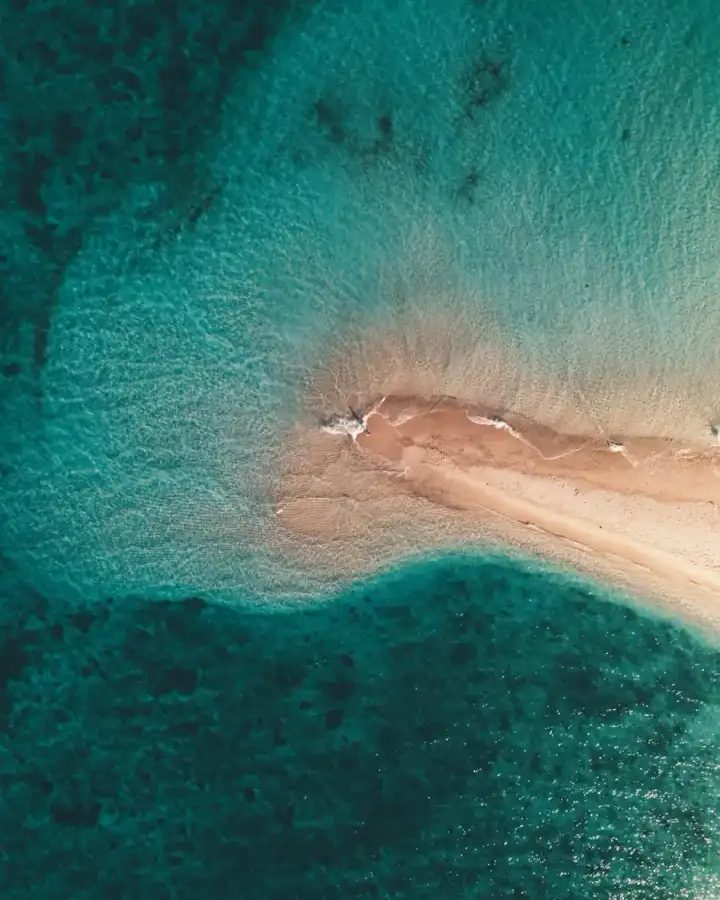
A slow walk around any local island shows you all three plant zones. In Dhiffushi, the bikini beaches are shaded by palms, while the open sandbanks offshore have almost no shade at all, which tells you a lot about how much those trees matter. Try a village walk in the early morning or late afternoon and look for breadfruit and banyan trees between the houses, then walk out to the beach scrub. Our Dhiffushi beach guide covers where to find shade.
How to treat island plants
- Leave them where they are. Do not pick flowers, break branches or dig up plants, and never take plants or seeds home.
- Ask before you pick fruit. Almost every coconut, breadfruit and mango tree on a local island belongs to someone.
- Stay off the beach scrub. Walking through magoo or boshi damages the roots that hold the sand. Use existing paths.
- Watch for falling coconuts. Do not sit or park a bike directly under a heavy palm.
- Do not bring plants in. New species can become invasive on small islands, a problem the government report flags.
For more ideas, see our guide to responsible travel in the Maldives.
Questions people ask
What trees grow in the Maldives?
The most common is the coconut palm, the national tree. Inland you will also find screwpine (kashikeyo), breadfruit (bambukeyo), Indian almond (midhili), banyan (nika), Alexandrian laurel (funa) and sea hibiscus (dhiggaa). Along the beaches, hardy shrubs such as magoo (scaevola) and boshi (beach heliotrope) form a green hedge. Gardens add mango, papaya, lime and banana.
How many plant species are there in the Maldives?
The Ministry of Environment’s fifth national report to the Convention on Biological Diversity (2015) records 583 vascular plants. Of these, 323, or 55%, are cultivated, and 260 are native or naturalised. Fewer than 100 are thought to be truly indigenous. The low number reflects the thin, salty, alkaline soils of coral islands, which only a limited range of plants can tolerate.
What is magoo?
Magoo is the Dhivehi name for *Scaevola taccada*, a salt-tolerant shrub that is the most common beach scrub in the Maldives. It grows on the beach crest, forming a dense green hedge three to four metres tall that shields the island from wind and spray. Its roots help hold the sand in place, and walking through it damages the beach.
Can you eat screwpine fruit?
The ripe fruit of the large beach screwpine has long been eaten in the Maldives. It was a famine food and is still used in juices and sweets, including a screwpine version of bondibaiy, the rice pudding. Not every screwpine is edible: the FAO guide notes that the fruit of a smaller species causes an itchy feeling on the tongue. Ask a local before you try any.
Why are trees important on Maldivian islands?
Trees and shrubs bind the coral sand, slow erosion and act as a windbreak against salt spray, protecting homes and gardens behind them. The FAO recommends layered belts of native coastal trees as a natural defence against storms and high waves. Trees also keep islands cooler, give shade in a hot climate, and provide homes for fruit bats and nesting seabirds.
Can I take plants or seeds home from the Maldives?
It is best not to. Plants and seeds on local islands usually belong to someone, and taking them damages fragile island vegetation. Most countries also have strict rules on bringing plant material in, so you may be stopped at your home border. Take photographs instead.


