


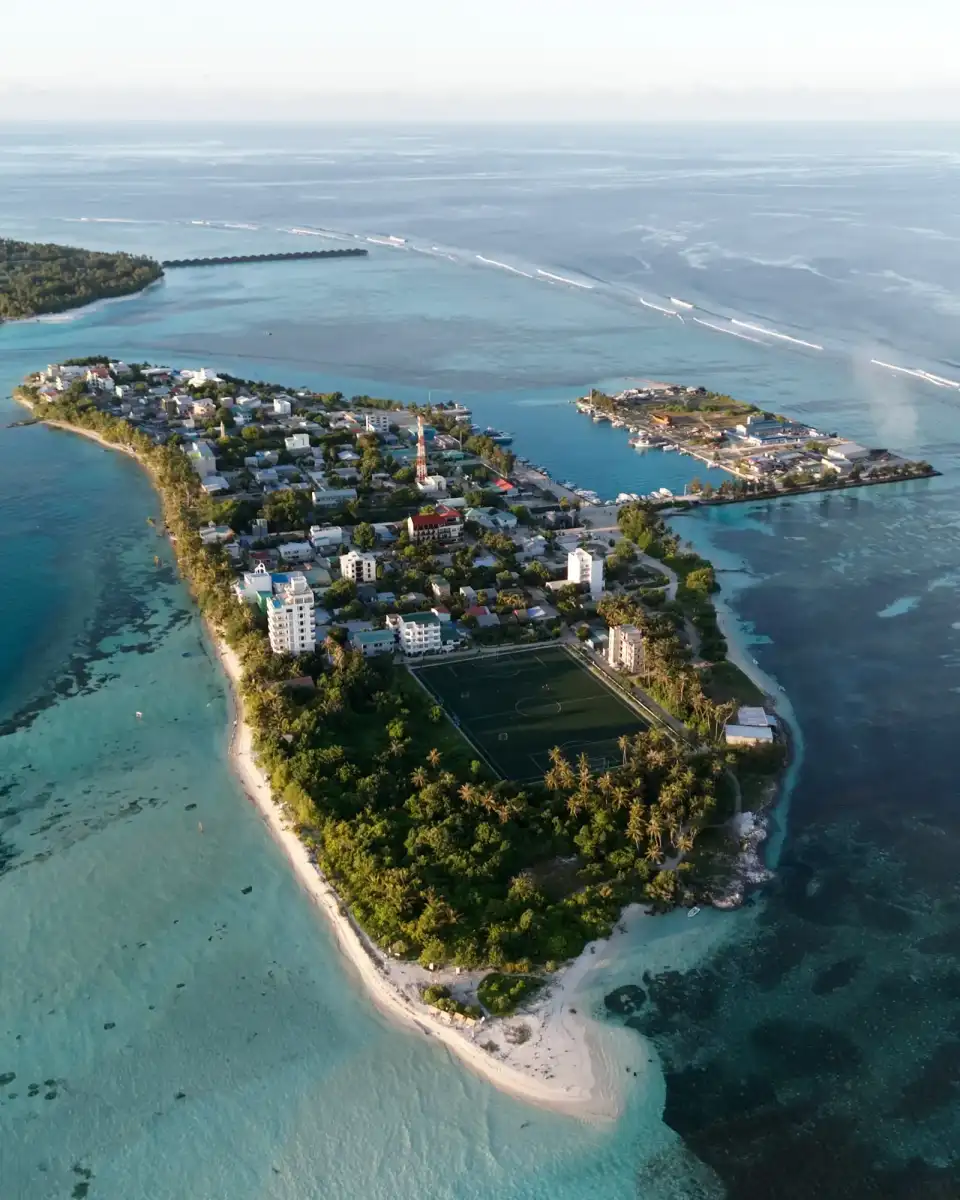
The far north of the Maldives: Haa Alif and Haa Dhaalu
Haa Alif and Haa Dhaalu: Utheemu’s wooden palace, an old coral stone mosque, Kulhudhuffushi’s wetland and the new Hanimaadhoo airport.
 By Dhiffushi Island Council8 min readUpdated
The far north of the Maldives is made up of two administrative atolls, Haa Alif and Haa Dhaalu, which together take in the top of the country’s long chain of reefs. It is the home island of the national hero Sultan Mohamed Thakurufaanu, has one of the oldest coral stone mosques, and since November 2025 has had its own international airport at Hanimaadhoo. Expect quiet local islands, few visitors and a slower, more self-reliant kind of trip than in the atolls around Malé.
Where the far north is
Haa Alif is the northernmost administrative atoll of the Maldives, and Haa Dhaalu sits just south of it. Together they cover the northern part of the natural atoll known as Thiladhunmathi (often called Boduthiladhunmathi, “great Thiladhunmathi”). Island names are often written with the atoll code in front, as in HA. Utheemu or HDh. Kulhudhuffushi.
For a wider picture of how natural and administrative atolls fit together, see our Maldives atolls guide.
What sets the north apart is distance from Malé (most visitors fly), a landscape of inhabited local islands rather than resorts, and a history tied closely to the end of Portuguese rule in the 16th century.
Getting there
Flying in
The simplest way north is a domestic flight from Velana International Airport to one of the northern airports. The main one is Hanimaadhoo International Airport in Haa Dhaalu. It was redeveloped with a line of credit from India’s Exim Bank and officially inaugurated on 9 November 2025, with a longer runway that can take narrow-body jets and a new terminal designed for about 1.3 million passengers a year. Some finishing works were reported as continuing into 2026.
International flights to Hanimaadhoo have operated at times, but routes change, so check current schedules with the airlines rather than relying on older reports.
Kulhudhuffushi Airport, a smaller domestic airport, also serves Haa Dhaalu. It was officially opened in 2018 and began commercial flights in 2019. Its building was controversial because part of the island’s mangrove wetland was reclaimed for it.
For booking, baggage limits and how domestic flights connect with your international arrival, read seaplanes and domestic flights in the Maldives.
Getting between islands
Once you land, you move on by speedboat or local ferry within the atoll. These services are run locally and change often, so:
- Ask your guesthouse to arrange the boat from the airport before you arrive.
- Expect fewer departures than around Malé, and fewer still on Fridays.
- Leave a buffer day before your international flight home in case of weather.
Haa Alif: the northernmost atoll
Utheemu and Utheemu Ganduvaru
Utheemu is the island most visitors come north to see. Its wooden palace, Utheemu Ganduvaru, is where Sultan Mohamed Thakurufaanu was born and grew up. He led the fight that ended Portuguese rule in Malé (1558 to 1573), a victory still marked each year on National Day.
The palace is a timber building on coral stone foundations, with woven walls, carved woodwork and swing beds. It has been repaired many times; sources place the original building around the early 1500s. Islanders have cared for the house and its relics for generations, and it now works as a small museum, with a memorial centre close by. A small entrance fee is charged.
More about the palace and other heritage places is in our guide to historical sites of the Maldives.
Ihavandhoo and its old mosque
Ihavandhoo is home to the Ancient Mosque of Ihavandhoo, one of six coral stone mosques on UNESCO’s Tentative List and part of the Maldives’ nomination submitted in January 2026. Its minaret is built with lime mortar, and an old octagonal well is still used. It is an active place of worship, so visit outside prayer times, dress modestly and ask before going in. Read the coral stone mosques of the Maldives before you go.
Dhidhdhoo
Dhidhdhoo has long been the administrative centre of Haa Alif, with the services that come with it: a hospital, schools, shops and a busy harbour. Atoll councils were abolished in May 2026, so it is best thought of as the atoll’s main service island rather than its “capital”. Several small guesthouses operate here, which makes it a practical base for day trips to Utheemu and other islands.
Uligan and the northern islands
Uligan, near the top of the atoll, is where many cruising yachts first clear in to the Maldives. Maldives Ports Limited awarded a contract in March 2026 to build a yacht marina there with customs and immigration services. Further north still is Thuraakunu, commonly described as the northernmost inhabited island of the country.
Haa Dhaalu: airports, a city and wetlands
Hanimaadhoo
Hanimaadhoo is the main arrival point for the far north. Small guesthouses operate on the island, and its long beaches make it an easy first or last night before a flight. Expect more building and change now that the airport is open.
Kulhudhuffushi City
Kulhudhuffushi is the largest town in the north. It was designated a city from 1 January 2020, the fourth in the country after Malé, Addu City and Fuvahmulah City, and the only one in the north. It has a regional hospital, a busy commercial harbour, shops and banking.
The island has two things worth slowing down for:
- Its mangrove wetland. Kulhudhuffushi has one of the larger mangrove wetlands in the Maldives. Part of it was reclaimed for the airport, and the rest was the focus of a public campaign to protect it. In 2019 volunteers recorded the rare *Bruguiera hainesii* mangrove here. See mangroves and wetlands of the Maldives.
- Its coir tradition. The island is remembered for coir rope, twisted from coconut husk fibre and once prized by sailors. Read more in traditional crafts of the Maldives.
Staying on a northern local island
The far north is local-island country. The same rules apply here as on any inhabited island, and in a small, less-visited community they are noticed more:
- No alcohol is sold or allowed on local islands. Only resorts, the airport hotel island and liveaboards are licensed.
- Swimwear only on a designated bikini beach. Elsewhere, cover shoulders and knees. No nude or topless sunbathing anywhere.
- Friday prayers. Shops and cafés close around midday prayer.
- Ramadan. Don’t eat, drink or smoke in public in daylight.
- Cash. Carry rufiyaa for small shops and boats.
- Medical care. Larger islands have hospitals, but the only fully equipped hospitals in the country are in Malé and Hulhumalé, so good travel insurance matters more the further you go.
Not every island has a bikini beach, so ask your host before you book. Our local islands guide covers the basics.
For comparison, Dhiffushi, our own island in Kaafu Atoll, is only 40 to 50 minutes by shared speedboat from Malé. If your time is short, an island near the capital, such as those in our North Malé Atoll guide, is easier. The far north rewards travellers with more days and patience.
When to go
The north follows the national monsoon pattern (Maldives Meteorological Service). January to March is the dry northeast monsoon, with calmer seas for boat transfers. Mid-May to November is the wetter southwest monsoon, with rougher crossings; April and December are transition months. It is hot all year, around 30 to 31°C.
Before you go
Confirm your guesthouse first, then flights, and ask your host to arrange the boat. Allow at least four or five nights, and check the visa and entry requirements, including the IMUGA Traveller Declaration within 96 hours before arrival.
Questions people ask
Which atolls are in the far north of the Maldives?
The two northernmost administrative atolls are Haa Alif and Haa Dhaalu. Together they cover the northern part of the natural atoll of Thiladhunmathi. Haa Alif includes Utheemu, Ihavandhoo, Dhidhdhoo and Uligan, while Haa Dhaalu includes Hanimaadhoo and Kulhudhuffushi City. Most islands are inhabited local islands rather than resorts, so the region suits travellers who want everyday Maldivian life and quiet beaches.
How do I get to Hanimaadhoo from Malé?
Take a domestic flight from Velana International Airport. Hanimaadhoo International Airport in Haa Dhaalu was officially inaugurated on 9 November 2025 after a major upgrade, with a longer runway and a new terminal. From there, guesthouses usually arrange speedboats or local boats to other islands. Check current schedules with the airline, and leave a buffer day before your international flight home in case of weather.
Can I visit Utheemu Ganduvaru?
Yes. The wooden palace where Sultan Mohamed Thakurufaanu grew up is now a small museum on Utheemu island in Haa Alif, with a memorial centre nearby and a modest entrance fee. Islanders have looked after it for generations. Dress modestly, remove shoes where asked and follow the guide’s lead on photography. Most visitors stay on a nearby island such as Dhidhdhoo and travel over by boat for the day.
Are there guesthouses in Haa Alif and Haa Dhaalu?
Yes, though far fewer than around Malé. Small guesthouses operate on islands including Hanimaadhoo and Dhidhdhoo, and more are expected now that the new airport is open. Choices are limited, so book ahead, especially in the dry season. Ask your host which beaches visitors can use and how they will arrange your boat from the airport, because transfers here are less frequent.
Is the far north good for a first trip to the Maldives?
It can be, if you have time and like slow travel. Getting there needs a domestic flight and a boat, so it suits trips of a week or more. If you only have a few days, a local island near Malé, such as Dhiffushi in Kaafu Atoll, is quicker to reach. The north is better for a second trip or for travellers keen on history and quiet islands.
Can I drink alcohol in the northern atolls?
Not on local islands. Alcohol is not sold or allowed on inhabited islands anywhere in the Maldives, and that includes every guesthouse island in Haa Alif and Haa Dhaalu. Only resorts, the airport hotel island and liveaboards are licensed. Alcohol you bring into the country is held by customs on arrival, so don’t pack it. See our guide to alcohol in the Maldives.

