


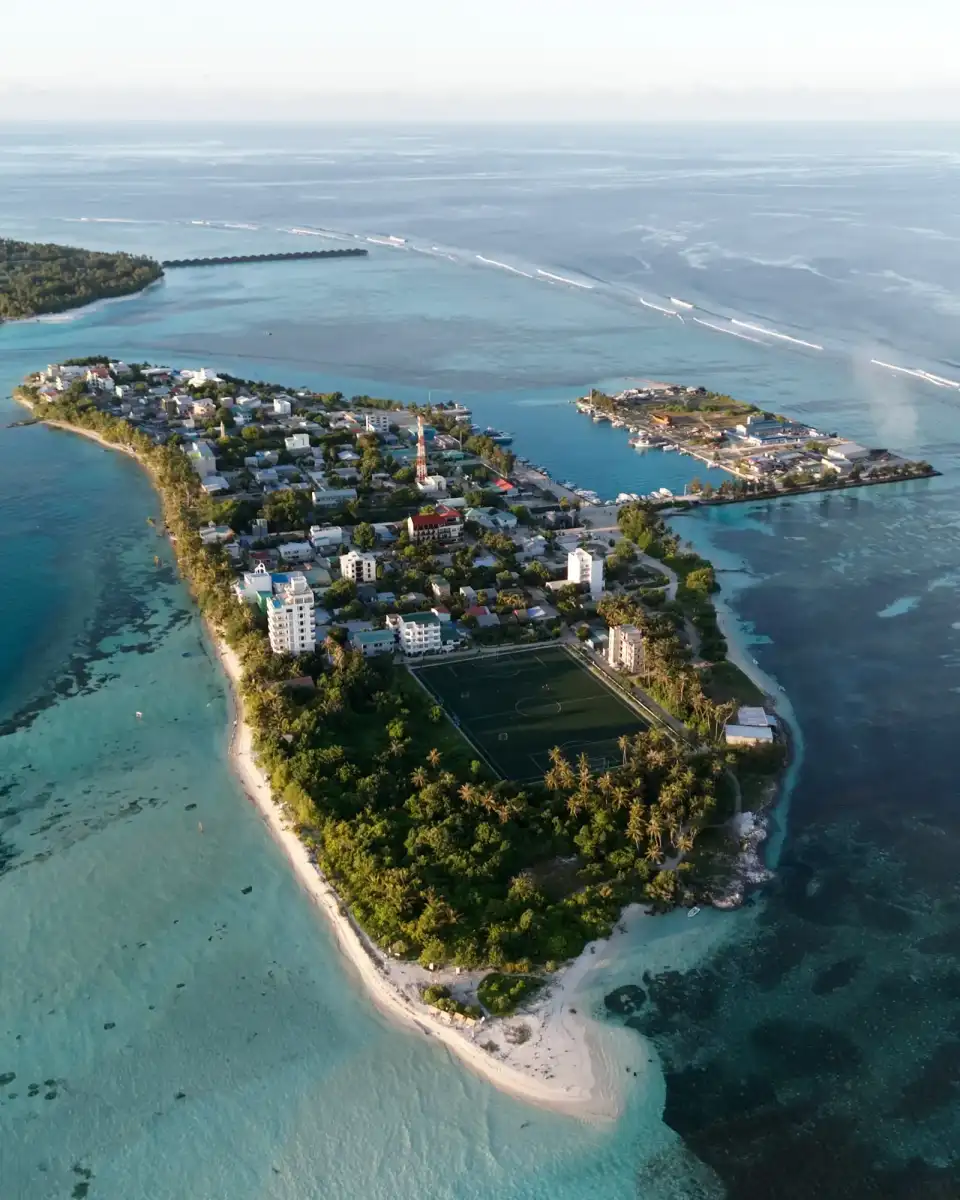
Maldives itinerary: 7 days on local islands
One week in the Maldives, day by day: a Kaafu local island, snorkelling and sandbank trips, a second island or big day out, and a few hours in Malé before you fly.
 By Dhiffushi Island Council8 min readUpdated
Seven days is enough to see the real Maldives without rushing: one or two local islands, a day or two of boat trips out on the reef, and a few hours in Malé before you fly home. The simplest plan is to land, take a shared speedboat to a local island in Kaafu Atoll, base yourself there for four nights, add a second island or a big day trip, then head back to the capital on your last day. Here is how that week looks, day by day, with Dhiffushi as the worked example.
Before you go: a short checklist
Get these sorted a week or two before you fly and the rest of the trip takes care of itself.
- Visa. Tourist visas are free and issued on arrival for 30 days, for most nationalities, at the immigration officer’s discretion. Bring a passport valid for at least one month (many airlines want six, so check with yours), an onward or return ticket, and a confirmed booking or proof of funds. Full detail is in our Maldives visa and entry guide.
- IMUGA. Every traveller, children included, completes the free Traveller Declaration at imuga.immigration.gov.mv within 96 hours before arrival. Children need their own passport.
- Cash. Carry some US dollars in clean, small notes and get rufiyaa (MVR) for small shops, cafés and public ferries. Some local islands have an ATM; Dhiffushi has one that accepts foreign cards, but don’t rely on any single machine.
- Insurance. Take travel insurance that covers water sports and, if you dive, diving to the depth you plan.
- Transfers. Ask your guesthouse to book your speedboat seats for you. They know the schedules, can hold a seat for a delayed flight and will meet you at the jetty.
- Packing. Modest clothes for the village, swimwear for the beach, reef-safe sun cream. See our packing list.
The week at a glance
| Day | Where | Main thing |
|---|---|---|
| 1 | Airport to a Kaafu local island | Arrive, transfer, first sunset |
| 2 | First island | Sunrise, beach, island walk |
| 3 | First island | Half-day snorkelling trip |
| 4 | First island | Sandbank day, slow evening |
| 5 | Second island or day trip | New island, or a full day at sea |
| 6 | Second island or day trip | Snorkel, dive or rest |
| 7 | Malé, then home | A few hours in the city, departure |
Day 1: arrive and get to your island
You land at Velana International Airport on Hulhulé, next to Malé. Clear immigration, collect your bags and meet your boat contact in arrivals or at the jetty outside.
If you land in daylight, take a shared speedboat straight to your local island. Kaafu Atoll, the atoll around Malé, has the most islands within an hour by boat, so it is the easiest place to start. Dhiffushi, about 37 km north-east of Malé, is 40 to 50 minutes by shared speedboat.
If you land in the evening or at night, be ready to stay one night in Malé or Hulhumalé. Shared speedboats run to set times and the last ones leave in the evening, so a late arrival often means a hotel near the airport and the first boat out next morning. Ask your guesthouse before you book flights.
Once there, keep it simple: check in, find the beach, eat at a local café and get an early night.
Days 2 to 4: an east-rim local island
The islands on the eastern rim of Kaafu face the open Indian Ocean, which brings clear water, steady breezes and some of the best sunrises in the country. Dhiffushi is the easternmost inhabited island, the place “where the Maldives wakes first”, and it works well as a first base. For an hour-by-hour plan of these three days, see our 3 days in Dhiffushi itinerary.
Day 2: sunrise, bikini beach and an island walk
- Sunrise. Set an alarm and walk to the eastern shore before dawn. On an east-facing island, the light arrives straight off the ocean.
- Bikini beach. After breakfast, spend the morning on the designated tourist beach, where swimwear is fine. Elsewhere on the island, cover shoulders and knees. Our local island etiquette guide explains why.
- Island walk. In the late afternoon, when it cools down, walk the village. Mosque, school, harbour, families on swing chairs: an hour or two at a slow pace.
Day 3: a snorkelling trip
Book a half-day snorkelling trip through your guesthouse. Most visit two or three reef spots, where you may see turtles, reef sharks, rays and big schools of fish. Mornings are usually calmest. Read up beforehand in our snorkelling guide, and see what’s on offer from Dhiffushi on things to do.
Day 4: sandbank day
Take a boat out to a sandbank, a strip of white sand surrounded by shallow lagoon. Half-day and full-day trips are common, often with a picnic or barbecue lunch. Bring water, a hat and sun cream: there is little or no shade.
A note on Fridays
Friday is the Maldivian weekend. Around midday, shops and cafés close for a while for Friday prayers, and the island is quieter. Public ferries don’t run on Fridays on most routes, including Dhiffushi’s, so plan any ferry travel for another day. Speedboats usually still run, but check.
Days 5 and 6: a second island or a big day trip
You have two good options for the second half of the week.
Option 1: move to a second island
Pick a second local island with a different character: one known for surfing, one with a long lagoon, or one in a nearby atoll reached by speedboat or domestic flight. Two nights is enough to settle in, snorkel the house reef or lagoon and see another side of island life. Ask your first guesthouse about connections, because transfers between islands don’t always go direct and sometimes route through Malé. Our island hopping guide explains how the boats, ferries and flights connect, and the local islands guide helps you choose.
Option 2: stay put and go further out
If you’d rather not pack again, stay on your first island and use days 5 and 6 for longer trips. Popular choices include a full-day excursion to look for manta rays or whale sharks (seasonal, and never guaranteed), a sunset dolphin cruise, a visit to a neighbouring local island, or a resort day trip if you want a few hours with a pool and a drink. Resorts are private islands with their own rules and prices, so check what’s included first.
Either way, keep one afternoon free.
Day 7: Malé and departure
Take a morning speedboat back towards the airport and give yourself a few hours in Malé before your flight. Leave your bags with your guesthouse contact or at the airport, take a short taxi ride over the bridge into the city, and walk. Visit the fish market, the Friday Mosque area and the waterfront, and try a short eats café for tea and Maldivian snacks. Our Malé city guide has a walking route.
Be back at the airport in good time. The departure tax and airport development fee are included in your air fare, so there’s nothing extra to pay at the desk.
What the week costs, roughly
A week on local islands costs far less than a week at a resort, but it isn’t free. Your accommodation is usually the biggest single item, followed by excursions and speedboat transfers. Food in local cafés is good value. Sit-down tourist restaurants cost more.
Expect taxes on top of quoted room prices: 17% Tourism GST, set by MIRA, since July 2025, plus a green tax of USD 6 per guest per night at smaller guesthouses on inhabited islands. A 10% service charge is often added too. Boat trips are where costs add up fastest, so choose two or three you really want rather than one every day. See Maldives money, costs and taxes for a fuller picture.
How to adapt the plan
Families
Keep transfers short and stay on one island for most of the week, so pick option 2 for days 5 and 6. Choose a guesthouse near the beach, plan snorkelling in calm, shallow lagoons, and leave afternoons for naps and play. Our Maldives with kids guide has more.
Divers
Swap the snorkelling trip and one sandbank day for two-tank dives. Many local islands have a dive centre, and Kaafu’s channels are known for currents and big fish. Don’t dive in the 24 hours before your flight home, so plan your last dive for day 5 at the latest. Read our diving guide before you book.
Surfers
The surf season and the best breaks matter more than the island. Base yourself on or near a surf island in Kaafu during the main season and keep days free for the swell. Our surfing guide explains when and where.
Wet season
The southwest monsoon, from mid-May to November, brings more rain and wind, according to the Maldives Meteorological Service. Storms usually pass quickly, but boat trips can be cancelled at short notice. Build a spare day into the week, book excursions early in your stay so you can reschedule, and leave a buffer before your flight. The best time to visit guide covers the seasons.
Questions people ask
Is 7 days enough for the Maldives?
Yes. A week gives you time to settle onto a local island, take three or four boat trips and still have slow days on the beach. You won’t see many atolls, but that’s fine: the Maldives rewards staying put. If you have 10 days or more, add a second island further from Malé, perhaps reached by domestic flight, rather than squeezing more into each day.
Can I go straight to a local island when I land?
Usually, if you land in daylight. Shared speedboats to Kaafu islands run to set times from the airport, and your guesthouse can book a seat. If your flight lands in the evening, you may need a night in Malé or Hulhumalé and the first boat the next morning. Check the last departure time before you book your flights.
How many islands should I visit in a week?
One or two. Each move costs half a day in packing, waiting and travel, and transfers between islands sometimes route through Malé. One island with day trips is the most relaxed plan. Two islands, with three or four nights on the first, gives more variety without feeling rushed. Three or more islands in seven days usually means too much time on boats.
Do I need to book excursions in advance?
Not usually. Most guesthouses arrange snorkelling, sandbank and dolphin trips a day or two ahead, depending on the weather and the number of guests. Book further ahead for diving and full-day trips, especially in the busy dry season. In the wet season, book early in your stay so cancelled trips can be moved.
Can I drink alcohol on a local island?
No. Alcohol isn’t sold or allowed on inhabited local islands, and you can’t bring it into the country; duty-free bought on the way is held by customs. If you want a drink, a resort day trip or a liveaboard are the licensed options.

