


Maldives independence: the road to 1965
From British protectorate in 1887 to independence on 26 July 1965, UN membership and the 1968 republic, plus how Independence Day is celebrated on local islands.
 By Dhiffushi Island Council8 min readUpdated
The Maldives became fully independent on 26 July 1965, when an agreement with the United Kingdom ended a British protectorate that had begun in 1887. It joined the United Nations a few weeks later, and in 1968 the old sultanate gave way to a republic. Independence Day, 26 July, is now the country’s biggest national celebration.
This guide explains how that happened, what changed and what stayed the same, and what you will see if you are in the Maldives in late July. For the wider story, from the first settlers to today, see our history of the Maldives.
A protectorate, not a colony
The Maldives was never a British colony. In December 1887 the sultan signed an agreement with the British authorities in Ceylon (today’s Sri Lanka). Under it, Britain took charge of the islands’ foreign relations and defence. In return, the British promised protection and agreed not to interfere in how the islands were run at home.
In practice, daily life carried on much as before. The sultans, their ministers and island chiefs kept governing. There was no British governor in Malé, no settler population and no plantation economy. Dhivehi stayed the language of government, and Islam the religion of the state.
Historians link the timing of the 1887 agreement to rivalry between powerful Malé families over the office of chief minister, and to wider pressure in the Indian Ocean. Accounts differ on the details, so treat any single explanation with care.
Why it still matters
This is why Maldivians do not usually speak of “colonial rule”. The country kept its own institutions, script and faith throughout. Independence in 1965 was about taking back full control of foreign affairs and defence, not about removing a foreign administration from the islands.
The road to 1965
The decades before independence were busy ones for a small island nation.
- 1932: the first written constitution was introduced under the sultanate.
- 1953: the Maldives briefly became a republic, with Mohamed Amin Didi as its first president. The experiment was short-lived.
- 1954: the sultanate was restored after a public vote, with Muhammad Fareed Didi as sultan.
- 1957: Ibrahim Nasir became prime minister and pushed to review the terms Britain held in the south.
- 1959–1963: the southern atolls of Addu, Huvadhoo and Fuvahmulah formed the breakaway United Suvadive Republic before returning to the Maldivian state.
- 1960: a new agreement on the British base at Gan was signed in Malé.
Sources differ on some of these dates, especially around 1953–54. Our history of the Maldives covers the period in more detail.
Gan: the British base in the south
Britain’s main presence in the Maldives was not in Malé but on Gan, in Addu Atoll, the southernmost atoll. The Royal Navy built a wartime base there from 1941. In the 1950s the airfield became RAF Gan, a staging post on Royal Air Force routes across the Indian Ocean.
Under the 1960 agreement, Britain kept the use of Gan and facilities on nearby Hithadhoo for a long term. Independence in 1965 did not end this. The base stayed in British hands for another decade.
As Britain pulled its forces back from east of Suez, Gan lost its purpose. The RAF left in late March 1976, and the island and its airfield were handed back to the Maldives soon after. The old runway became today’s Gan International Airport.
The base brought jobs and new skills to the southern islands, and it sits in the background of the Suvadive episode. You can still see traces of that era if you visit; see our Addu City guide.
26 July 1965: independence
The independence agreement was signed in Colombo on 26 July 1965. Prime Minister Ibrahim Nasir signed for the Maldives, and Sir Michael Walker, the British High Commissioner in Ceylon, signed for the United Kingdom. With it, Britain’s responsibility for the Maldives’ defence and foreign affairs came to an end.
The country remained a sultanate at this point, with Muhammad Fareed Didi as head of state. Britain kept its rights at Gan, as agreed in 1960.
Recognition followed quickly. The United States recognised the new state in 1965, and its president sent a message of congratulations to Prime Minister Nasir in August.
Joining the United Nations
The Maldives accepted the obligations of the UN Charter in a declaration dated in Malé on 26 August 1965. Its membership was registered on 21 September 1965, less than two months after independence. For a country of scattered coral islands with a small population, a seat at the UN gave it a voice in world affairs, and later a platform to speak about sea level rise. (See is the Maldives sinking?)
1968: from sultanate to republic
Independence did not end the sultanate straight away. In March 1968 voters approved a new constitution that would replace the monarchy with a republic. It came into force on 11 November 1968, which is why that date is now Republic Day. Ibrahim Nasir became president of what Maldivians call the Second Republic, the first having been the short-lived one of 1953.
The change ended centuries of rule by sultans, a line that the country traces back to the 12th century. National heroes from the sultanate era, such as Muhammad Thakurufaanu, who led the fight against Portuguese occupation in the 16th century, remain central to how Maldivians tell their history.
After independence
A few later milestones help make sense of modern Maldives:
- 1976: the British left Gan, ending the last foreign military presence.
- 1982: the Maldives joined the Commonwealth. It left in 2016 and rejoined in 2020.
- 2008: a new constitution brought in multi-party presidential elections.
The arrival of tourism in the early 1970s, just a few years after independence, also reshaped the economy. Our short history of tourism in the Maldives picks up that story.
Independence Day today
Independence Day on 26 July is the biggest national celebration of the year. It is a public holiday, and usually the following day is a holiday too. Check the festivals and public holidays guide for each year’s dates.
What happens
- In Malé: a parade by the Maldives National Defence Force, cultural shows, boduberu drumming and traditional dance, and fireworks.
- On local islands: flags and strings of lights along the streets, football and other sports, music nights, and school and community events.
- Everywhere: the national flag flies from homes, boats and offices. The red, green and white flag is explained in our guide to the Maldives flag and national symbols.
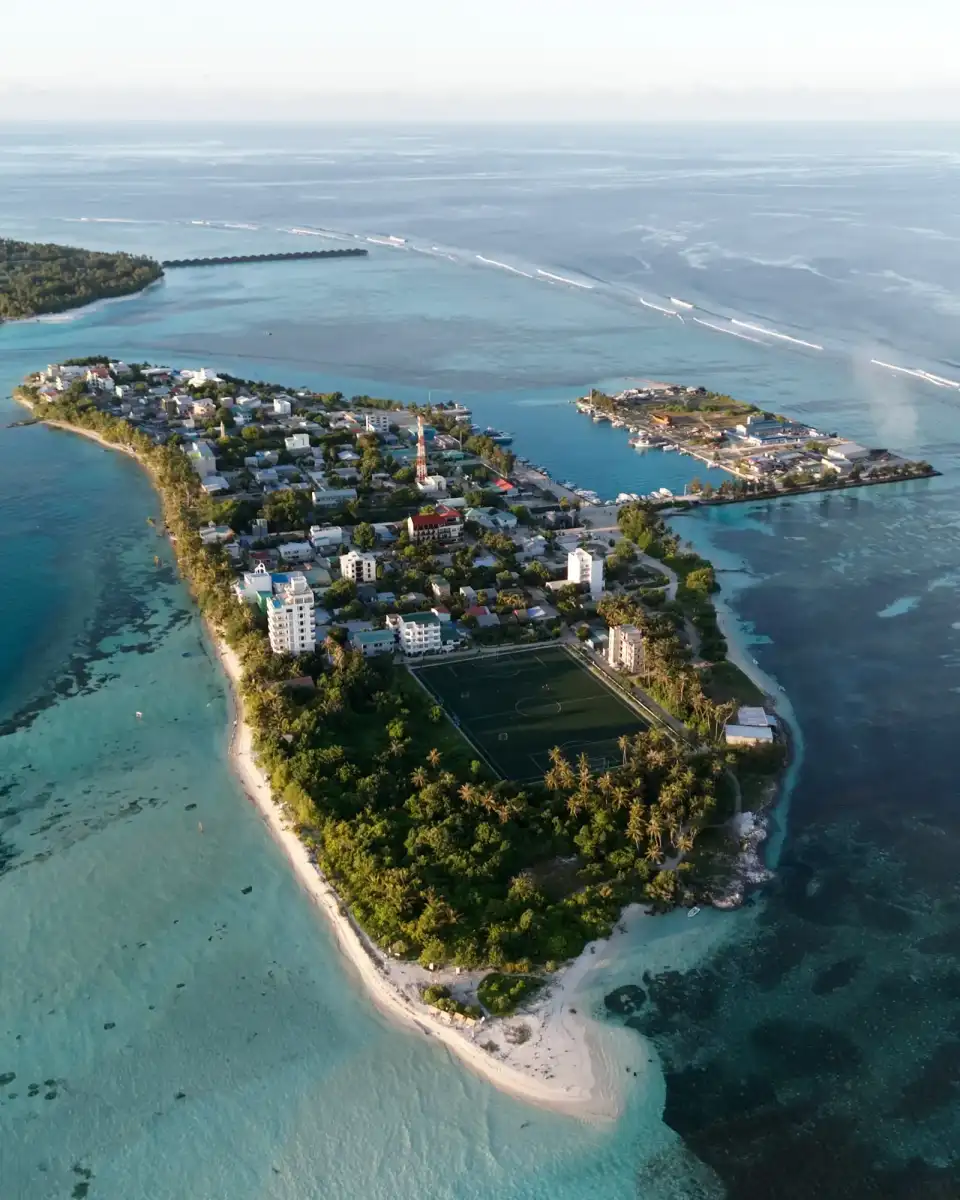
On a local island like Dhiffushi, Independence Day is a community event. Visitors are welcome to watch, and it is one of the best chances to see island life at its most lively. See our Independence Day event page.
Tips for visitors
- Offices close. Government offices and banks shut on the holiday. Plan any paperwork, such as immigration matters, around it.
- Transport can be busier. Many Maldivians travel home to their islands. Book boat transfers early, and remember that the public ferry does not run on Fridays on most routes.
- Dress and behave as on any local island. Cover shoulders and knees away from the bikini beach, and ask before photographing people. See our local island etiquette guide.
- Weather. Late July falls in the southwest monsoon, so expect some showers and breezy days. See the Maldives in July.
Other national days
- Victory Day, 3 November: marks the defeat of an attack on Malé in 1988, usually with official ceremonies and a defence force parade.
- Republic Day, 11 November: marks the start of the Second Republic in 1968. See our Republic Day page.
- National Day: remembers Muhammad Thakurufaanu’s victory over the Portuguese, on a date set by the Islamic calendar.
Questions people ask
When did the Maldives gain independence?
The Maldives became fully independent on 26 July 1965. On that day an agreement signed in Colombo by Prime Minister Ibrahim Nasir and the British High Commissioner in Ceylon ended Britain’s responsibility for the islands’ defence and foreign affairs. The date is celebrated every year as Independence Day, the country’s biggest national holiday, with parades, flags and island events.
Was the Maldives a British colony?
No. From 1887 the Maldives was a British protectorate, not a colony. Britain handled foreign relations and defence, but the sultans and their governments ran the islands’ internal affairs. There was no British governor in Malé and no settler population. Dhivehi and Islam remained at the heart of public life throughout, which is why Maldivians rarely speak of colonial rule.
Who led the Maldives to independence?
Ibrahim Nasir, prime minister under the sultanate from 1957, negotiated with Britain and signed the 1965 agreement for the Maldives. He also became the first president of the Second Republic when the sultanate was replaced in November 1968. Muhammad Fareed Didi was sultan at the time of independence and remained head of state until the republic began.
When did the Maldives join the United Nations?
The Maldives joined the United Nations in 1965, the same year it became independent. It declared its acceptance of the UN Charter on 26 August 1965, and its membership was registered on 21 September 1965. UN membership gave the small island nation a voice in world affairs, which it has used to speak about climate change and sea level rise.
What was RAF Gan?
RAF Gan was a British air base on Gan, in Addu Atoll in the far south of the Maldives. It began as a wartime naval base in 1941 and later served as a Royal Air Force staging post across the Indian Ocean. Britain kept it after independence and left in 1976. The old airfield is now Gan International Airport.
What is the difference between Independence Day and Republic Day?
Independence Day, 26 July, marks the end of the British protectorate in 1965. Republic Day, 11 November, marks the day in 1968 when the sultanate was replaced by a republic under a new constitution approved by voters earlier that year. Independence Day is the larger celebration, with parades and island events; Republic Day is mostly a public holiday.
Is it a good time to visit during Independence Day?
It can be. Local islands come alive with flags, lights, sports and music, and visitors are welcome to watch. Late July is in the southwest monsoon, so expect some rain and choppier seas. Offices and banks close, and transport gets busier as people travel home, so book transfers early and plan any official paperwork around the holiday.

