Liveaboards in the Maldives: how dive safaris work
How a Maldives dive safari works: daily routine, central and southern routes, seasons, the 30 m rule, taxes, and when diving from a local island suits you better.
 By Dhiffushi Island Council8 min readUpdated
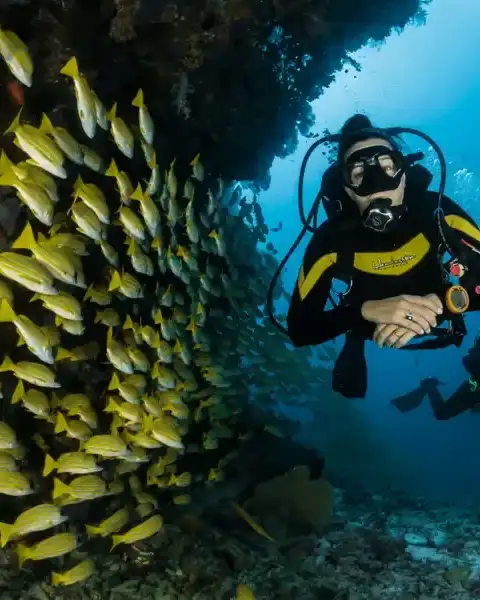
A Maldives liveaboard, also called a dive safari, is a boat you live on for several days while it moves between atolls, with two to four dives a day from a smaller dive boat that follows it. It suits keen divers who want to reach many sites in one trip. If you would rather dive and still see island life, you can dive just as well from a local island and sleep ashore.
What a liveaboard actually is
In the Maldives, liveaboards are licensed by the Ministry of Tourism as “safari vessels”, one of the country’s four types of tourist accommodation alongside resorts, hotels and guesthouses. Ministry figures for late 2025 listed about 167 registered safari vessels with roughly 3,300 beds between them, so they are a small but established part of tourism here.
Most trips follow the same simple pattern:
- The main boat is where you sleep, eat and relax. Cabins are usually small, with shared decks and a lounge.
- The dive dhoni is a second, smaller boat that carries the tanks, compressor and gear. You kit up on it, so the main boat stays quiet and dry.
- The day usually runs: early dive, breakfast, a late-morning dive, lunch and a move to the next atoll, an afternoon dive, and sometimes a dusk or night dive.
- Trip length is often around a week, though shorter and longer trips run too.
Typical routes, in general terms
Routes depend on season, weather and the group’s experience, and the captain has the final say. Broadly, trips fall into three types. Our Maldives atolls guide explains where each atoll sits.
Central atolls
This is the classic first trip. It usually loops through North and South Malé, Ari and Vaavu atolls, with a mix of channel dives, reef walls, thila (submerged pinnacles) and manta cleaning stations. Distances are short, so you spend more time diving and less time sailing.
The deep south
Southern trips head towards atolls such as Huvadhoo, Fuvahmulah and Addu. They involve longer crossings, often with a domestic flight at one end, and are aimed at experienced divers who are comfortable in strong currents and open water. Big pelagic life is the draw. Our guide to sharks in the Maldives covers which species you might meet.
The north
Northern routes may include atolls such as Baa, Raa and Lhaviyani. They are quieter and less dived. Baa Atoll is a UNESCO Biosphere Reserve, and Hanifaru Bay there is a protected area with its own rules for visitors.
When to go
There is diving all year, but the two monsoons change what you will see and how the sea feels. The Maldives Meteorological Service describes the northeast monsoon (January to March) as the dry season and the southwest monsoon (mid-May to November) as the wet season, with April and December as transition months. Water stays warm, at about 28–29°C.
- Northeast monsoon: usually calmer seas and good visibility, which is why many liveaboards run their busiest season from around December to April. Mantas tend to feed on the western sides of the atolls.
- Southwest monsoon: more wind, rain and swell, so crossings can be rough. Mantas move to the eastern sides of the atolls, and Hanifaru Bay’s peak season is around July to October.
For the bigger picture, see our best time to visit the Maldives guide, the Maldives in March guide for the heart of the dry season, and manta rays in the Maldives.
Diving rules you should know
The Maldives has a national Recreational Diving Regulation, first issued by the Ministry of Tourism in 2003. Its best-known rule is the depth limit: recreational diving in the Maldives is limited to 30 metres. National news outlets restated it in May 2026, after a fatal deep cave dive in Vaavu Atoll. The lesson is simple: the 30-metre limit applies on liveaboards too, and a good crew will enforce it.
Other points to expect:
- Certification and logbook. Bring your card and log. Crews may ask for a check dive first.
- Dive computers. Expect to dive with your own computer, and plan to stay within no-decompression limits.
- Nitrox. Enriched air is widely offered on boats. You need a nitrox certification to use it, and it does not change the 30-metre limit.
- Night dives. These are offered on some trips and at some sites, at the guide’s discretion. Ask before you book if they matter to you.
- Protected wildlife. All rays are protected, and feeding sharks, rays or whale sharks is banned. Keep your distance and never touch.
- Flying after diving. Leave a gap before your flight home, or before a seaplane or domestic flight. Many diving bodies recommend at least 18 hours after repeated dives; your guide will plan the last dive day with this in mind.
Life on board
Liveaboards are licensed in a way local islands are not. Alcohol is not sold or allowed on inhabited islands, but licensed resorts, the airport hotel island and liveaboards can serve it. That means you may be able to have a drink on deck after the last dive, but you cannot take it ashore. Duty-free alcohol brought into the country is held at customs on arrival, so do not try to bring your own. Our guide to alcohol in the Maldives explains the rules in full.
Many trips stop at a local island for a walk. Ashore, local norms apply: cover shoulders and knees away from bikini beaches, and expect shops to close for a while at Friday midday prayers. Space on board is tight, so pack light in a soft bag.
What a liveaboard costs
Prices vary widely by boat, season, route and cabin. A liveaboard is usually one of the more expensive ways to dive the Maldives, because accommodation, meals, boat fuel and diving are bundled into one package. On a per-dive basis it can still be fair value for keen divers, simply because you dive so often.
When comparing trips, check what is included:
- Taxes and charges. MIRA’s Tourism GST is 17% (since 1 July 2025). Green tax on liveaboards is USD 12 per guest per night, the same rate as resorts; children under 2 are exempt. A 10% service charge is commonly added to bills.
- Diving extras. Nitrox, equipment rental, marine park or site fees and extra night dives may be charged separately.
- Transfers and flights. Domestic flights for southern routes are often extra.
- Crew tips. Tipping is customary on boats but not compulsory; see our tipping in the Maldives guide.
Our Maldives money, costs and taxes guide explains each charge in more detail.
Liveaboard or a local island?
Both are good ways to dive the Maldives. They simply suit different trips.
| Liveaboard | Diving from a local island | |
|---|---|---|
| Dives per day | Usually 3–4 | Usually 1–2, by choice |
| Range | Several atolls in a week | Sites within reach of the island |
| Where you sleep | Shared boat, small cabin | Guesthouse on land |
| Local life | Short visits ashore | Live in a real village |
| Alcohol | Allowed on licensed boats | Not allowed on the island |
| Non-divers | Can feel limited | Plenty to do |
| Flexibility | Fixed itinerary | Dive as much or as little as you like |
On a local island, you dive with a local dive centre and come home each afternoon to a guesthouse, a beach and a village. It is often the more affordable choice, and it works well for mixed groups where not everyone dives, or for anyone who wants to learn.
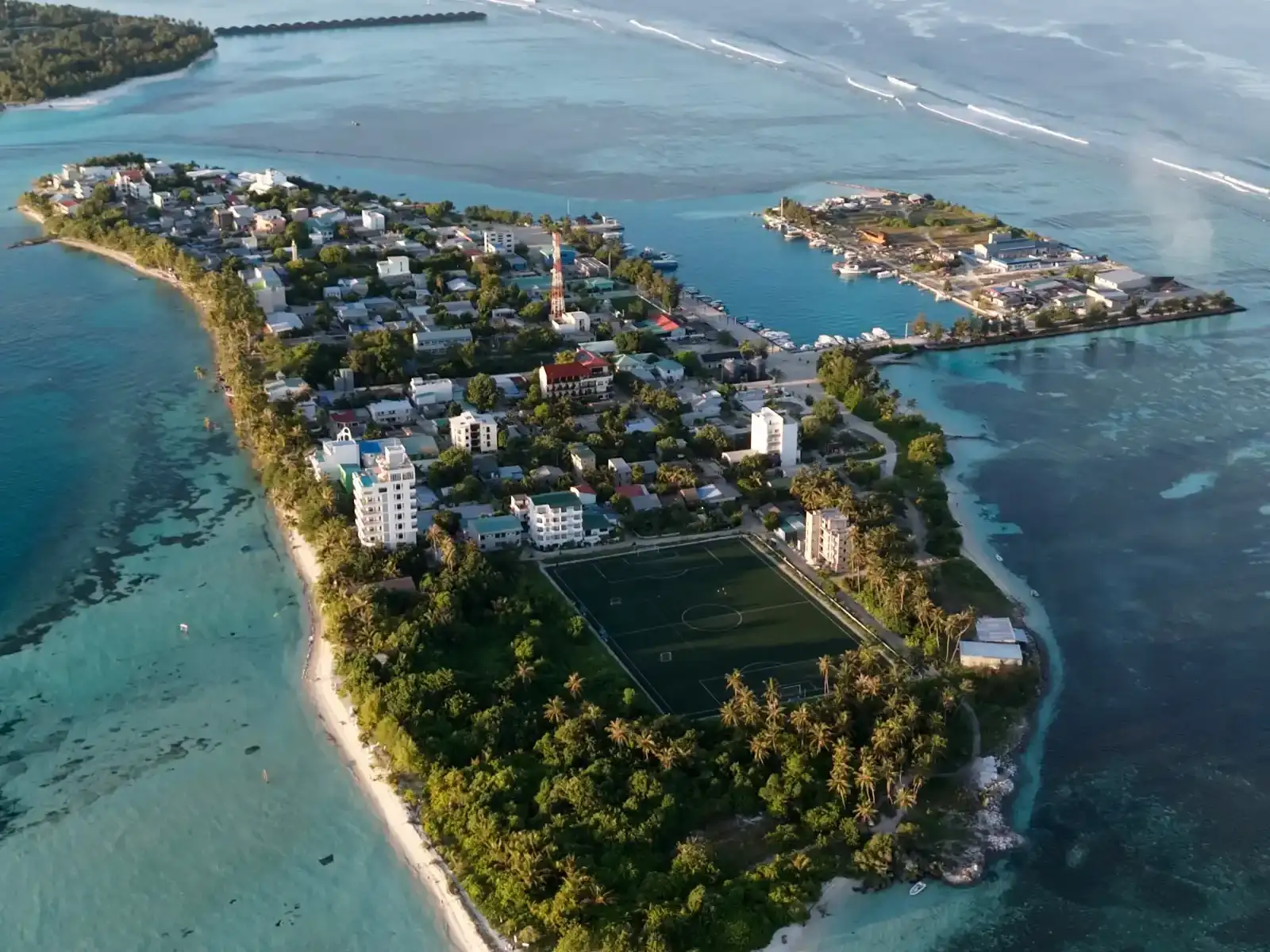
Dhiffushi is a good example. It sits on the eastern rim of North Malé Atoll, about 40–50 minutes by shared speedboat from the airport, with reefs, channels and a manta spot close by. Read diving and snorkelling in Dhiffushi to see what is within reach, and our wider diving in the Maldives guide for the whole country.
Some divers do both: a week on a liveaboard, then a few slower days on a local island before flying home, which also leaves a safe gap before the flight.
Questions people ask
Is a liveaboard worth it in the Maldives?
For keen, certified divers who want as many dives and sites as possible, yes. You can reach several atolls in a week and dive three or four times a day. If you want a slower trip, travel with non-divers or want to see Maldivian village life, diving from a local island is often the better fit, and it is usually more affordable too.
What is the maximum diving depth in the Maldives?
Recreational diving in the Maldives is limited to 30 metres under the national Recreational Diving Regulation issued by the Ministry of Tourism. The limit applies on liveaboards as well as at resorts and local island dive centres. National news outlets restated it in May 2026 after a fatal deep cave dive in Vaavu Atoll. Plan your dives within this limit and within no-decompression limits.
Can beginners go on a Maldives liveaboard?
Some central atoll trips welcome newly certified divers, but many Maldives sites are drift dives in channels with strong currents. Southern routes are generally for experienced divers only. Be honest about your logbook when booking. If you are still learning, a local island dive centre is a gentler place to build skills before a liveaboard.
Can you drink alcohol on a liveaboard?
Yes, on licensed boats. Alcohol is allowed only on licensed resorts, the airport hotel island and liveaboards, never on inhabited local islands. You cannot take drinks ashore, and you cannot bring your own into the country: alcohol is held by customs on arrival. Most crews ask guests not to drink before diving, and it is wise to follow that.
What taxes apply to a Maldives liveaboard?
Liveaboards pay green tax of USD 12 per guest per night, the same as resorts, with children under 2 exempt. MIRA’s Tourism GST of 17% applies since 1 July 2025, and a 10% service charge is commonly added. Check whether a quoted price already includes these, plus nitrox, equipment rental and any domestic flights.
When is the best time for a Maldives liveaboard?
Many boats run their main season from around December to April, during and around the northeast monsoon, when seas are usually calmer and visibility good. The southwest monsoon (mid-May to November) brings more wind and swell, but it is also manta season on the eastern sides of the atolls and at Hanifaru Bay, which peaks around July to October.