Sharks in the Maldives: species, safety and sightings
Blacktips in the shallows, grey reef sharks in the channels, nurse sharks on the sand: which sharks live in the Maldives, how safe they are and how to see them well.
 By Dhiffushi Island Council8 min readUpdated
Yes, there are sharks in the Maldives, and seeing them is one of the best parts of a trip. Most are small reef sharks that are wary of people. Serious incidents are very rare. All sharks in Maldivian waters have been protected since 2010, so you can snorkel with blacktips in knee-deep water off many local islands, while divers head to the channels for grey reef sharks and, at a few sites, hammerheads.
Are there sharks in the Maldives?
Plenty. Reefs, deep channels and open ocean sit close together here, and that mix suits sharks. The marine protected area listing for the national shark sanctuary says it covers more than 30 shark species. A 2026 study of seven years of dive logs from Lhaviyani Atoll alone recorded 14 shark species.
Most live in deep water far from any island. What visitors actually meet is a handful of reef species, and they are a sign of a healthy sea.
Common sharks you might see
Blacktip reef shark
The shark most visitors see first. Blacktips are small, usually around a metre long, with a black tip on the dorsal fin. Young ones patrol the shallows along beaches and lagoons, often in water so shallow their fins break the surface. They are shy and tend to turn away when a swimmer approaches.
Whitetip reef shark
Slim, grey, with white tips on the fins. Whitetips often rest on sand or under ledges during the day and hunt at night. Survey data for eastern Rasdhoo Atoll, collected by a government-led citizen-science programme, describe them as abundant there, cruising reefs in small groups and gathering in the channels.
Grey reef shark
Larger and more confident, grey reef sharks are the classic sight on channel dives, where they hang in the current at the edge of the reef. They are listed as threatened on the IUCN Red List, which is one reason the Maldives’ protection matters.
Tawny nurse shark
Big, brown and slow, nurse sharks spend much of the day resting on the bottom, sometimes piled together. They feed mostly at night on small fish and bottom-dwelling animals. They look impressive but are calm, and they are the species behind many shallow-water shark snorkels.
Hammerheads and other big sharks
Scalloped hammerheads are seen by divers at a few outer-reef sites, usually on early-morning deep dives, and they are never a sure thing. Rasdhoo Atoll is the best-known spot. In the far south, the large single-island atoll of Fuvahmulah is known among experienced divers for tiger sharks and other ocean species. Silvertip sharks also turn up on some channel dives.
Whale sharks
The world’s largest fish is a gentle, filter-feeding shark, best seen around South Ari Atoll. See swimming with whale sharks in the Maldives for the rules and seasons.
The shark sanctuary: protected since 2010
In 2010 the Maldives banned shark fishing across its whole exclusive economic zone. The government describes it as the first Indian Ocean country to do so, and the country later banned the import and export of shark fins. A living shark, seen again and again by visitors, is worth far more than a dead one.
There is one recent change. From 1 November 2025 the government reopened a licensed fishery for gulper sharks, a deep-water species prized for its liver oil. It is limited to waters outside the atolls, to a capped number of licensed vessels, and to gulper sharks only; catching any other shark remains banned. The decision has been criticised by environmental groups and challenged in the courts, as reported by national news. For visitors, nothing changes on the reef: the sharks you swim with are still fully protected.
Rays get even stronger protection. All rays and skates have been protected since 2014, and the Protected Species Regulation forbids feeding them.
Is it safe to swim with sharks in the Maldives?
Yes, if you behave sensibly. The reef sharks you will meet eat small fish and are wary of people. Bites on swimmers and snorkellers are very rare. The Tourism Ministry has linked injuries on excursions to shark feeding, which is why food in the water is the main thing to avoid.
A few habits keep the risk close to zero:
- Never swim near fishing or fish cleaning. Blood and scraps excite sharks.
- Don’t feed sharks or carry fish or bait in the water. It teaches them to link people with food.
- Don’t touch, corner or chase any shark. A cornered animal may defend itself.
- Shuffle your feet in shallow sandy water. It warns stingrays you are coming, which matters more than sharks.
- Leave the water calmly if a shark seems unusually curious or agitated.
For general water safety, currents, medical care and emergency numbers, see is the Maldives safe?.
The feeding question
Some places became famous because sharks gathered where food was regularly thrown in, with nurse sharks at jetties the best-known example. The scenes are dramatic, but feeding changes behaviour: sharks lose their caution, crowd swimmers and can bite by mistake.
The Maldives government is clear on this. The Ministry of Fisheries has urged the public, divers and the tourism industry not to feed or chum sharks, and the Tourism Ministry has told dive centres and excursion providers that shark feeding is illegal under the recreational diving regulation (as reported by national news). Feeding whale sharks and rays is also prohibited under the Protected Species Regulation.
What this means for you:
- Choose trips that don’t use food to attract animals. Ask before you book: “Do you feed the sharks?”
- If a crew starts throwing fish in, it’s fine to stay on the boat.
- Never bring food into the water yourself, even bread for reef fish.
Good encounters don’t need bait: sharks visit sand flats, channels and lagoons on their own to hunt and rest.
Where to see sharks
Snorkelling with blacktips in the shallows
This is the easiest and most memorable encounter for most people. Baby blacktips often patrol beaches and lagoons on local islands, especially in the early morning and around sunset. Stand quietly in ankle-deep water, or float on the surface over sand, and they may pass right by.
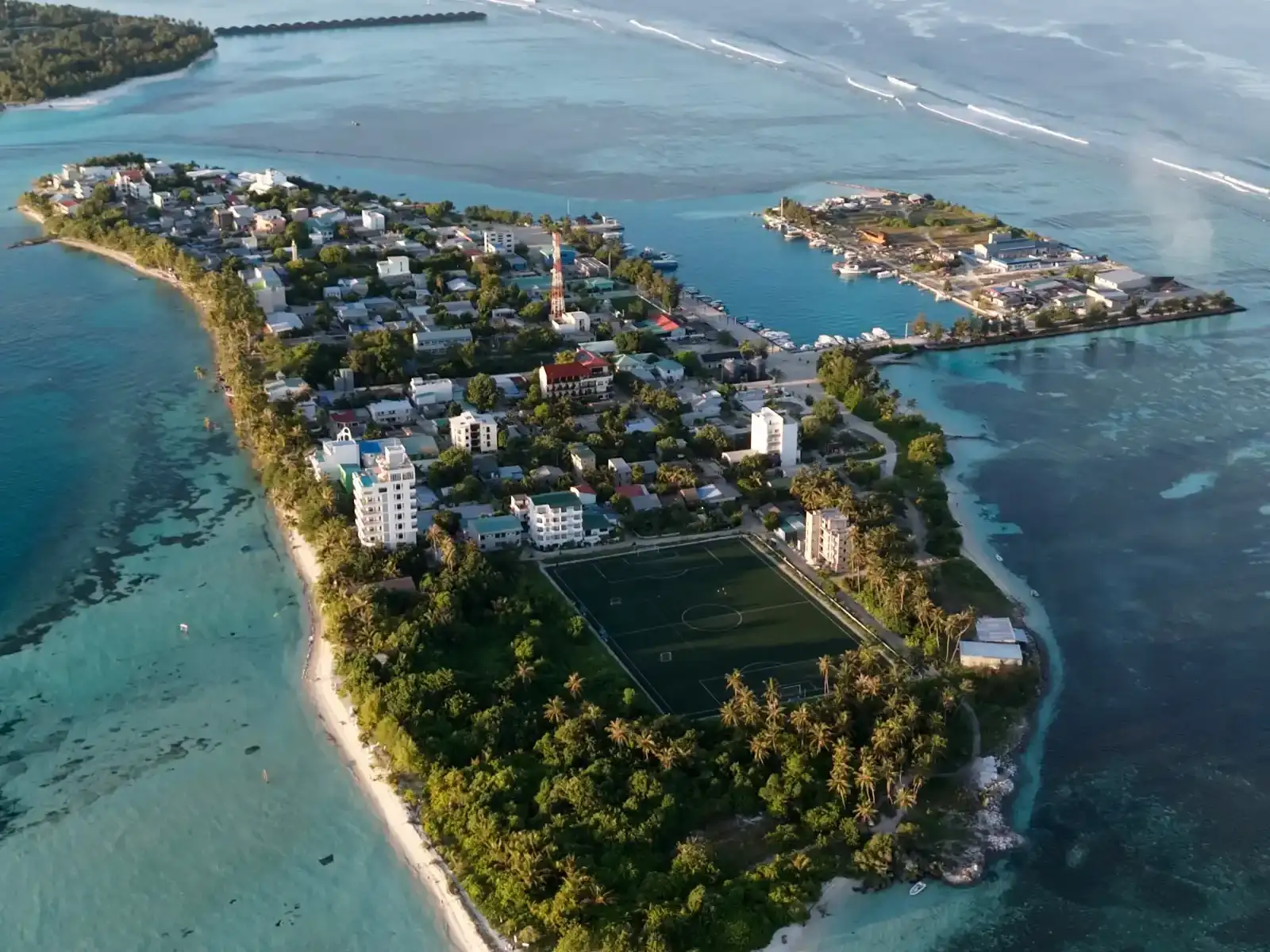
On Dhiffushi, on the eastern rim of North Malé Atoll, the evening stingray and baby shark watching at the north bikini beach is free and watch-only: young blacktips and stingrays follow small fish into the shallows after dark.
Nurse shark snorkelling
In several atolls, boat trips visit shallow sand areas where tawny nurse sharks rest. From Dhiffushi, a half-day nurse shark snorkelling trip visits a site in North Malé Atoll. Float at the surface, keep your fins up so you don’t kick a resting shark or stir up sand, and let the sharks keep their own space.
Diving the channels
For grey reef sharks, whitetips and the chance of something bigger, divers head to the channels (kandu) where the atoll meets the open ocean. Incoming currents bring nutrients and fish, and sharks line up to hunt. These are often strong-current dives for experienced divers. See our diving in the Maldives guide for atolls, seasons and certification, and diving and snorkelling from Dhiffushi for local options.
How to behave around sharks
The same simple rules apply whether you are snorkelling a lagoon or diving a channel:
- Watch, don’t touch. Touching harms the shark’s skin and stresses it.
- Give space. Stay a few metres away and never block a shark’s path.
- Stay calm and still. Slow movement brings closer, longer encounters.
- No flash or bright torches, and don’t stand on coral.
Our snorkelling in the Maldives guide covers equipment and reef etiquette, and responsible travel in the Maldives explains how to support conservation on your trip.
When is the best time to see sharks?
Reef sharks live here all year, so you can see blacktips and nurse sharks in any month. The drier northeast monsoon (January to March) usually brings calmer seas. Channel and hammerhead conditions vary by site, so ask local dive centres about your dates. For mantas and whale sharks, which follow different patterns, see the marine life guide and manta rays in the Maldives.
Questions people ask
Are there sharks in the Maldives?
Yes. The Maldives has protected all sharks in its waters since 2010, and the sanctuary covers more than 30 species. Visitors mostly see blacktip and whitetip reef sharks, grey reef sharks and tawny nurse sharks. Divers may also meet hammerheads at a few sites, and whale sharks live around South Ari Atoll. Young blacktips are often seen in the shallows right off local island beaches.
Is it safe to swim with sharks in the Maldives?
Yes, for sensible swimmers. The reef sharks around the islands eat small fish and are shy of people, and bites are very rare. Food in the water is the main risk, so avoid fishing and fish-cleaning areas, never feed sharks, and don’t touch or chase them. Follow your guide’s briefing and you can enjoy close, calm encounters.
Do sharks come close to the beach in the Maldives?
Often, yes. Baby blacktip reef sharks patrol many lagoons and beaches, especially early in the morning, around sunset and after dark. They are usually under a metre long and swim off when people approach. Standing quietly in shallow water is a good way to watch them. Shuffle your feet on sandy bottoms to avoid stepping on resting stingrays.
Is shark fishing allowed in the Maldives?
Shark fishing has been banned across the Maldives’ exclusive economic zone since 2010. From 1 November 2025 the government reopened a licensed fishery for deep-water gulper sharks only, limited to waters outside the atolls; all other sharks remain protected. The decision has been criticised by conservation groups and challenged in court. Rays have been protected since 2014.
Is shark feeding allowed in the Maldives?
No. The Tourism Ministry has told dive centres and excursion providers that shark feeding is illegal under the recreational diving regulation, and the Fisheries Ministry has urged everyone not to feed or chum sharks. Feeding rays and whale sharks is also banned. Choose trips that don’t use food, and never take food or bait into the water yourself.
Where can I see hammerhead sharks in the Maldives?
Scalloped hammerheads are seen at a few outer-reef sites, with Rasdhoo Atoll the best known. These are deep, early-morning dives for experienced, certified divers, and sightings are never guaranteed. Ask local dive centres about recent conditions before you go, and follow your guide’s depth limits.