


Maldivian names explained: house names and titles
Why most Maldivians have no surname, how house names work as addresses and identity, what Didi and Maniku once meant, and how to address people politely.
 By Dhiffushi Island Council8 min readUpdated
Most Maldivians have no fixed family surname in the European sense. A person is usually known by one or two given names, most often of Arabic origin, plus a nickname, and is officially identified by the name of their family house and home island. Old titles such as Didi and Maniku still turn up in names, but they no longer carry rank.
Why Maldivian names work differently
The Dhivehi way of asking someone’s name, *kon nameh kiyanee?*, translates roughly as “what name are you called?” That small twist matters. A Maldivian can answer with an official name, a shortened everyday name, a nickname, a house name or a mixture of all four.
Given names come from a fairly short list of Islamic names, communities are small, and for generations the family house did the job a surname does elsewhere.
For the bigger picture of language and daily life, see our guide to Maldives culture, people and language.
Given names
The Maldives is a Muslim country, and almost all given names are Arabic in origin, often the names of prophets, companions of the Prophet or other respected figures. Writing about the islands in 1883, the British colonial official H.C.P. Bell noted that single Muslim names such as Ali, Hasan and Fatimah were the most common, which is still broadly true today.
Spelling in English
Dhivehi is written in the Thaana script, so every name has to be transliterated into Latin letters. The official transliteration system dates from 1977, but in practice spellings vary. You will see:
- Mohamed, Mohammed and Muhammad for the same name
- Aishath and Fathimath, with a final “th”, for Aisha and Fatima
- Ahmed, Hassan, Hussain, Ibrahim and Moosa among the most familiar men’s names
Our guide to Dhivehi and the Thaana script explains why “dh” and “th” appear so often.
Two given names, one everyday name
An official name is often just two given names, for example “Mohamed Ismail”. The second name is not a surname, and it may or may not be the father’s name. In daily life that person might simply be called Ismail. When you meet someone, the easiest thing is to ask what they like to be called and use that.
Nicknames
Nicknames are everywhere in the Maldives, and many carry semi-official status. A man may be known across his island by a name linked to his trade, a boat, a childhood incident or nothing anyone can remember. Some local writers suggest that, in the past, nicknames also served to keep a person’s birth name hidden from evil spirits.
For visitors, the point is simple: your host may introduce themselves by a short name that bears no resemblance to their official one. And some nicknames are used *about* a person but not *to* them, so check before using one you have only overheard.
House names
This is the part that surprises most visitors. Maldivian houses traditionally have registered names rather than street numbers. A house name might come from an ancestor, a place, a tree or a flower. Today many are more inventive, and both Dhivehi and English names are common, so you might walk past a gate reading “Rosevilla” next to one with a traditional Dhivehi name.
Many older names end in *-ge*, a Dhivehi ending used for houses and buildings; Bell recorded words such as *vaaruge*, an atoll storehouse, in the 1880s.
House names and identity
A house name is much more than an address. The family home, or *goathi*, has long shaped inheritance, family ties and a person’s sense of where they belong. It also helps tell apart two people with the same given name: “Ali of this house” and “Ali of that house”.
Prominent people are still often referred to with the house name first: the first president of the Second Republic is remembered as Velaanaage Ibrahim Nasir.
On the national ID card
Every Maldivian has a registered permanent address: a house name on a particular island. It appears on the national ID card and is used to confirm who someone is, often for decades after they have moved to Malé. In formal settings, such as a court, a person is still identified with their island and house name placed before their given names.
Because many people live in Greater Malé while staying registered on their home island, the permanent address system is the subject of real public debate. A November 2025 opinion piece in the Maldives Independent noted that about 120,000 voters live in Greater Malé, but only around 55,000 are registered to vote there.
Finding a house on a local island
An island address is usually a house name, a street and the island. Without numbers, the quickest way to find a house is to ask. Our guide to atoll codes and island addresses explains the letter codes before island names, as in K. Dhiffushi.
Old titles: Didi, Maniku and more
Before the Maldives became a republic, names often carried a title that showed rank, birth or royal favour. Bell’s 1883 account gives a clear snapshot of how the system worked in the late sultanate:
| Title | What it meant in the 1880s (Bell) |
|---|---|
| Manippulu | Reserved for the sultan’s closest relations |
| Didi | Descendants of former sultans, implying a link to royal blood |
| Takurufaanu | A rank granted by the sultan to people of respectable birth |
| Maniku (Manike for women) | The lineal descendants of those granted Takurufaanu |
| Manikufaanu | A courtesy form of Maniku, used as more respectful |
| Kilegefaanu | A rank that could be obtained for a payment, with a higher grade above it |
| Kalo | A general term for ordinary people without rank |
A few other details from Bell’s account:
- All ranks were granted by the sultan and announced by public proclamation.
- Rank could pass through the mother: a noble woman who married a commoner kept her rank, and her children counted as noble.
What the titles mean today
The sultanate ended with a referendum in 1968, and the Maldives has been a republic since 11 November that year. The old ranks no longer carry any legal standing. Even so, words like Didi and Maniku survive as part of many people’s official names, and some families still use them with pride. The last sultan, Muhammad Fareed Didi, carried the title in his name. For more on that period, see our history of the Maldives.
How to address people politely
You don’t need to master any of this to be polite. A few simple habits go a long way:
- Greet first. *Assalaamu alaikum* is the standard greeting, and it is warmly received from visitors. Our Dhivehi phrases guide has pronunciation.
- Use the name you are given. If your host introduces themselves as “Ali”, call them Ali. There is no need to hunt for a surname.
- Don’t treat the second name as a surname. “Mr Ismail” may sound odd if Ismail is actually the name the person goes by every day. If in doubt, use the first name they offer.
- Ask, don’t guess, with nicknames. It’s fine to ask “what should I call you?”
- Mind the context. On local islands people are relaxed and friendly, but conservative. Our local island etiquette guide covers dress, prayer times and behaviour.
Invited to a family occasion? See Maldivian weddings and family celebrations.
Names on a local island: Dhiffushi as an example
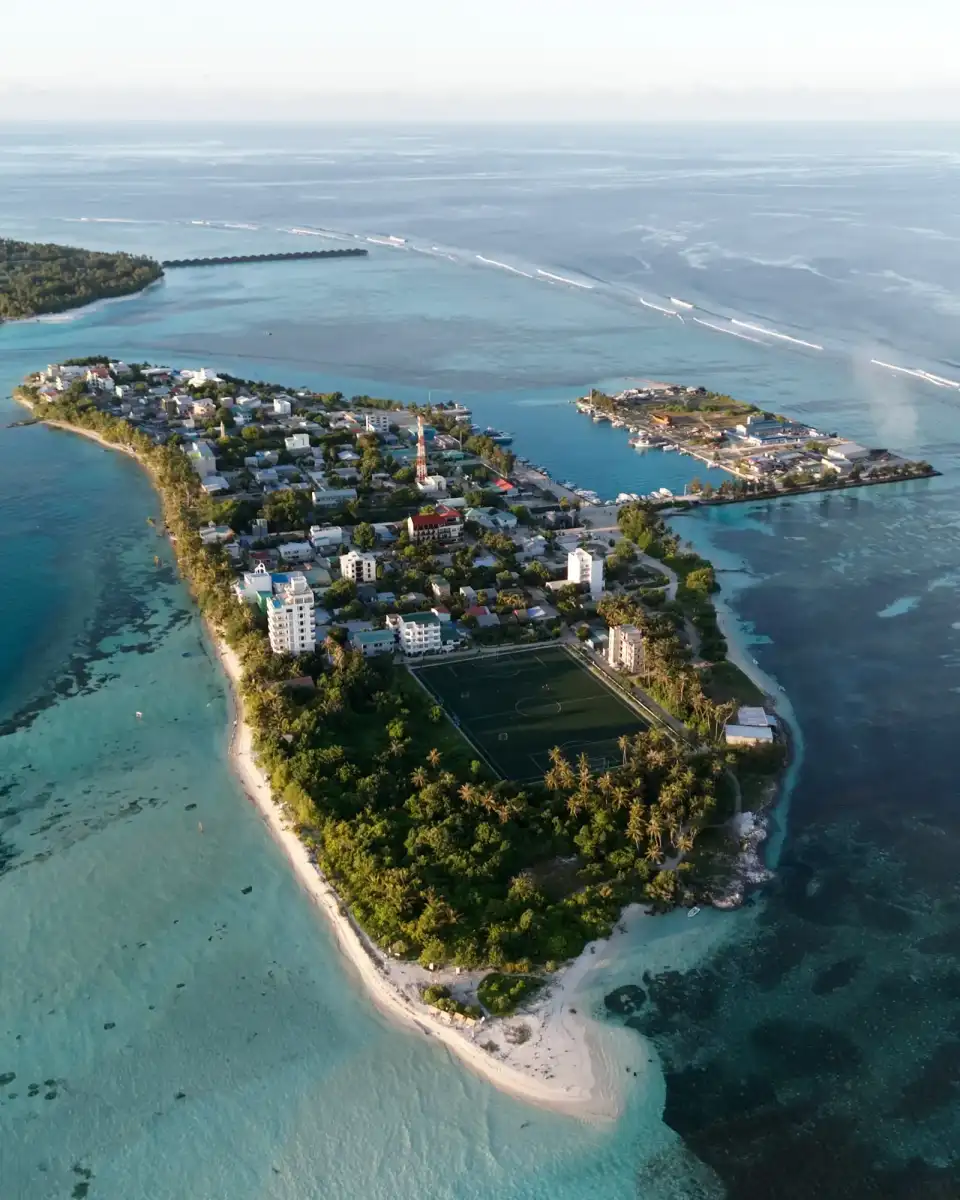
On a small island like Dhiffushi, where about 1,270 people live, house names and nicknames do most of the work. Ask for a fisherman by his given name alone and you may get three suggestions; add his house name and people will point you to the right gate. Our guide to Dhiffushi’s history and island life tells more of the island’s story, and the Maldives travel guide covers the rest.
Questions people ask
Do Maldivians have surnames?
Not in the European sense. Most Maldivians are officially known by one or two given names, and the second name is not usually a fixed family name passed down through generations. Instead, families have long been identified by their house name and home island. Some people carry inherited elements such as Didi or Maniku, which once showed rank. In daily life, most people go by a single short name or a nickname.
What is a Maldivian house name?
It is the registered name of a family home, used instead of a street number. House names might come from an ancestor, a place, a plant or simply a name the family liked, and modern ones can be in Dhivehi or English. The house name forms part of a Maldivian’s permanent address, appears on the national ID card and is used to identify people in formal settings, often for life.
What does Didi mean in a Maldivian name?
Historically, Didi marked descent from former sultans and implied a link to royal blood, according to H.C.P. Bell’s 1883 account of the islands. Since the Maldives became a republic in 1968, the old ranks carry no legal standing. Didi survives today as part of many official names, and some families keep it as a mark of heritage. It does not change how you should address someone.
Why are Maldivian names spelled in different ways?
Dhivehi is written in the Thaana script, so names have to be transliterated into Latin letters. An official system was introduced in 1977, but spellings still vary between people, documents and generations. Mohamed, Mohammed and Muhammad can all be the same name, and many women’s names, such as Aishath and Fathimath, end in “th”. Use whatever spelling the person themselves uses.
How should I address my guesthouse host?
Use the name they introduce themselves with, usually a short given name or a nickname. You don’t need a title or surname. A friendly *assalaamu alaikum* followed by their name is perfect. If you’re unsure what to call someone, simply ask; people are used to the question and won’t mind. With older people, a little extra courtesy, like standing to greet them, is always appreciated.
Is it rude to use a Maldivian nickname?
Usually not. Nicknames are a normal part of life and many people prefer them to their official names. But some nicknames are only used when talking about a person, not when speaking to them, and a few may be teasing. If you only know someone by a nickname you’ve overheard, check with your host or ask the person what they’d like to be called.

