Dhiffushi vs Maafushi vs Thulusdhoo: which local island?
Choosing a local island near Malé? An honest look at Dhiffushi, Maafushi and Thulusdhoo: crowds, beaches, surfing, transfers, drinks and who each island suits.
 By Dhiffushi Island Council7 min readUpdated
All three are good choices, and the right one depends on what you want from your days. Maafushi is the biggest and busiest, with the widest choice of rooms, trips and an offshore boat for drinks. Thulusdhoo is the surf island, closest to the famous Cokes break. Dhiffushi is the quietest of the three, with a long bikini beach and a slower pace, at the cost of a slightly longer boat ride from Malé.
The three islands at a glance
Maafushi sits in South Malé Atoll, about 26 km south of Malé. Thulusdhoo and Dhiffushi are both in North Malé Atoll to the north-east, about 27 km and 37 km from the capital. All three are inhabited local islands, so the same basic rules apply everywhere: no alcohol on the island, modest dress in the village, and swimwear only on the designated bikini beach.
| Dhiffushi | Maafushi | Thulusdhoo | |
|---|---|---|---|
| Atoll | North Malé (Kaafu) | South Malé (Kaafu) | North Malé (Kaafu) |
| Distance from Malé | about 37 km | about 26 km | about 27 km |
| Shared speedboat | about 40–50 min | about 30–45 min | about 30–45 min |
| Public ferry (not Fridays) | Route 308, about 2–3 hrs | Route 309, about 90 min | Route 308, shorter than to Dhiffushi |
| Size | about 0.95 km x 0.2 km | about 1.3 km x 0.26 km | about 1.6 km x 0.7 km |
| Population (2022 census) | about 1,270 | about 4,470 | about 1,800 |
| Guesthouses | around 25–30 | 70+ (2017 count) | around 30–35 |
| Feel | quiet, beach-focused | lively, lots on offer | surfer, relaxed, creative |
| Surfing | by boat to nearby breaks | limited | Cokes and Chickens on the doorstep |
| Drinks | resort day trips | offshore safari boat, resort trips | resort day trips |
Figures come from census data and recent travel guides. Guesthouse numbers change often.
Dhiffushi vs Maafushi
This is the comparison most people make, and the two islands feel quite different.
Size, crowds and development
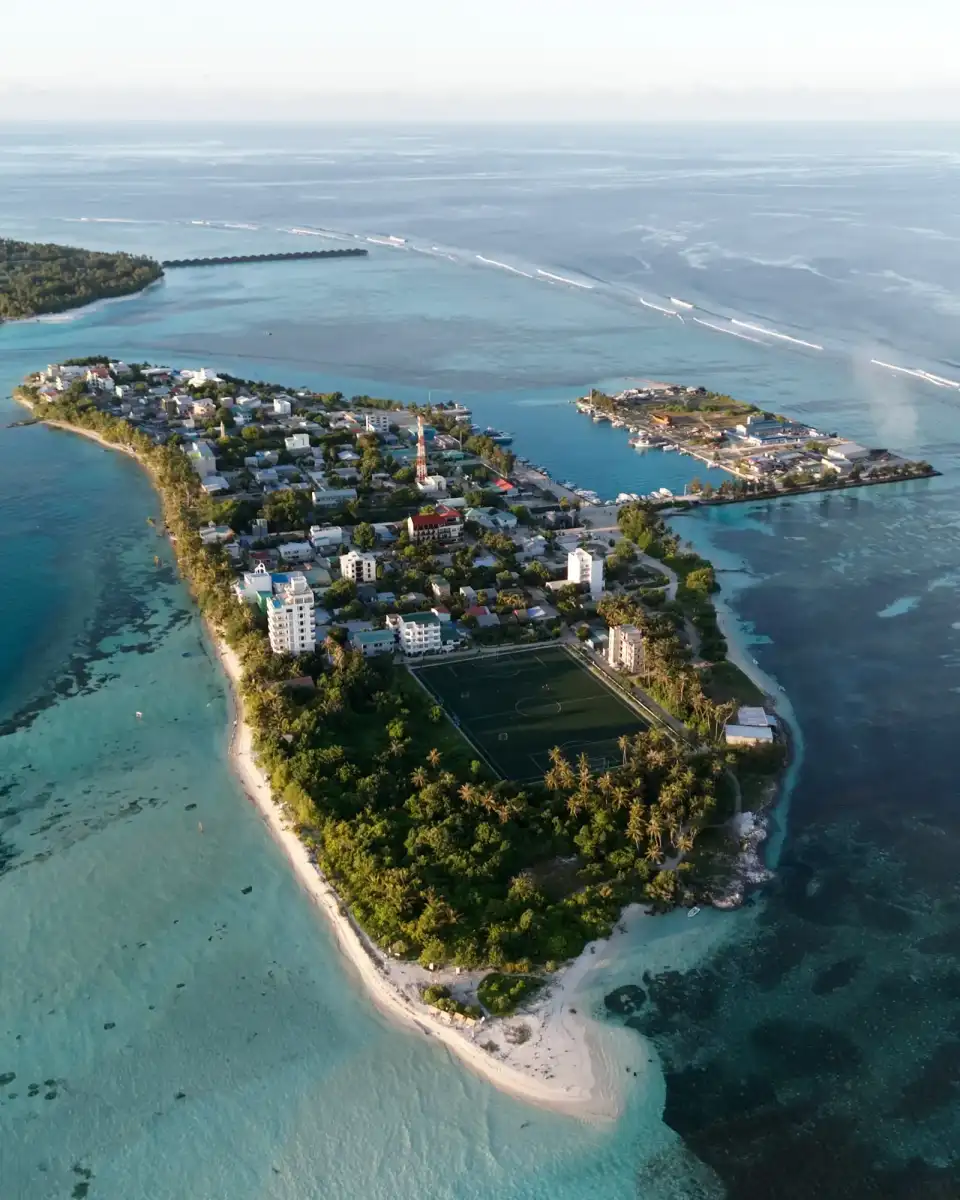
Maafushi was one of the first local islands to welcome guesthouse tourism and is now the most developed. By the end of 2017 it already had more than 70 guesthouses, and its population, including foreign workers, has more than doubled since 2006. That brings real advantages: plenty of restaurants, tour desks on every corner and keen prices thanks to competition. It also means more buildings, more construction and a busier bikini beach, especially in the afternoon.
Dhiffushi is smaller, with around 1,270 residents and roughly 25–30 places to stay. There are no cars, and you can walk anywhere in 10–15 minutes. Evenings are calm. If you want a buzz, you may find it too quiet; if you want to switch off, that is the point.
Beaches
Maafushi’s bikini beach is well kept, with loungers and umbrellas, but it is one main stretch shared by many guests. Dhiffushi has around a kilometre of bikini beach split between the north and south shores, so it is usually easy to find space. The south sunset beach tends to be calmer, as it sees less boat traffic.
Alcohol
Neither island allows alcohol. Maafushi has a licensed safari boat moored a short ride offshore, which many visitors use for an evening drink. Dhiffushi has no equivalent nearby that we can confirm, so guests usually book a resort day trip, where drinks can be bought on the resort. Note that the nearest resort, Meeru, does not sell day visits to Dhiffushi guests; other resorts may.
Getting there
Maafushi is closer, and its public ferry (Route 309) takes about 90 minutes. Dhiffushi’s ferry (Route 308) takes roughly two to three hours, as it stops at Himmafushi, Huraa and Thulusdhoo first. By shared speedboat the gap is small: about 40–50 minutes to Dhiffushi. Neither public ferry runs on Fridays. See how to get to Dhiffushi for timings and fares.
Dhiffushi or Thulusdhoo?
These two are neighbours on the same ferry route, about 8 km apart, so the choice is mostly about surfing and feel.
Surfing
Thulusdhoo is the clear pick if surfing is your main reason for travelling. Cokes, named after the island’s Coca-Cola bottling plant, is a powerful right-hander over shallow reef and best for experienced surfers. Chickens, a left-hander, is a short boat ride away. The main season runs roughly March to October, during the south-west monsoon. Dhiffushi guests can also reach these and other North Malé breaks, such as Jailbreaks, Sultans and Honky’s, but always by boat.
Feel and beaches
Thulusdhoo has a relaxed, international surf scene, with street art and a social café culture. It is the administrative capital of Kaafu Atoll, so it also feels like a working town. Its bikini beach on the north side is well set up with seating and shade. Dhiffushi is narrower and more beach-centred, with a longer swimming beach and fewer surfers around.
Snorkelling and diving
Both islands make good bases for reefs in North Malé Atoll. Dhiffushi has a long house reef you can snorkel from the shore, plus several dive centres. Thulusdhoo’s better snorkelling is generally just outside its harbour entrance. Day trips from either island cover similar sites.
Excursions and sandbanks
All three islands offer the usual menu: snorkelling trips, dolphin cruises, sandbank picnics, night fishing and resort day trips. Maafushi has the most operators and, often, the keenest prices. Long full-day trips to see whale sharks run from both atolls; they head out to South Ari Atoll, so check the travel time before booking.
From Dhiffushi you can join a sandbank picnic, turtle snorkelling or a half-day island-hopping trip to Thulusdhoo and Huraa. Browse the full list on our things to do page.
A few other islands
- Gulhi is a small, quiet island close to Maafushi, with a pretty bikini beach and only a handful of guesthouses. It suits people who like Maafushi’s area but not its bustle.
- Huraa is a peaceful village island in North Malé Atoll. It was home to the Huraa dynasty, the last royal family of the Maldives, and has a small mangrove area.
- Himmafushi is a working fishing village known for souvenir shops and the Jailbreaks surf break.
Who each island suits
- Choose Maafushi if it is your first trip on a tight plan, you want lots of restaurants and trips to pick from, or you would like a drink without leaving the area.
- Choose Thulusdhoo if you surf, travel solo, or enjoy a sociable, creative atmosphere.
- Choose Dhiffushi if you want a quieter island, more beach space, easy shore snorkelling and early sunrises from the east beach.
Whichever you pick, respect local life: cover shoulders and knees in the village, keep swimwear to the bikini beach, and expect things to slow down during Friday prayers. Don’t touch coral, feed fish or chase turtles and sharks. When you’re ready, start with our plan your trip page and see where to stay.
Questions people ask
What is the best local island near Malé?
There is no single best island. Maafushi has the most choice and nightlife options, Thulusdhoo is best for surfers, and Dhiffushi suits people who want a quieter island with a long bikini beach. All three are under an hour from Malé by shared speedboat, so you can pick by mood rather than distance.
Is Dhiffushi quieter than Maafushi?
Yes. Dhiffushi has around a quarter of Maafushi’s population and far fewer guesthouses, so streets and beaches are calmer and evenings are low-key. Maafushi is livelier, with more restaurants, more tour desks and a busier bikini beach, which many visitors enjoy.
Can you drink alcohol on Dhiffushi, Maafushi or Thulusdhoo?
No. Alcohol is not allowed on any inhabited local island in the Maldives, and you should not bring it with you. Near Maafushi, a licensed safari boat offshore serves drinks. From Dhiffushi and Thulusdhoo, the usual option is a resort day trip, where drinks are sold on the resort itself and must stay there.
Can I surf if I stay on Dhiffushi?
Yes, but you will need a boat. The best-known breaks, Cokes and Chickens, are near Thulusdhoo, about 8 km away, and other North Malé breaks are also reached by boat. Many are reef breaks suited to experienced surfers. If surfing every day is the plan, staying on Thulusdhoo saves time.
How long does it take to get from Malé to each island?
By shared speedboat, allow about 30–45 minutes to Maafushi or Thulusdhoo and about 40–50 minutes to Dhiffushi. The public ferry is much cheaper but slower: about 90 minutes to Maafushi and roughly two to three hours to Dhiffushi. Public ferries do not run on Fridays, so plan arrivals around that.
Can I visit Thulusdhoo or Huraa from Dhiffushi?
Yes. Half-day island-hopping trips from Dhiffushi usually take in Thulusdhoo, with its Coca-Cola plant and surf scene, and Huraa, with its old mosque and mangrove. Both are local islands, so cover shoulders and knees in the village and keep swimwear for the bikini beach.