Healthcare for visitors in the Maldives: hospitals and help
Island health centres, the big hospitals in Malé and Hulhumalé, pharmacies, emergency numbers and medical evacuation: what visitors need to know.
 By Dhiffushi Island Council8 min readUpdated
Every inhabited island in the Maldives has a government health centre or hospital, so help for minor illness and first aid is never far away. Serious cases go to the big hospitals in Malé and Hulhumalé, often by boat, and visitors pay for their own care. Bring travel insurance with medical evacuation cover, carry your regular medicines, and save the emergency numbers before you land.
How healthcare works in the Maldives
The public health system is built in three tiers, built to reach a country spread across hundreds of kilometres of sea.
- Island level. Health centres on inhabited islands give primary care: minor illness, wounds, first aid, basic medicines and checks. Public policy aims to have a facility on every inhabited island, even small ones.
- Atoll and regional level. Larger hospitals in the atolls handle maternity care, some specialist clinics and more serious cases. In 2026 the government said several regional hospitals were being upgraded towards tertiary care, and new health centres were being built.
- Tertiary level. The fullest care is in the capital area. The UK government’s travel advice says the only fully equipped hospitals are in Malé and Hulhumalé.
In practice, this means a local island can stabilise you and treat everyday problems, but anything complex means a transfer. On most local islands, that transfer is by boat.
Hospitals in Malé and Hulhumalé
Indira Gandhi Memorial Hospital (IGMH)
IGMH in Malé is the country’s largest government hospital and its national referral centre for tertiary care. Patients are sent here from across the atolls, and it also treats foreign patients. It has been expanded in recent years, with new wards and a surgical wing reported in national news.
Hulhumalé Hospital
Hulhumalé Hospital is the only government hospital in Hulhumalé, close to Velana International Airport. Its emergency room was enlarged in 2025, with more emergency beds and a resuscitation room, as reported by Atoll Times. Both hospitals are run under the state’s Malé City group of hospitals.
There are also private hospitals and clinics in the Malé area. This guide does not name or compare them. Your insurer or your guesthouse can tell you which facilities your policy works with.
Health centres on local islands
On a local island, the health centre is the first stop for almost everything. Staff are usually a doctor and nurses, sometimes with a small pharmacy counter attached. Expect:
- treatment for fevers, stomach upsets, ear infections and small injuries
- cleaning and dressing of cuts, including coral scrapes
- first aid and stabilisation before a transfer
- limited stock of medicines and few diagnostic tests
Opening hours and services vary from island to island. Your guesthouse will know the local pattern and can call ahead for you.
A local example: Dhiffushi
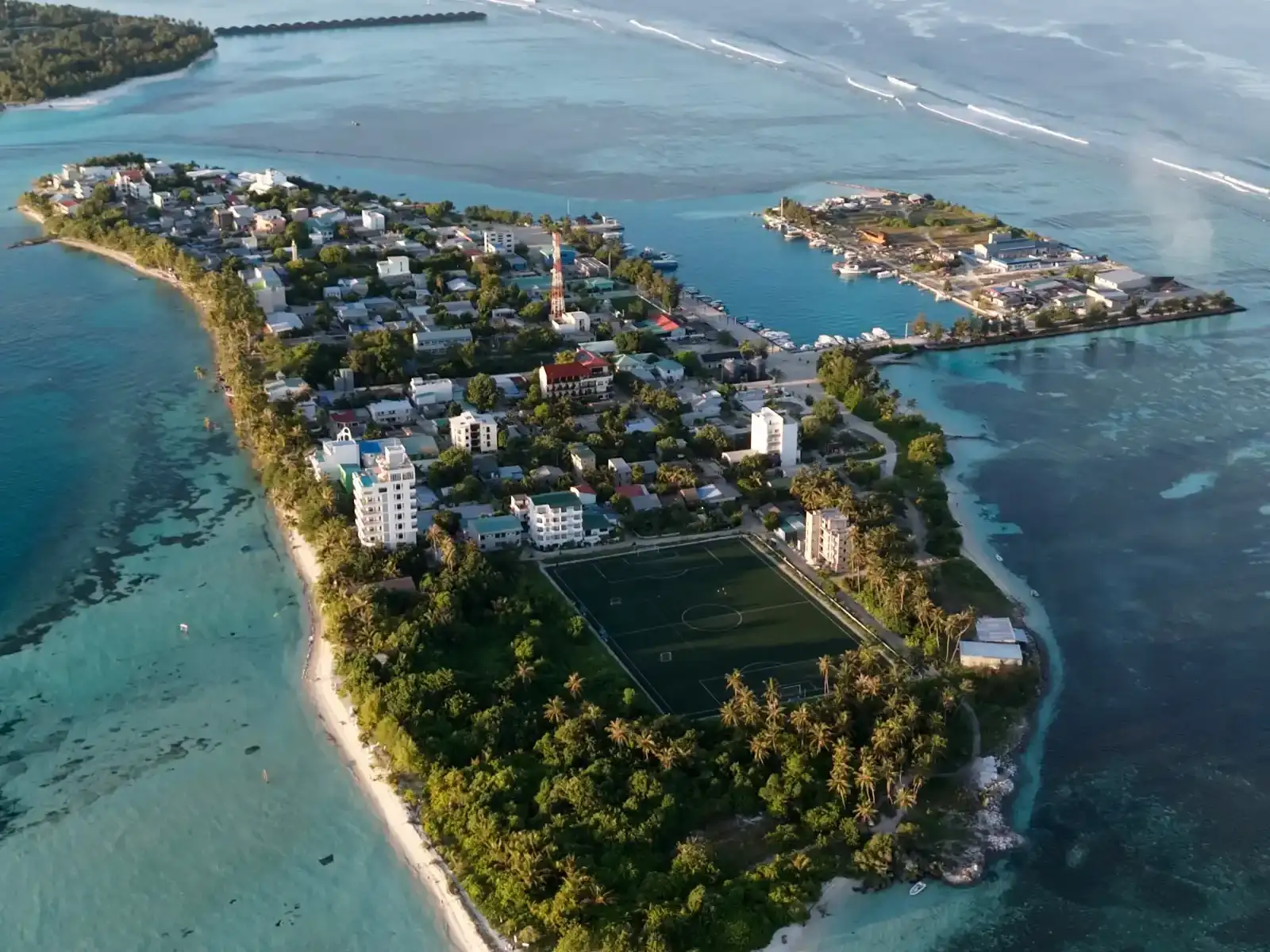
Dhiffushi Health Centre is the island’s government clinic, with a doctor and nursing staff for minor illness and first aid. Serious cases are sent on to Malé, about 40 to 50 minutes away by speedboat. The government has announced plans to run the centre around the clock and add X-ray and scan services. It is a fair picture of what most local islands near Malé offer.
Pharmacies and medicines
Pharmacies in the Maldives must be licensed by the Maldives Food and Drug Authority (MFDA). Pharmacists need an MFDA-issued pharmacist card to work in a registered pharmacy, and the authority asks the public to check that the pharmacy is licensed.
What this means for you:
- Malé and Hulhumalé have many pharmacies, with a wide range of common medicines.
- Local islands may have one small pharmacy, often near the health centre, with basic stock only. Don’t count on finding a specific brand or strength.
- Bring enough of your regular medicines for the whole trip, plus a few days spare in case the weather delays your boat. Pharmacy hours on local islands can change in Ramadan, so stock up first.
- Keep medicines in their original packaging with a copy of your prescription.
Controlled medicines for personal use need a valid prescription, and narcotics and psychotropic substances are prohibited (Maldives Customs). Some medicines that are legal at home are restricted here. Read our guide to bringing medicines into the Maldives before you pack.
A small first-aid kit is worth its space: plasters, antiseptic, rehydration salts, an antihistamine and your usual pain relief.
Emergency numbers
Save these in your phone before you arrive:
| Service | Number |
|---|---|
| National emergency number | 911 |
| Ambulance | 102 |
| Police | 119 |
| Fire | 118 |
The single national emergency number, 911, came in from November 2024. On a local island, it is often fastest to call the health centre directly or ask your guesthouse host, who will know who to ring. Keep your guesthouse’s number and your accommodation address with you on day trips.
Medical evacuation and transfers
Moving a patient between islands is a routine job here. The Maldives National Defence Force (MNDF) Coast Guard and sea ambulances carry out medical evacuations every week; in one week of June 2026, the MNDF reported 65 of them across the country. Air transfers are also used for distant atolls.
For visitors, a few things matter:
- Weather can slow things down. In rough seas, especially in the southwest monsoon, a transfer can take longer or be delayed.
- Seaplanes fly in daylight only, so night transfers from far-flung islands depend on boats or other aircraft.
- Serious conditions may need treatment abroad. Some care is not available in the country, and an international evacuation is expensive.
This is why travel insurance with medical evacuation and repatriation cover is not optional. Our travel insurance guide explains what to check in the small print.
Who pays: visitors and Aasandha
The Maldives has a national health insurance scheme called Aasandha, but it is for Maldivians. National news reported in October 2025 that Parliament was still debating whether even foreign spouses of Maldivians should be covered. Tourists are not part of it.
As a visitor, you will normally:
- pay at the health centre, hospital or pharmacy, then claim from your insurer
- need your passport and insurance details when you register
- call your insurer early if you are admitted or referred to a hospital
Some facilities may ask for payment or a guarantee from your insurer before treatment. Keep every receipt and medical report for your claim.
Staying well: the common problems
Most visits to a local health centre are for problems you can avoid with a little care. Each has its own guide on this site:
- Sunburn and heat. The sun near the equator is strong even when it is cloudy. See sun safety in the Maldives.
- Dengue. The Health Protection Agency reports dengue cases every month, with more in wetter months. See mosquitoes and dengue.
- Coral cuts and stings. Small scrapes get infected quickly in the heat. Clean them straight away. See marine stings and first aid.
- Stomach upsets. Drink bottled or treated water and take care with ice. See drinking water in the Maldives.
- Boat and sea safety. Wear the life jacket and listen to the crew.
For the wider picture, from currents to local laws, read is the Maldives safe?
Diving and decompression
The Maldives has very few recompression chambers, and some of them are on resort islands rather than in hospitals. A diver with decompression sickness may face a long boat or air transfer to reach one. That is one reason to dive conservatively:
- stay within the 30 m recreational depth limit set by the Recreational Diving Regulation
- dive with a licensed dive centre that carries oxygen
- leave 24 hours between your last dive and your flight, as Maldivian rules require
- check that your insurance covers diving and chamber treatment
If you are new to diving, our learning to dive guide covers training and safety.
Questions people ask
Is there a hospital on every island in the Maldives?
Not a full hospital, but every inhabited island has a government health centre or hospital. Island health centres handle minor illness, small injuries and first aid. Larger regional hospitals in the atolls offer more services, and the fullest care is in Malé and Hulhumalé. Serious cases are transferred, usually by boat, so check where the nearest hospital is when you choose your island.
Do tourists get free healthcare in the Maldives?
No. The national health insurance scheme, Aasandha, is for Maldivians, not visitors. Tourists pay for consultations, tests, medicines and transfers, then claim the cost back from their insurer. Carry your passport and policy details, keep every receipt and report, and call your insurer early if you are referred to a hospital or admitted.
What number do I call for an ambulance in the Maldives?
Call 102 for an ambulance, or 911, the single national emergency number in use since November 2024. Police are 119 and fire is 118. On a local island, it is often quicker to call the health centre directly or ask your guesthouse host, who will know the right person to ring and can help explain where you are.
Can I buy medicines on a local island?
Usually, but only basic ones. Most local islands have a small pharmacy, often near the health centre, with limited stock. Malé and Hulhumalé have a much wider range. Bring enough of your regular medicines for the whole trip plus spare days, keep them in original packaging, and carry your prescription. Some medicines legal at home are restricted in the Maldives.
Do I need travel insurance for the Maldives?
Yes, and it should include medical evacuation. On a local island, serious illness or injury means a boat or air transfer to Malé, and some conditions need treatment abroad. Both are costly without cover. Check that your policy includes evacuation, repatriation and any activities you plan, such as diving or water sports, before you travel.
What happens if I get sick on a local island at night?
Call the health centre or ask your guesthouse for help. Hours vary from island to island, but your host will know how to reach the health staff, and serious cases are transferred to a larger hospital, often by Coast Guard or sea ambulance. Transfers can be slower at night or in rough weather, so keep your phone charged and your insurer’s number to hand.