


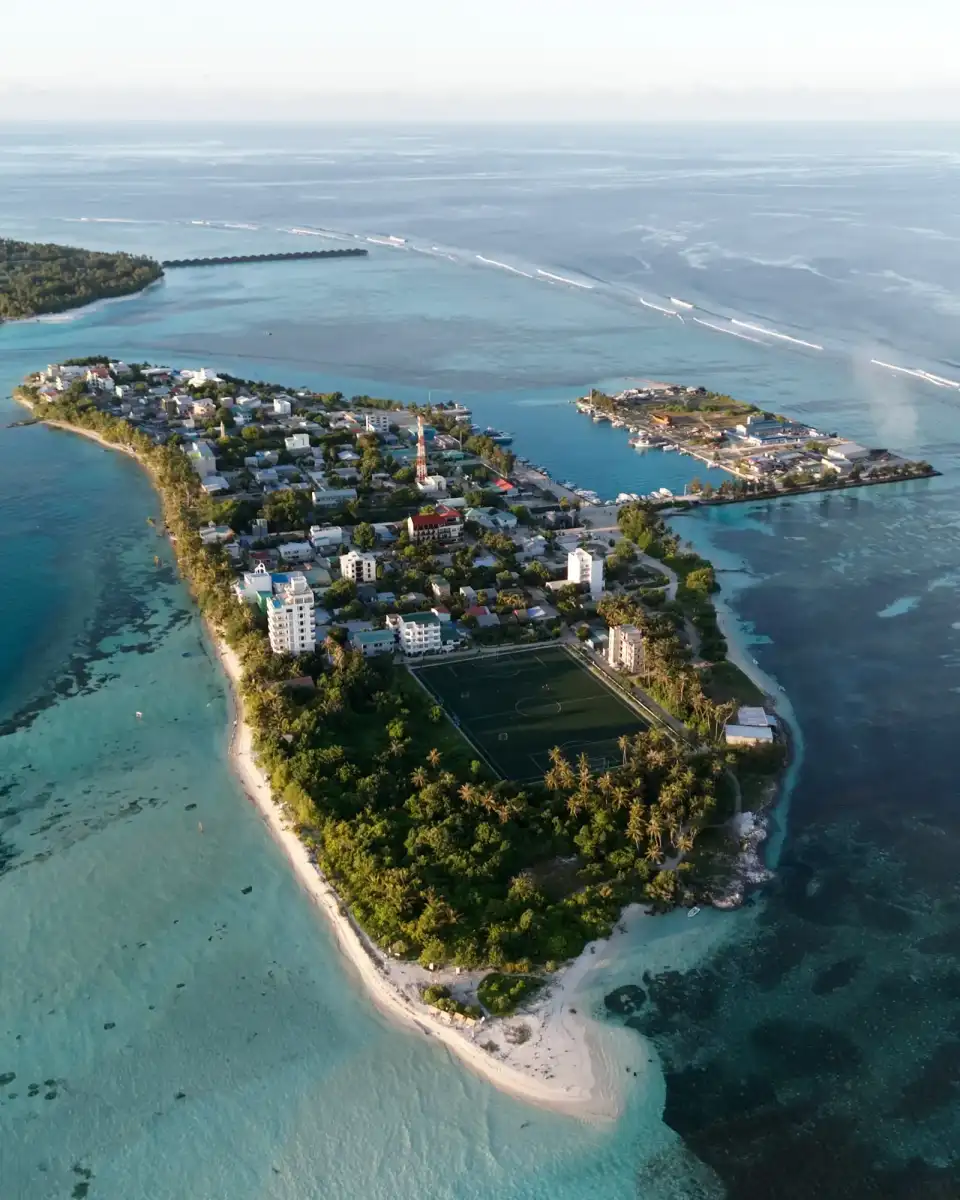
Flying a drone in the Maldives: rules and permits
Every drone flight in the Maldives needs approval. Here is how the Ministry of Defence and CAA permits work, the limits to expect, and how to fly respectfully on local islands.
 By Dhiffushi Island Council8 min readUpdated
Yes, you can fly a drone in the Maldives, but not on a whim. Every flight needs approval: first a permit from the Ministry of Defence, which the Maldives National Defence Force (MNDF) oversees, and then a permit from the Maldives Civil Aviation Authority (CAA). On top of that you need the go-ahead from whoever runs the island you are on. Plan it before you fly out, not after you land.
Why the Maldives is strict about drones
The Maldives is about 99% sea, and much of its air traffic flies low. The CAA says seaplanes serve more than 90 floating platforms across the atolls, and they fly by sight under visual flight rules rather than on fixed corridors. That makes it hard to draw simple “safe” zones for hobby drones, so the CAA reviews every drone operation case by case.
Security is the other reason. In June 2016 the Ministry of Defence announced that drones may not be flown without permission over Malé, near international and regional airports, or near several defence and security sites. In 2022 a drone filmed close to a seaplane in flight, and the government responded by tightening the rules further.
The short version: the sky over a local island is not empty, even when it looks it.
The approval process, step by step
The CAA’s own guidance page, “Flying Remotely Piloted Aircraft (Drones) in the Maldives”, sets out three steps. As of October 2026 this is still the official route.
1. Ministry of Defence (MNDF) permit
- Apply online through the government’s oneGov portal, using the “Permit to Operate Drones” service run by the Ministry of Defence. You need a oneGov account to sign in; if you cannot register as a visitor, ask your guesthouse, resort or a local agent to help you apply.
- The Ministry’s guidance says applications must arrive at least three official working days before the flight. Weekends and public holidays do not count, and late applications are rejected.
- Include a map of the area with the exact coordinates of where you plan to fly.
- The MNDF can halt any drone flight at any time if it judges it necessary.
- Security zones designated by the MNDF must be left out of any photography or filming.
Three working days is the minimum, not a promise. Apply as early as you can, ideally before you travel. See our Maldives festivals and public holidays guide to avoid losing days to holidays.
2. Civil Aviation Authority permit
Once you have the defence permit, apply to the CAA on its form CAA/AD/05, “Application for permit to operate model aircrafts, kites, unmanned balloons, parasails and gyrogliders” (revision 4). You send it by email with a copy of your Ministry of Defence permit attached. The form asks for:
- your name, passport number, nationality and contact details
- the coordinates of the take-off area, the height you will fly and the radius of the area
- start and end dates and times, plus a map of the flight path
- the purpose of the flight
- your drone’s make, model, size, weight and serial number
The CAA asks operators to stay below 400 feet (about 120 metres). The notes on the form add that flights over land should be in open space, clear of surrounding structures, and outside the no-fly zone of any aerodrome.
3. Everyone else who has a say
The CAA is clear that the operator, meaning you, must get any other approvals needed. It names:
- resorts, which are private islands with their own rules
- island and city councils, for flights over or around inhabited islands
- the National Centre for the Arts, which the CAA lists for filming approvals
- Maldives Airports Company Limited, the state-owned airport operator, near airports
The conditions you are likely to fly under
Your permits set the actual limits, so read them closely. Official documents do not all agree:
| Source | What it says |
|---|---|
| CAA guidance and form CAA/AD/05 | Below 400 ft; open space; clear of structures; outside aerodrome no-fly zones |
| Older Ministry of Defence application form (on the CAA site) | 50 m radius in urban areas, 150 m over water, maximum height 10 m |
The older defence form is far stricter than the CAA ceiling. Treat whatever is written on your own permit as the rule, and if it is unclear, ask before you fly.
No-fly areas to know about
- Malé and the airport. Since 2016, flying without permission has been banned across Malé, apart from one designated area (reported as Rasfannu beach). Drones are also banned near Velana International Airport and the regional airports without permission.
- Defence and security sites. The 2016 notice also listed areas such as Maafilaafushi, Maduvvaree in Vaavu Atoll, the security forces’ areas at Kadhdhoo (Laamu) and Gan (Addu), and Girifushi in Kaafu Atoll.
- Seaplane routes and lagoons. These are not fixed, which is exactly why the CAA reviews each flight. If you hear or see a seaplane, land.
The CAA publishes aeronautical information through the Maldives air navigation service (AIP, supplements and NOTAMs). Ask the CAA whether a temporary notice affects your area.
Bringing a drone into the country
We could not find an official Maldives Customs rule that deals specifically with drones. Travel sites say drones may be questioned or held at the airport if you arrive without approval. Our advice:
- Have your permits, or at least your applications, printed or saved on your phone when you land.
- Declare the drone if you are unsure. Use the red channel if you think it might need checking.
- Keep spare batteries in your hand luggage, as your airline requires.
Read our guide to arriving at Velana International Airport for how customs and arrivals work, and the visa and entry requirements guide for the IMUGA traveller declaration.
Flying on a local island
Local islands are home to real communities, not film sets. The Maldives has no drone-specific privacy law that we could confirm, but the norms on the ground are strong and worth respecting:
- Ask the island council. It speaks for the community and can tell you about local concerns. On Dhiffushi, the island council is the first contact for any filming on the island.
- Ask people before filming them. Many Maldivians, women especially, may not want to be filmed. Never fly over private homes or yards.
- Keep away from mosques, schools and the health centre. Never fly during prayers or near funerals.
- Mind the dress code. Footage of bikini beaches can end up showing local people who never agreed to it. See our what to wear guide and local island etiquette.
- Fly quietly and briefly. Early morning is calm and beautiful, and fewer people are around.
On Dhiffushi, the easternmost inhabited island, the east beach at sunrise is the shot everyone wants. Get your permits and council approval first, then go early.
Sandbanks, reefs and wildlife
Sandbanks and lagoons look like perfect launch spots, but the same permits apply, and they sit on boat and seaplane routes. Your permit covers the coordinates you applied for, not the whole boat trip. Our sandbanks and picnic islands guide covers how to get there and behave once you arrive.
The Maldives protects many species, including turtles, rays, whale sharks and dolphins. We found no official rule on drone distances from wildlife, so follow good practice:
- Don’t hover low over turtles, dolphins, mantas or whale sharks, and never chase them.
- Keep away from roosting and nesting seabirds, which may treat a drone as a predator.
- Never launch from or land on coral.
Our responsible travel guide and sea turtles guide explain why it matters.
A quick checklist
- Apply on oneGov for the Ministry of Defence permit, early.
- Send CAA form CAA/AD/05 with the defence permit attached.
- Get approval from the island council or resort.
- Carry your permits through arrivals.
- Fly below your permitted height, in open space, away from people, and land for any aircraft.
For the rest of your trip planning, start with our Maldives travel guide.
Questions people ask
Do I need a permit to fly a drone in the Maldives?
Yes. The Civil Aviation Authority reviews every drone operation case by case. In practice you apply first to the Ministry of Defence through the oneGov portal, then to the CAA on form CAA/AD/05 with the defence permit attached. You also need permission from the island council or resort where you plan to fly. Holiday or hobby use is not exempt from these steps.
How long does a drone permit take?
The Ministry of Defence asks for applications at least three official working days before the flight, and it rejects late applications. Weekends and public holidays do not count. That is the minimum: the CAA step comes after it, and processing can take longer, especially around holidays. Apply well before you travel and keep copies of everything.
How high can I fly a drone in the Maldives?
The CAA asks operators to stay below 400 feet, about 120 metres, in open space and clear of structures. An older Ministry of Defence form listed much tighter limits, including a 10-metre ceiling. Official documents are not consistent, so the limits written on your own permit are the ones that count. If anything is unclear, ask the CAA before you fly.
Can I fly a drone at the airport or in Malé?
No, not without specific permission. Since 2016 the Ministry of Defence has banned unpermitted drone flights across Malé, apart from one designated area, and near international and regional airports. Velana International Airport is busy with jets and seaplanes. If you are staying in Malé or Hulhumalé, check your permit carefully and assume the answer is no unless it says otherwise.
Can I fly a drone at a resort?
Resorts are private islands with their own rules, and many restrict or ban drones. The CAA lists resorts among the parties whose approval you must get yourself, and the government’s permit guidance asks resort operators to make sure flights pose no risk to seaplanes. Ask the resort in writing before you arrive, and still get your defence and CAA permits.
Will customs take my drone at the airport?
We could not confirm an official Maldives Customs rule specific to drones. Travel reports suggest drones can be questioned or held if you arrive without approval. Carry printed or digital copies of your permits or applications, declare the drone if you are unsure, and keep lithium batteries in your hand luggage. Check with Maldives Customs before you travel if you are concerned.

