Water sports in the Maldives: from kayaks to kitesurfing
Kayaks, paddleboards, jet skis, parasailing and kitesurfing: what local islands offer, when the wind is right, the safety rules and what to wear.
 By Dhiffushi Island Council8 min readUpdated
Water sports in the Maldives are not only for resort guests. On most local islands with guesthouses you can hire a kayak or paddleboard from the beach, go snorkelling, and book jet skis, banana boats, parasailing and kitesurfing with island operators. The sea is warm all year. Calmer months suit paddling and snorkelling, and windier months suit kites and sails.
What’s on offer from a local island
Most of the activities below are run straight off the beach by small island operators. Not every island has all of them. Use this table as a quick guide.
| Activity | Who it suits | Best conditions |
|---|---|---|
| Kayak | Everyone, including families | Calm, low wind, morning |
| Stand-up paddleboard | Beginners upwards | Flat water, light wind |
| Snorkelling | Anyone who can swim | Calm sea, good visibility |
| Jet ski | Adults; older teens with an adult | Moderate sea, outside swimming areas |
| Banana boat or tube | Groups, families with older children | Calm to moderate sea |
| Parasailing | First-timers, no skill needed | Steady light to moderate wind |
| Wakeboarding | Sporty beginners and riders | Flat, sheltered water |
| Kitesurfing | Lessons for beginners; riders with experience | Steady wind, windier months |
| Glass-bottom boat | Non-swimmers, young children, older travellers | Calm sea, sunny days |
Kayaking
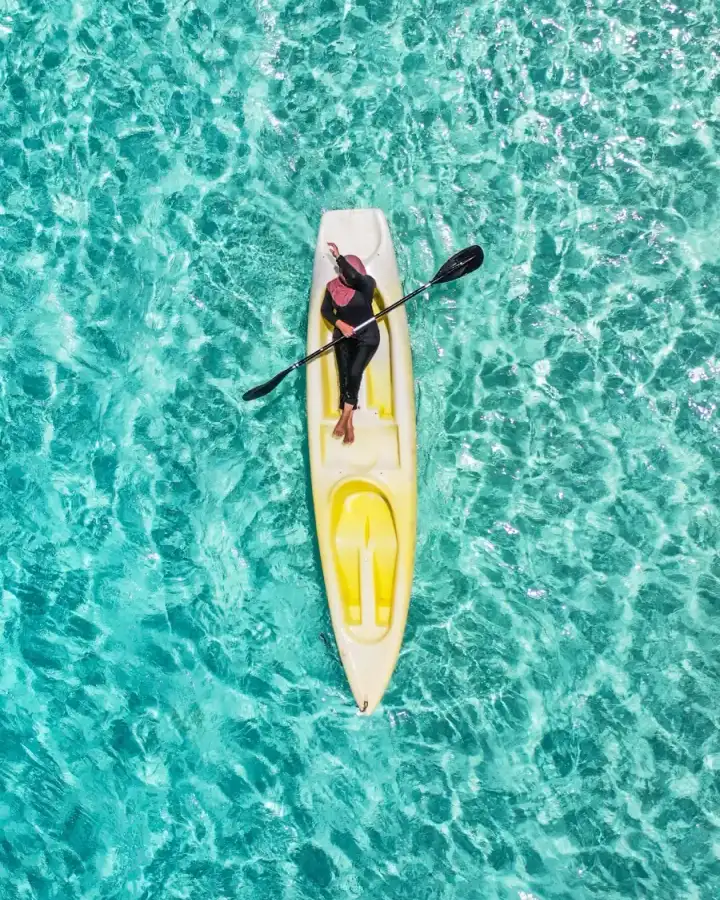
Kayaking in the Maldives is the easiest way to explore a lagoon on your own. Sit-on-top kayaks are stable, and the shallow water near the shore is often clear enough to see fish and coral heads from above. Go early, before the wind picks up, and paddle into the wind on the way out so the return is easier.
Stand-up paddleboarding
A paddle board in the Maldives gives you a higher view than a kayak, which helps you spot rays and small reef sharks in the shallows. Most people can stand within minutes on flat water, but any real breeze turns it into a workout. Wear a leash, and stay inside the lagoon rather than drifting towards the reef edge.
Snorkelling
You can snorkel from the beach on many local islands, and boat trips go further out to reefs, turtle spots and sandbanks. Calm mornings are often best. Our full snorkelling guide covers kit, sites and safety in detail.
Jet skis
Jet ski trips in the Maldives are usually guided tours of 30 minutes to an hour, often following a guide around the island or to a nearby sandbank. They are loud and fast, so they are best for adults and confident older teenagers riding with an adult. Expect a short briefing on the controls and route first.
Banana boats and tubes
A banana boat or inflatable tube is towed behind a speedboat, and the fun is in falling off. It suits groups and families with older children who are happy in the water.
Parasailing
Parasailing in the Maldives lifts you high above the lagoon on a parachute towed by a boat. Many launches and landings happen from the boat deck, and no skill is needed. Operators need a steady breeze, so it can be cancelled on very calm or very windy days.
Wakeboarding
Wakeboarding is towed behind a boat on a board, a little like snowboarding on water. It needs flat, sheltered water and reasonable fitness.
Kitesurfing
Kitesurfing in the Maldives is a wind sport, so timing matters more than for anything else on this list. Complete beginners need several hours of lessons before riding alone, so plan for more than one session. Experienced riders should ask in advance about gear, spots and wind direction. Nearby, there are pages on kitesurfing from Dhiffushi and on surfing in the Maldives for wave riders.
Glass-bottom boat
A glass-bottom boat trip lets you see the reef without getting wet. It is a gentle choice for non-swimmers, young children and older travellers.
Seasons and wind
The Maldives Meteorological Service describes two monsoons. The northeast monsoon, roughly January to March, is the dry season, with generally calmer seas and lighter winds. The southwest monsoon, from about mid-May to November, is the wet season, and winds are generally stronger, with more rain and squalls. April and December are transition months.
In practice:
- Kayaking, paddleboarding and snorkelling are generally best in the calmer, drier months and on still mornings at any time of year.
- Kitesurfing and windsurfing generally have more good days in the windier months of the southwest monsoon, though wind can be gusty around showers. The northeast monsoon also brings usable days, especially early in the year.
- Jet skis, banana boats and parasailing run most of the year but stop in rough weather.
Air temperatures sit around 30–31°C and the sea around 28–29°C all year, so a wetsuit is not needed. For month-by-month detail, see the best time to visit the Maldives.
Safety and rules
In November 2024 the Ministry of Tourism sent a circular with interim safety standards to water sports and snorkelling operators, guesthouses and tourist vessels, as reported by national media. A full regulation was to follow in the government gazette. The standards include:
- A safety briefing for each activity before it starts.
- Non-swimmers must wear a life jacket at all times during water activities.
- Where it applies, activities take place inside set boundaries.
- Activities stop when the Met office warns of bad weather, or when conditions or the instructor judge it unsafe.
- Operators keep a log of participants and ask them to sign a consent and health form; a parent signs for anyone under 16.
- Equipment must meet safety standards and be used as intended.
So expect to show ID and fill in a short form.
Good practice on top of the official standards:
- Book with an operator your guesthouse or island council knows, and ask whether they hold the permits required for their activities.
- Wear a life jacket on any towed ride or jet ski, even if you swim well.
- Jet skis and towed boats should keep well away from swimmers, snorkellers and bathing areas. If a driver comes close to swimmers, say something.
- Tell someone ashore where you are paddling, and stay inside the lagoon on kayaks and boards.
- Use reef-safe sun cream, drink water and cover up; the sun is strong even on cloudy days.
- Mention any heart condition, pregnancy or recent surgery before a high-speed ride or parasailing.
There is more on staying well in our health and safety guide.
Reef and wildlife care
The reefs that make the Maldives beautiful are fragile and shallow.
- Jet skis and boats should not run over shallow reef. Propellers and hulls break coral, and a grounding can hurt riders too.
- Never chase, circle or block dolphins, turtles, rays or sharks. Let them come to you, slow down and keep your distance.
- Do not stand on coral, even dead-looking patches, and do not touch or feed marine life.
- Do not take shells, coral or sand from the beach or reef.
Turtles are protected in the Maldives, as are all rays. See marine life in the Maldives to know what you might meet.
What to wear on a local island
Local islands are home to Maldivian communities, and swimwear rules apply. Bikinis and swim shorts are fine on a designated bikini beach. Elsewhere, including when you walk to the jetty or ride from a public beach, it is respectful to cover shoulders and knees.
A rash vest or swim shirt with shorts or leggings is the easy answer. It also protects you from sunburn and scrapes. Bring water shoes for coral sand and boat decks, and a hat for paddling. Read more in our local island etiquette guide.
Prices
Prices vary by island, season and group size, so think of them in broad terms. Kayaks and paddleboards are usually the cheapest, often hired by the hour. Banana boats, tubes and snorkel trips sit in the middle. Jet skis, parasailing, wakeboarding and kitesurfing lessons cost more, since they need fuel, boats and trained staff. Tourism GST and a service charge may be added, so ask whether a quoted price includes them, and whether it is per person or per group.
Water sports on a local island like Dhiffushi
On a local island, water sports are run from the beach by island operators, often families or small teams who know the lagoon well. You can usually walk up and book on the day, or arrange it through your guesthouse. Operators will often move a trip if the wind or sea changes.
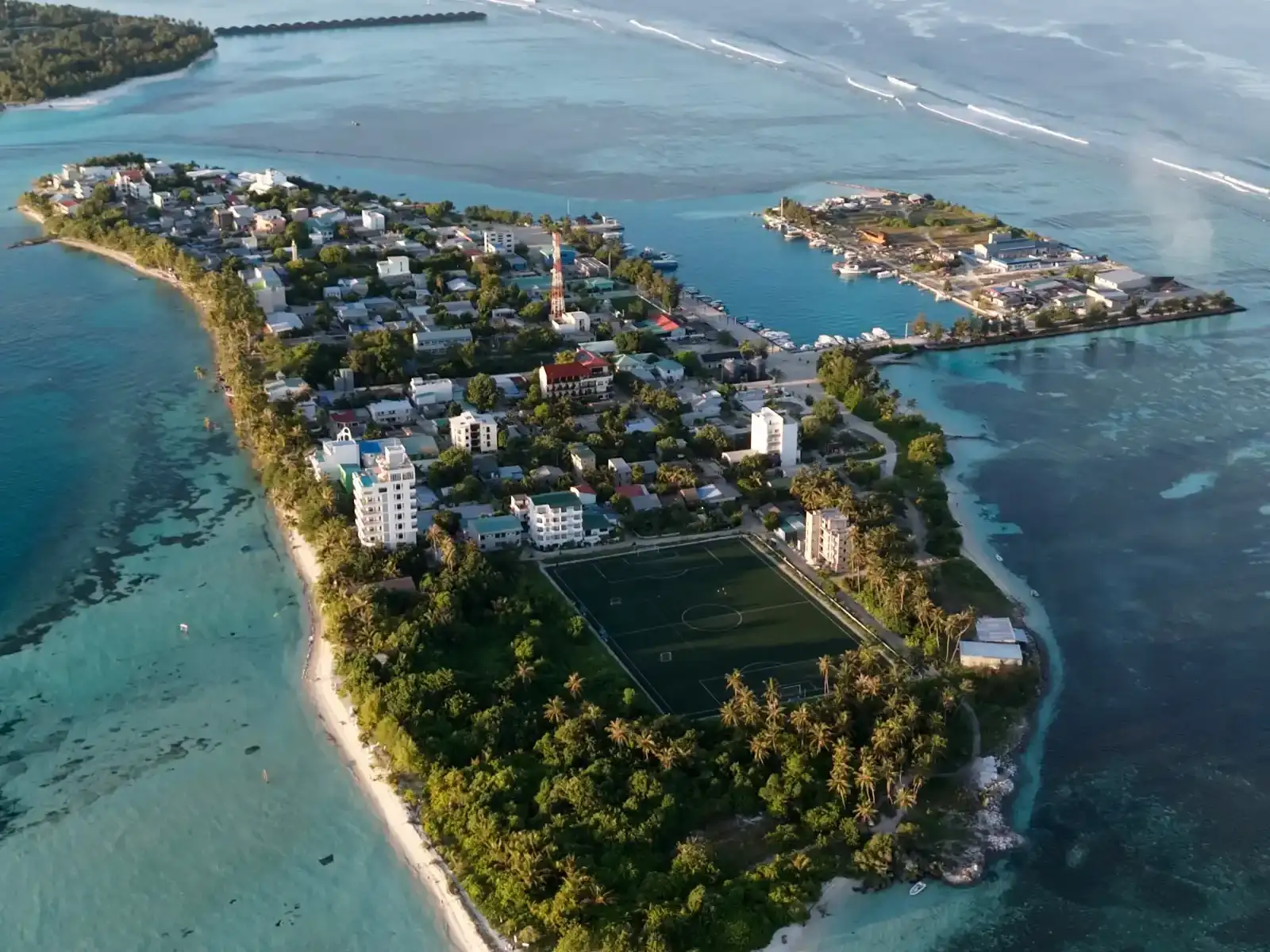
Dhiffushi, in Kaafu Atoll about 37 km north-east of Malé, is one example. Island operators there run many of the activities in this guide. Browse water sports in Dhiffushi and the wider list of things to do to see what is on offer. Families can find age tips in our guide to the Maldives with kids.
Questions people ask
What water sports can you do in the Maldives?
Most visitors can try kayaking, stand-up paddleboarding, snorkelling, jet skis, banana boats and tubes, parasailing, wakeboarding, kitesurfing and glass-bottom boat trips. Local islands with guesthouses usually have island operators running several of these from the beach. What is available depends on the island, the season and the day’s weather.
When is the best time for kitesurfing in the Maldives?
Kitesurfing generally has more good days during the windier southwest monsoon, from about mid-May to November, when winds are usually stronger. The northeast monsoon, roughly January to March, is calmer but still brings usable days. Wind varies from week to week, so ask a local operator about recent conditions and allow spare days in your plans.
Do I need to know how to swim to do water sports?
Not for every activity. Under the Ministry of Tourism’s safety standards, non-swimmers must wear a life jacket at all times during water activities. Glass-bottom boats and parasailing from a boat deck suit non-swimmers well. For snorkelling, paddling and towed rides, being a confident swimmer makes the experience safer and more fun, so tell your operator honestly.
Can I ride a jet ski in the Maldives without a licence?
On most local islands, jet skis are offered as guided tours where you ride behind or with a guide after a briefing, rather than as free hire. Rules on who may ride and where can differ by operator and area, so ask before you book. Riders should keep well away from swimmers, bathing areas and shallow reef at all times.
Can I do water sports on a local island in a bikini?
Only on a designated bikini beach. Elsewhere on local islands, it is respectful to cover shoulders and knees, including at public beaches and jetties. A rash vest with shorts or leggings works for almost every water sport, and it protects your skin from strong sun. Your guesthouse can tell you where the bikini beach is.
Are water sports cheaper on local islands than at resorts?
Usually, yes. Island operators tend to charge less than resorts for the same activities. Prices still depend on the activity, season and group size. Always check whether a quoted price includes taxes and service charge, and whether it is per person or per group.