Freediving in the Maldives: where to start and stay safe
Warm, clear water and shallow reefs make the Maldives a lovely place to freedive. How to start, why you never dive alone, and how to behave around mantas.
 By Dhiffushi Island Council8 min readUpdated
Freediving in the Maldives means exploring the reef on a single breath: no tank, just a mask, fins and a relaxed body. The warm, clear water and shallow reef tops make it a lovely place to learn, but the open sea, currents and boat traffic mean you should never do it alone. Start with a short course or a guided session, dive with a trained buddy, and treat mantas and whale sharks with the same respect you would on a snorkelling trip.
What freediving is (and isn’t)
Freediving is breath-hold diving: a calm breath at the surface, a dive down, a look around and back up. No compressed air, no heavy kit. It sits between snorkelling and scuba:
- Snorkelling keeps you at the surface, looking down.
- Freediving lets you go under for short, gentle dives, often just 3–10 metres, and get eye to eye with the reef.
- Scuba gives you a tank so you can stay down for the length of a dive.
Anyone who ducks down to peer under a coral ledge is already freediving. A course teaches you to do it more comfortably and, above all, more safely.
Why the Maldives suits freediving
- Warm water all year. The sea sits at about 28–29°C, so you can relax in a thin wetsuit or rash vest.
- Clear water. Visibility is often good, especially on the clearer side of an atoll. It changes with the monsoon and plankton.
- Shallow reef tops. Many reefs rise to within a few metres of the surface, so beginners can enjoy real reef life without going deep.
- Sheltered lagoons. Calm, sandy lagoons are perfect for first breath-hold practice before you head out to the reef.
- Big marine life near the surface. Mantas, turtles and sometimes whale sharks feed or travel close to the surface, which suits breath-hold divers well.
For the seasons and the way conditions swap sides of the atolls, see our best time to visit the Maldives guide.
Safety first: the rules that matter
Freediving is calm and quiet, but the risks are real. Most come back to one thing: losing consciousness underwater with nobody there to help.
Never freedive alone
This is the golden rule. A trained buddy watches you on every dive, from the moment you go down until you’ve been back at the surface and breathing normally for a short while. Then you swap roles. Two people both looking at the reef is not the same thing: one dives, the other watches.
Understand shallow water blackout
Shallow water blackout is a loss of consciousness caused by low oxygen, usually on the way up or just after surfacing. It can happen without warning, even to strong swimmers, and even in a lagoon only a few metres deep. A buddy who is watching can bring your face out of the water and help you breathe. Alone, a blackout can be fatal.
What raises the risk:
- Hyperventilating (fast, deep breathing) before a dive. It makes you feel you can hold your breath longer, but it delays the urge to breathe and can lead to a blackout. Breathe slowly and normally instead.
- Pushing your limits on time or depth.
- Long repeated dives without enough rest at the surface. A simple habit is to rest at the surface for at least twice as long as your dive, and longer after deeper dives.
Watch out for boats
Local islands are busy with speedboats, fishing boats and dhonis. A freediver underwater is invisible to a boat driver. Stay inside areas your guide chooses, keep away from harbour channels, and use a bright surface buoy with a dive flag when you are on the reef.
Respect the current
Maldivian reefs are cut by channels (kandu) where water rushes between the lagoon and the open ocean. Currents can be strong and can change with the tide. Leave channel sites to people trained and guided for them, and on boat trips follow the crew’s briefing and stay together.
Equalise gently
As you go down, pressure builds in your ears and mask. Equalise early and often, and never force it. If your ears won’t clear, come up. Don’t freedive with a cold or blocked sinuses.
Scuba, insurance and the bigger picture
If you also scuba dive, ask your instructor how to plan the two; the usual advice is not to freedive after scuba on the same day (more in our diving in the Maldives guide, or start with learning to dive). Our health and safety guide covers the wider picture, including emergency numbers and travel insurance. Check that your insurance includes freediving and medical evacuation.
Learning to freedive: courses in general
Freediving courses are run by several internationally recognised training agencies. On holiday you’ll typically find:
- Try sessions of a few hours, with a short talk and a lagoon session. Good if you just want a taste.
- Beginner courses, usually over two or three days, covering breathing, relaxation, equalisation, safe technique and buddy rescue, with sessions in the lagoon and on a reef or line.
- Further levels with more depth and longer breath-holds under supervision.
The most valuable part of any course is the rescue and buddy training.
Choosing an instructor or centre
Not every island has a freediving instructor, so ask before you book. Dive centres in the Maldives must hold a licence from the Ministry of Tourism, and some of them also offer freediving. Useful questions:
- Is the instructor certified to teach freediving, not just scuba?
- Do they use a line, buoy and flag, and who watches each dive?
- What happens if the sea or current is too rough?
- Is there oxygen and first aid on the boat?
If someone promises deep dives on your first day, look elsewhere.
Freediving from a local island
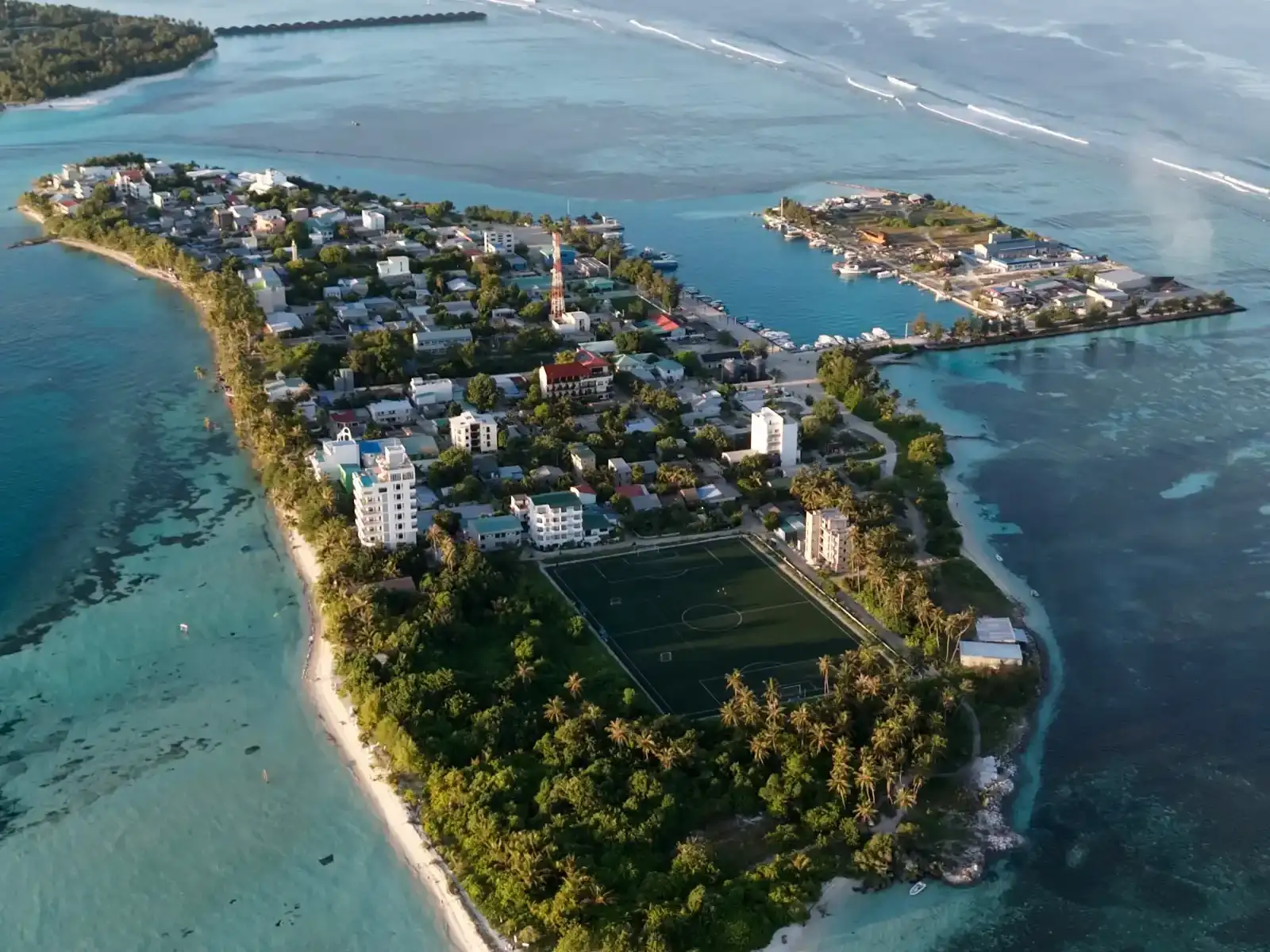
Staying on a local island makes freediving easy to fit into a trip. On Dhiffushi, the house reef is a natural place to warm up with a buddy, and our diving and snorkelling in Dhiffushi guide explains what’s around the island. Remember that swimwear is only for designated bikini beaches on local islands; elsewhere, cover up when you leave the water.
How deep should you go?
For most visitors: not very. The reef top and upper slopes, down to about 10 metres, hold most of the colour and life, and mantas often feed close to the surface.
Depth and time come with training and practice, not with willpower. Let your instructor set the plan, and stop each dive while it still feels easy. Records and competition depths have nothing to do with a good holiday dive.
Freediving with mantas, whale sharks and turtles
Breath-hold divers move quietly, which makes for wonderful encounters. The same codes of conduct apply whether you snorkel, freedive or scuba dive.
- Keep your distance. For whale sharks, stay at least 3 metres from the body and 4 metres from the tail. For mantas, about 3 metres.
- Never touch, chase, ride or block their path. Don’t dive down directly on top of a manta or swim in front of it.
- Enter the water quietly. Slide in from the boat without splashing.
- No flash or video lights.
- Don’t feed anything. Feeding rays and whale sharks is banned under Maldivian rules, and feeding sharks is illegal too.
- Stay off the coral. Don’t stand, kneel or hold on to the reef to rest. Rest at the surface or on your buoy.
All rays have been protected in the Maldives since 2014, and turtles are protected too. Many famous sites sit inside protected areas, where fishing, anchoring and collecting are not allowed.
Read our guides to manta rays and swimming with whale sharks before you go. Near Dhiffushi, mantas visit a local cleaning and feeding spot at Manta Bay (Dhiya Adi Faru).
What to bring
- Mask and snorkel that fit you well. A low-volume mask is easier to equalise.
- Fins. Long freediving fins are efficient, but ordinary snorkelling fins are fine for a beginner.
- Thin wetsuit or rash vest for sun and warmth; cover up rather than relying on lots of sunscreen.
Weight belts and buoyancy should be set by your instructor. Too much weight is a common and dangerous mistake.
Questions people ask
Is the Maldives good for beginner freedivers?
Yes. Warm water, good visibility and calm, sandy lagoons make it a comfortable place to learn, and many reefs rise close to the surface. The main thing is to start with a qualified instructor and practise in sheltered water before heading to reefs where currents and boat traffic come into play.
Can I freedive without a course?
You can snorkel and make gentle surface dives without a course, but never do it alone. A short course teaches relaxation, equalisation and, most importantly, how to watch a buddy and help them after a blackout. If you want to dive deeper or longer than a casual duck-dive, take at least a try session or beginner course first.
What is shallow water blackout?
It is a sudden loss of consciousness caused by low oxygen, usually near the surface at the end of a breath-hold. It often comes with no warning. Hyperventilating and pushing your limits make it more likely. A buddy watching from the surface can bring your airway clear of the water. That is why freedivers always dive in pairs.
Can I freedive with manta rays and whale sharks?
Yes, many breath-hold divers enjoy quiet encounters with both, but the same codes of conduct apply as for snorkellers. Keep at least 3 metres away (4 metres from a whale shark’s tail), never touch or chase, enter the water quietly and use no flash. Don’t dive down on top of an animal or block its path. Follow your guide’s briefing.
When is the best time to freedive in the Maldives?
You can freedive all year, as the sea stays at about 28–29°C. The northeast monsoon (January to March) is the dry season and often brings calmer seas and clearer water on one side of the atolls. The southwest monsoon (mid-May to November) brings more rain and wind, but also plankton that draws mantas. Your guide chooses sites to suit the day.
Can I freedive from a local island like Dhiffushi?
Yes. Local islands make it easy to mix shore practice with boat trips. On Dhiffushi you can warm up on the house reef with a buddy and join boat trips to nearby reefs. Ask before you book whether a freediving instructor is available during your dates, and stick to bikini beaches for swimwear when you’re on land.